
The Gevangenisbrug — History & Facts
In the quiet weight of absence, we confront the pang of grief, that profound silence that stretches across time and space. Look closely at the central bridge, the Gevangenisbrug, arched gracefully against a muted sky. Notice how the delicate interplay of light and shadow dances upon its surface, reflecting the weight of its history. The colors are subdued—earthy browns and soft grays—evoking a somber mood that invites contemplation.
The water below, still and reflective, draws your gaze downward, mirroring the introspective nature of the scene. As you explore further, the juxtaposition becomes clear: the solidity of the bridge stands in stark contrast to the ephemeral quality of the tree branches above, reaching out like arms in longing. There’s a tangible tension in the composition—the bridge symbolizes connection, yet its solitary presence evokes feelings of separation. Each element whispers stories of those who traversed this path, entwined in the fabric of memory and loss. In 1880, the artist painted this work during a time of personal and cultural reflection in Belgium.
Verhaert, influenced by the burgeoning realism movement, sought to capture the emotional landscape of his surroundings. The Gevangenisbrug, a literal and metaphorical bridge, resonates with the struggles and sentiments of a society grappling with change, reminding viewers that grief often lingers in the spaces we inhabit.
More Artworks by Piet Verhaert
Browse all →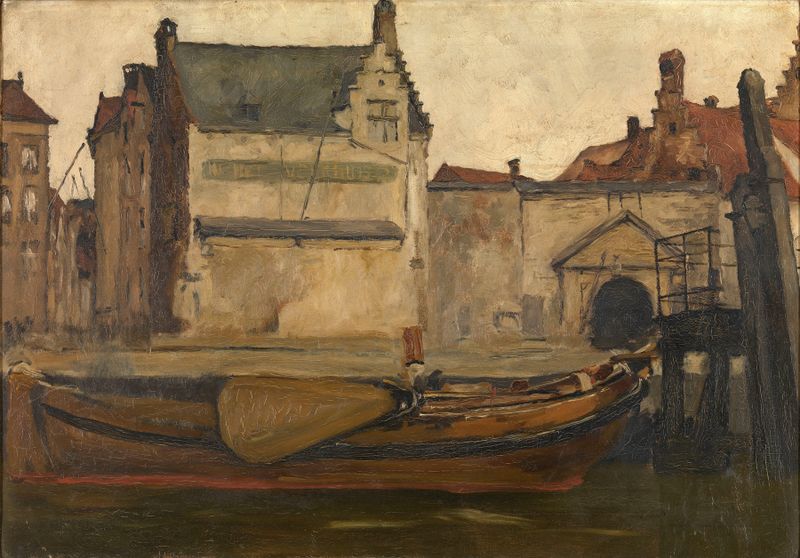

More Architecture Art
Browse all →
The statue of Liberty
Frédéric Auguste Bartholdi

View of Houses in Delft, Known as ‘The Little Street’
Johannes Vermeer

View of Houses in Delft, Known as ‘The Little Street’
Johannes Vermeer

The Cathedral in Rouen. The portal, Grey Weather
Claude Monet

The yellow house
Vincent van Gogh

The Church in Auvers-sur-Oise, View from the Chevet
Vincent van Gogh