Palingbrugstraat — History & Facts
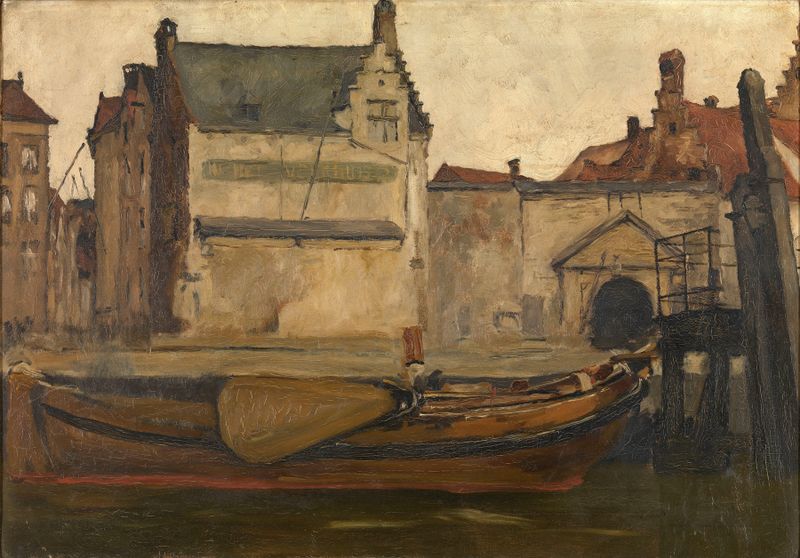
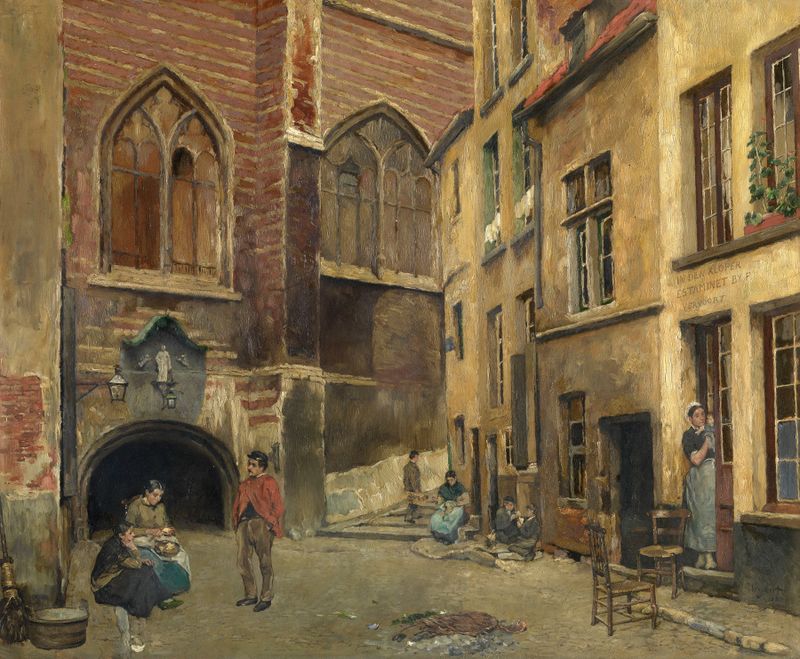
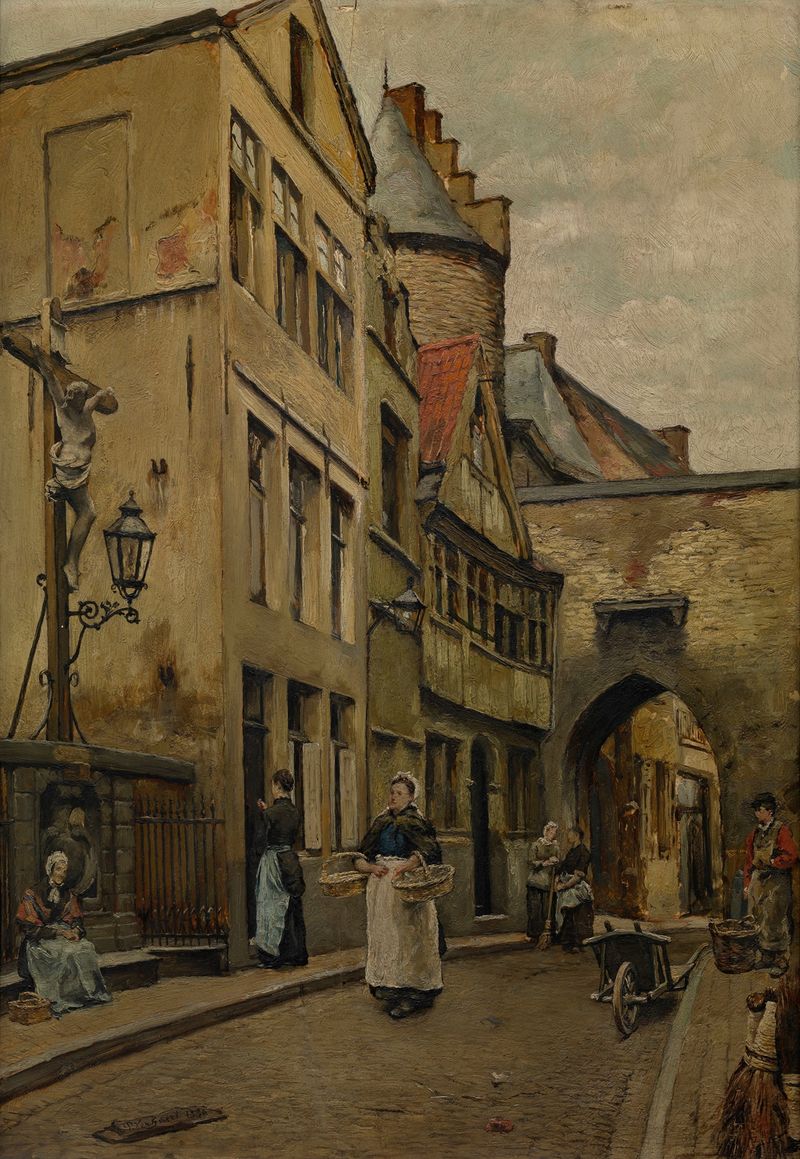
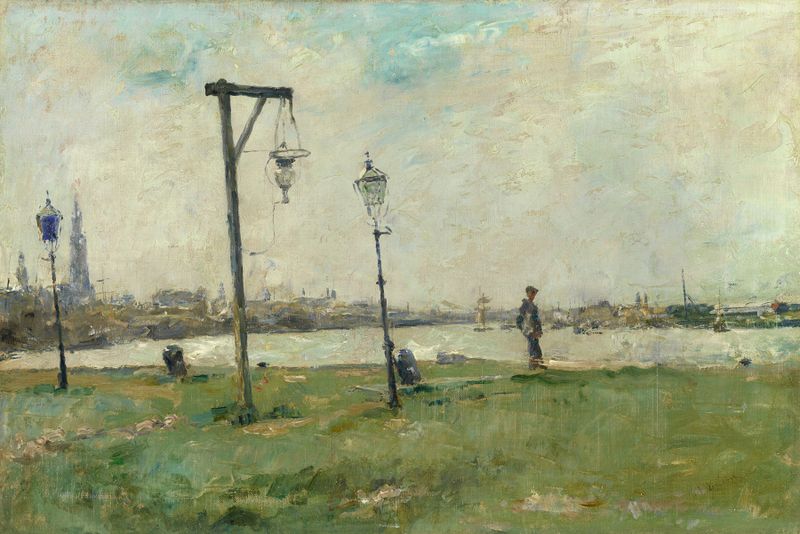
In an ever-accelerating world, art immortalizes the fleeting moments of existence, anchoring memories against the tide of time. Look closely at the canvas, and your gaze is immediately drawn to the serene street scene. Notice how the soft, dappled light filters through the trees, casting playful shadows on the cobblestones below. The pastel hues of the buildings stand in gentle contrast to the deeper greens of the foliage, inviting the viewer to explore the tranquil interplay between color and light.
Verhaert’s brushstrokes, both delicate and deliberate, breathe life into every detail, from the whimsical reflections in windows to the textured surfaces of the pavement. Delve deeper, and you’ll uncover a narrative woven within the subtleties of the scene. The calmness of the street juxtaposes the underlying pulse of urban life, suggesting the coexistence of solitude amidst bustling surroundings. The figures, painted with an air of mystery, move through the space like whispers of the past, evoking memories long forgotten.
Each element—a stray cat, a flickering lamppost—holds significance, suggesting that time, while relentless, can also be tender in its embrace of everyday moments. Created in 1880, this piece emerged during a transformative period in the artist's life, when he was deeply engaged in exploring the nuances of light and atmosphere. Living in Belgium amidst the burgeoning Impressionist movement, Verhaert sought to capture the essence of ordinary scenes, reflecting the broader changes in both art and society. As the world outside rapidly industrialized, his focus on the familiar and the intimate offered a poignant counter-narrative, preserving the beauty and stillness of fleeting moments.