
The Goose Girl at Montfoucault (White Frost) — History & Facts
In this stillness, the essence of decay blooms, transforming the ordinary into a reflection of forgotten beauty. Here lies a moment captured in time, where nature surrenders to its inevitable cycle, revealing the raw poetry of existence. Look to the center, where a figure stands poised amidst the landscape, her vibrant dress contrasting sharply against the muted greens and browns of the earth. The brushstrokes reveal a soft impressionism; each stroke captures the delicate play of light filtering through the trees, dappled shadows shifting gently on the ground.
Notice how the artist employs a palette of soft pastels to evoke a sense of nostalgia, where the vibrancy of life feels just a whisper away from the encroaching stillness of decay. Beneath the surface vibrates a tension between vitality and deterioration. The girl, though vibrant, seems isolated, her gaze directed away from the viewer, hinting at a world she is part of yet removed from. The encroaching foliage may symbolize nature's reclamation, suggesting that even in beauty, there lies an underlying sorrow.
This duality evokes a quiet reflection on the passage of time, where life and decay dance as partners in an endless cycle. In 1875, the artist was deeply engaged in his exploration of rural life in France, painting in the midst of a shifting artistic landscape where impressionism was asserting its voice. During this period, he sought to capture the delicate interplay between light, atmosphere, and human experience, reflecting both the fleeting nature of beauty and the inevitable embrace of decay.
More Artworks by Camille Pissarro
Browse all →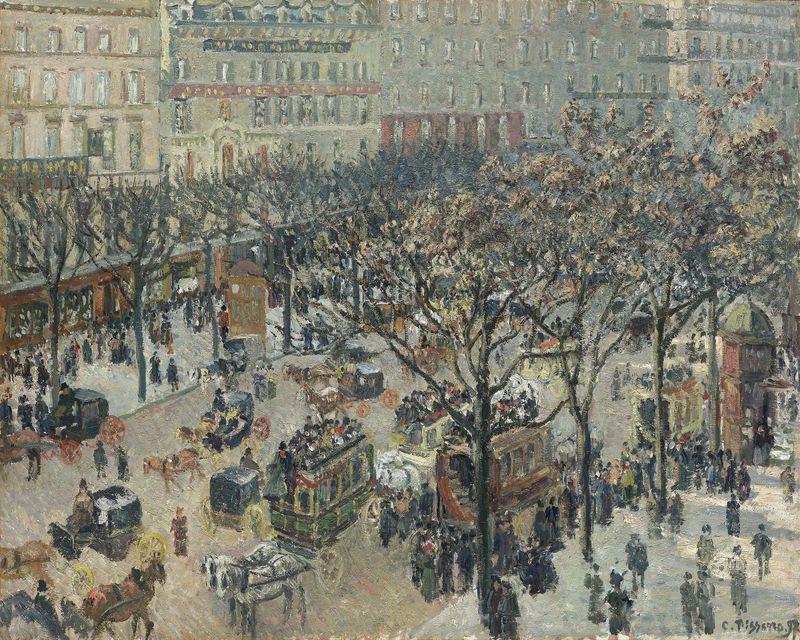
Boulevard des Italiens,Morning_Sunlight
Camille Pissarro
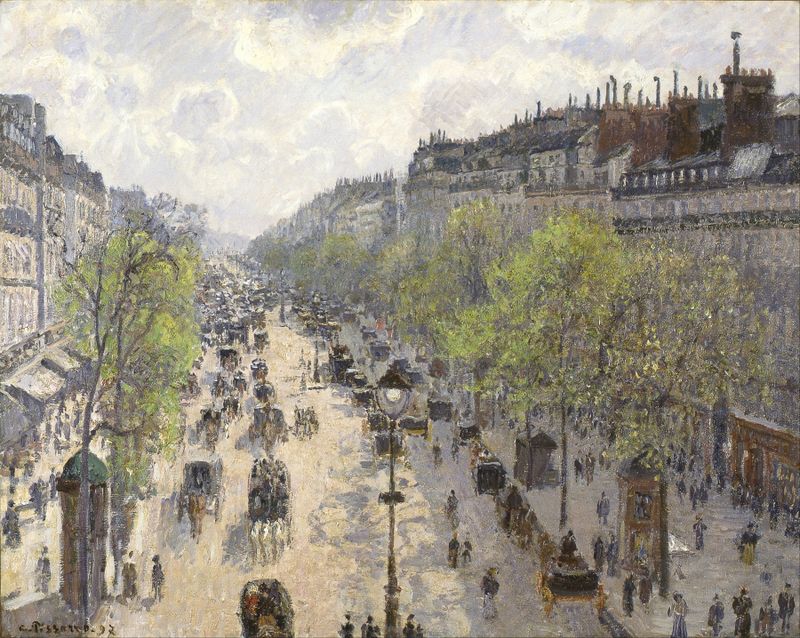
Boulevard Montmartre, Spring
Camille Pissarro
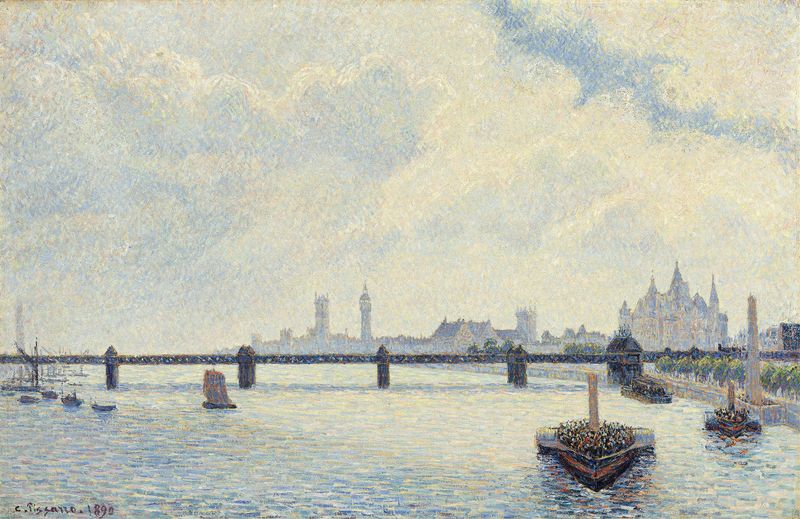
Charing Cross Bridge,London
Camille Pissarro
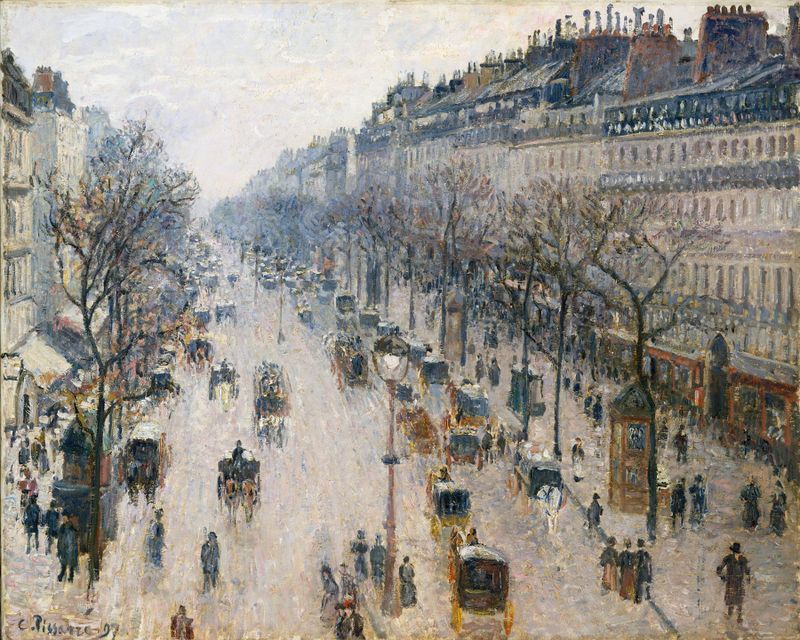
The Boulevard Montmartre on a Winter Morning
Camille Pissarro
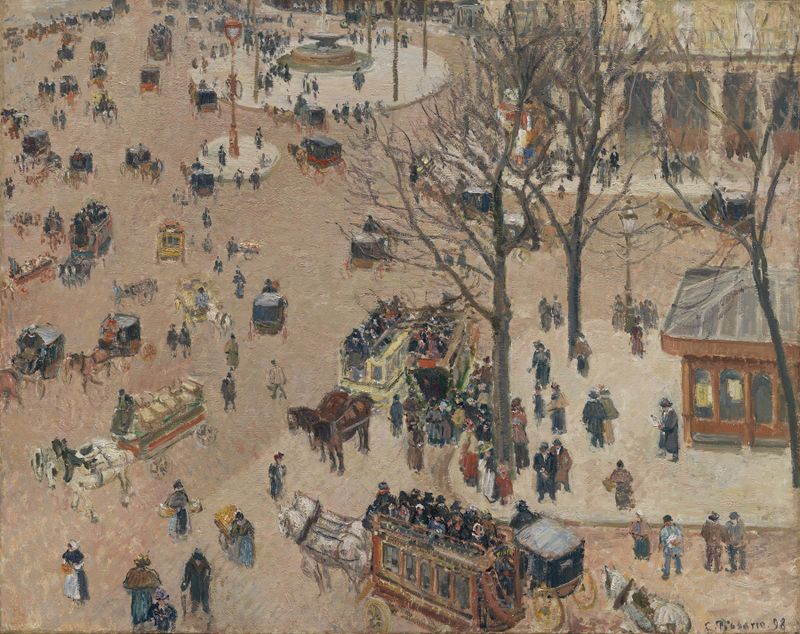
La Place du Théâtre Français
Camille Pissarro

Rue Saint-Lazare, Paris
Camille Pissarro
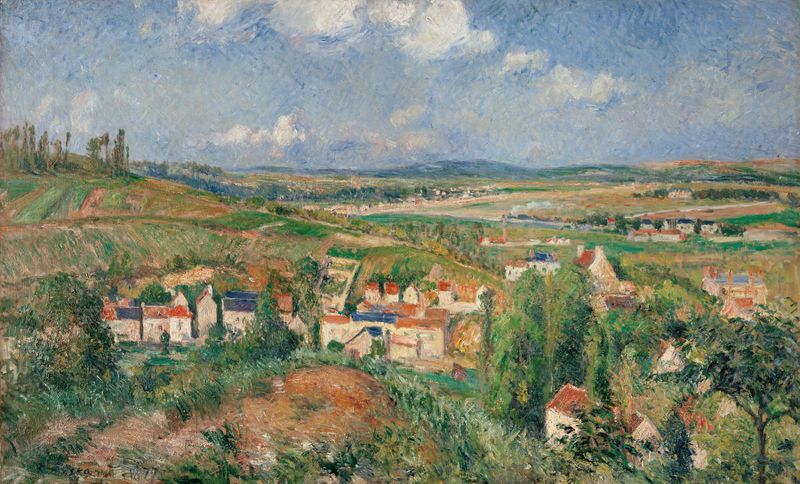
L’hermitage En Été, Pontoise
Camille Pissarro

Place du Theatre Francais,Fog Effect
Camille Pissarro
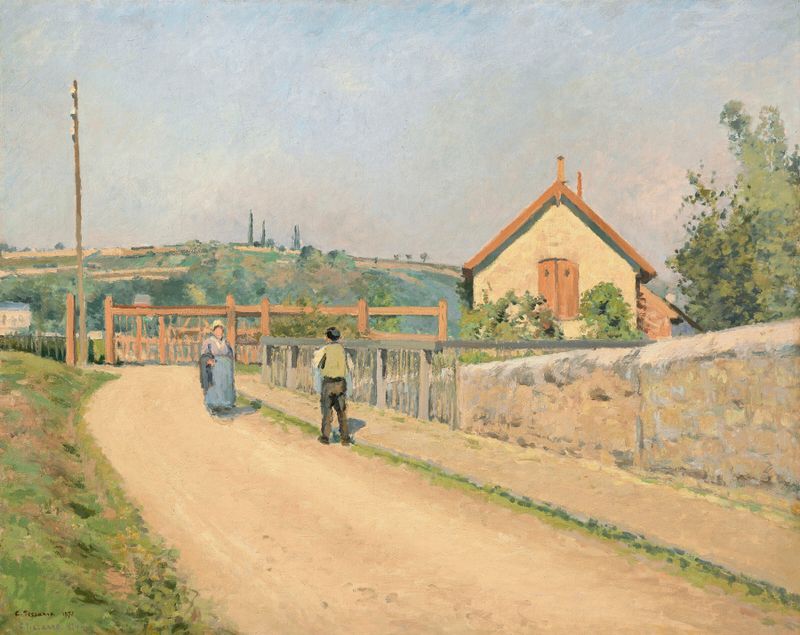
La barrière du chemin de fer, aux Pâtis près Pontoise
Camille Pissarro
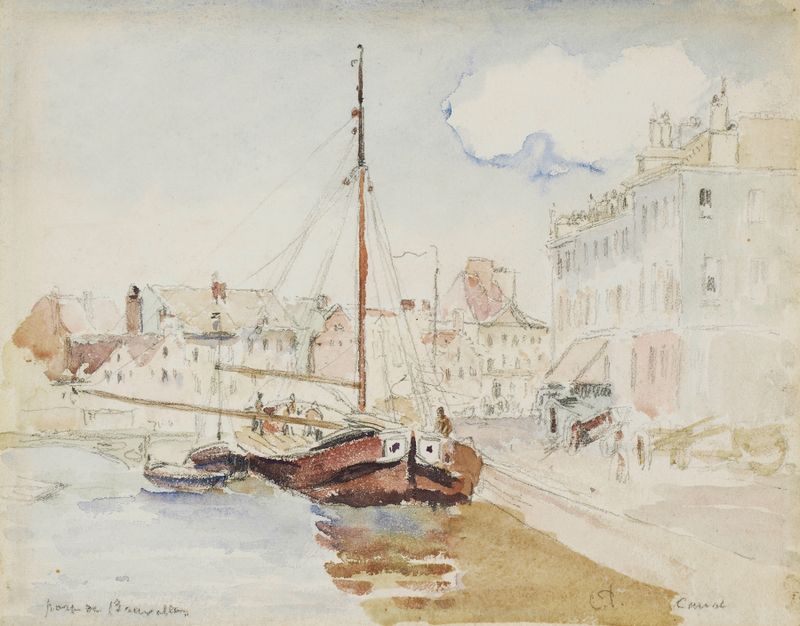
Port de Bruxelles
Camille Pissarro





