
The gust of wind — History & Facts
What secret hides in the quiet of the canvas? In The Gust of Wind, a stunning interplay of nature and emotion awakens the senses, beckoning the viewer to explore the profound urgency of the scene. Look to the center of the painting where the lush trees bend gracefully, their leaves caught mid-flutter in an unseen breeze. The dappled light filters through the branches, casting flickering shadows that dance across the ground. Notice how the artist renders the delicate greens and browns, creating a harmonious palette that vibrates with energy, while a brilliant azure sky envelops the scene, hinting at the freshness of a new day. Deep within the composition lies a tension between stillness and motion.
The trees, seemingly alive, evoke a sense of freedom as they sway, while the subtle figures in the foreground remain almost statuesque, rooted yet ready to embrace the wind. This contrast hints at a moment of awakening, where nature invites both tranquility and exhilaration, capturing the viewer in a shared breath of anticipation. Furthermore, the play of light and shadow symbolizes the duality of calm and chaos, an invitation to reflect on the unseen forces that shape our lives. Barend Cornelis Koekkoek painted The Gust of Wind in 1855, a period marked by Romanticism's influence in European art.
At that time, he was deeply invested in capturing landscapes infused with emotional resonance. Living in Germany and deeply connected to the Dutch landscape tradition, he sought to express the sublime beauty of nature, a reflection of both his personal journey and the collective yearning for connection with the natural world during a rapidly industrializing age.
More Artworks by Barend Cornelis Koekkoek
Browse all →
Italian Landscape
Barend Cornelis Koekkoek
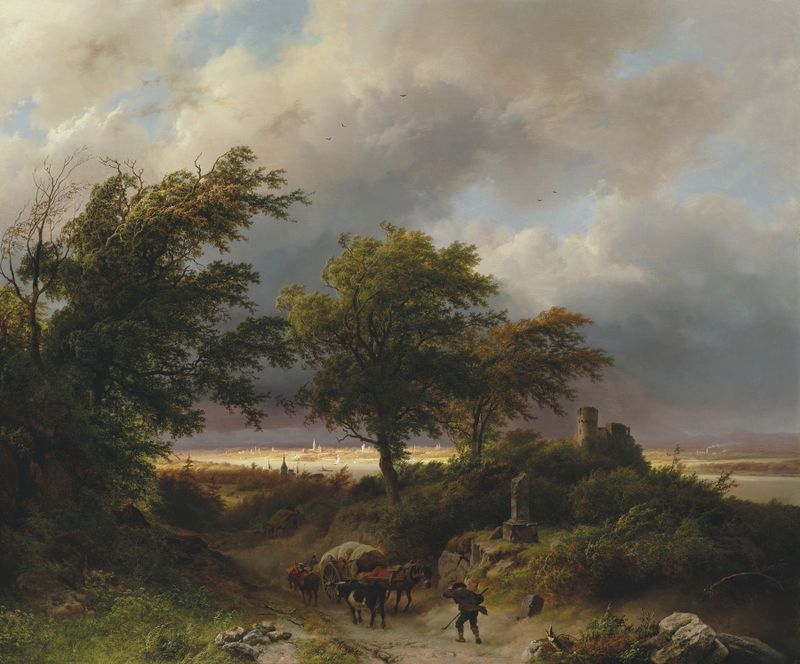
A wooded landscape
Barend Cornelis Koekkoek

Panoramalandschaft am Mittelrhein
Barend Cornelis Koekkoek
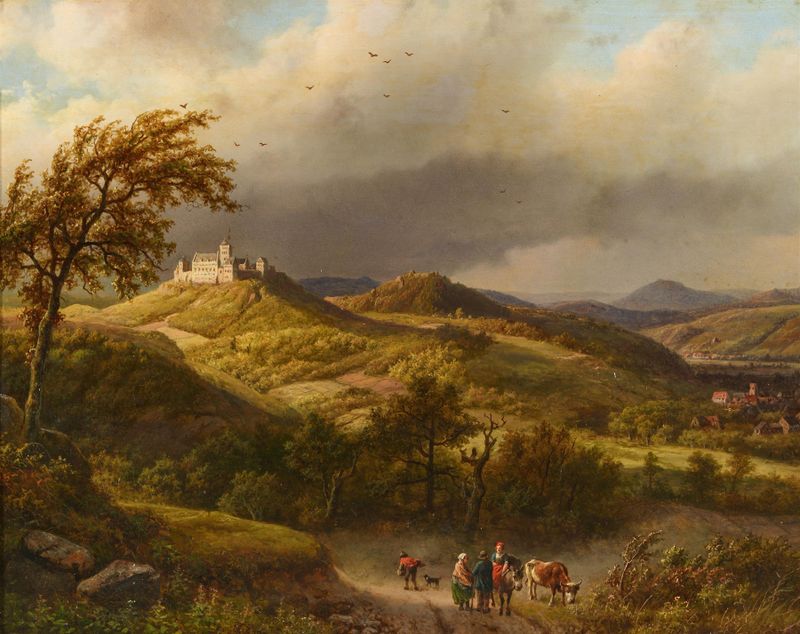
Die Wartburg bei Eisenach
Barend Cornelis Koekkoek
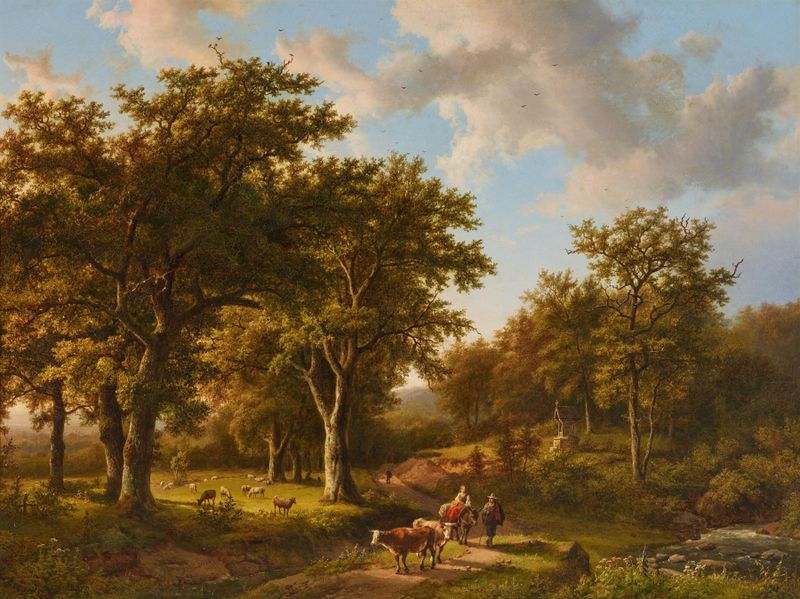
Waldlandschaft mit Hirten und Vieh
Barend Cornelis Koekkoek
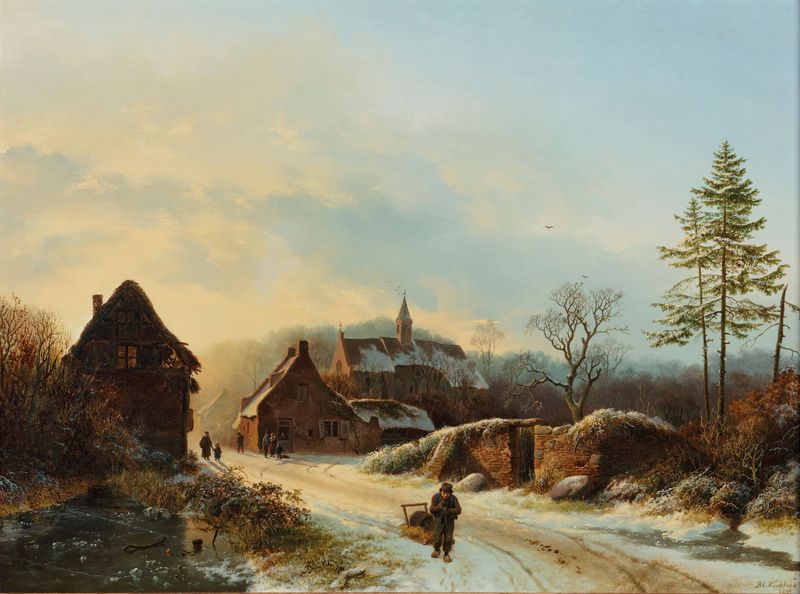
A winter’s day
Barend Cornelis Koekkoek

Travellers On A Road
Barend Cornelis Koekkoek
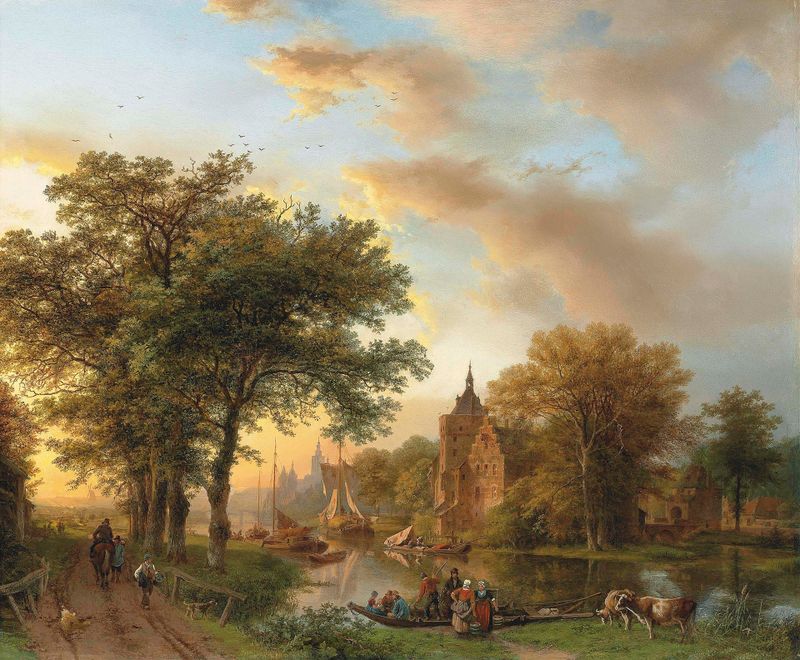
A River Landscape in Holland at Sunset
Barend Cornelis Koekkoek

A panoramic landscape with a view on the Middle-Rhine with a castle
Barend Cornelis Koekkoek
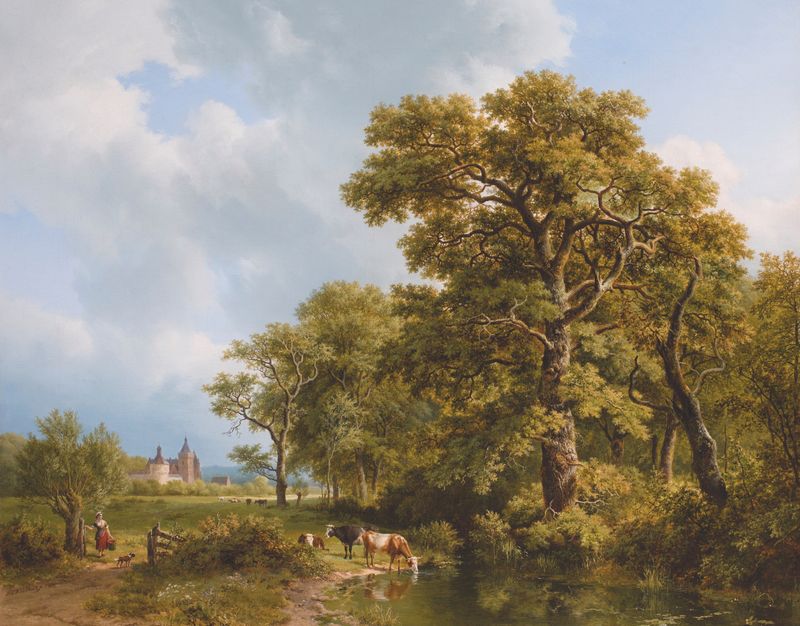
A Summer Landscape With cows Watering, A Castle In The Distance
Barend Cornelis Koekkoek





