The Harvest, allegory of Summer — History & Facts
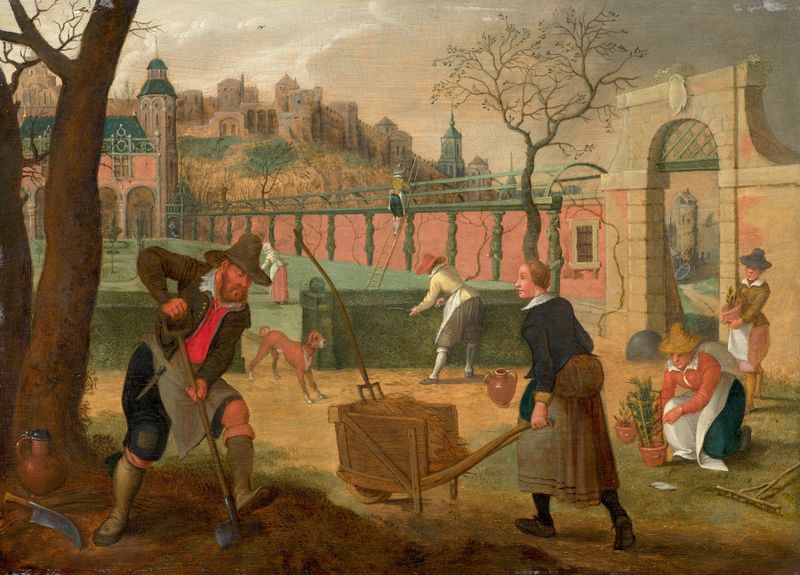
In the vibrant dance of summer’s embrace, the essence of divinity flows through the harvest, connecting the earth and its bounty in a timeless celebration. Look to the center of the canvas, where a burst of golden wheat stands tall, swaying gently under the sun. The light spills across the scene, illuminating the figures engaged in labor, their gestures infused with purpose. Notice the contrast of deep greens and soft yellows, expertly blended to evoke warmth and abundance, while deep shadows hint at the laborious toil hidden beneath the surface.
The composition draws the eye outward, leading us through the rhythmic motions of the harvesters, each stroke of paint echoing the unity of human effort and nature’s gifts. Delve deeper into the subtleties: the woman cradling a handful of wheat, her outstretched hand cradling nature’s bounty, not merely as a laborer but as a guardian of life. The distant villagers, captured in mid-motion, portray a harmonious community, underscoring the collective spirit of summer's labor. The interplay of light and shadow conveys the divine presence that infuses the mundane with grace, reminding us of the sacredness embedded in the cycle of seasons. Sebastien Vrancx painted this artwork during a time of artistic flourishing in the 17th century, likely within the vibrant milieu of the Flemish Baroque movement.
His works often reflected the harmony of humanity and nature, a theme that resonated deeply in a Europe transitioning through burgeoning agriculture and rich cultural expression. The artist’s exploration of allegorical motifs mirrored the era's emphasis on celebrating nature’s bounty, allowing viewers to connect with the divine presence found in everyday labor.