
The Hay Wagon — History & Facts
What if beauty was never meant to be finished? In The Hay Wagon, a world unfolds where the tension between labor and leisure vibrates in the air, suggesting a desire for completion that lingers just out of reach. Look to the left at the vibrant greens of the rolling hills, where the sun bathes the landscape in a warm embrace. The hay wagon, painted in muted browns and ochres, dominates the foreground, its sturdy form contrasting with the ethereal backdrop. Notice the figures in the scene, each gesture telling a story—one man, bent over in toil, while another stands at ease, gazing toward the horizon.
The soft brushwork and delicate play of light highlight both the physicality of their labor and the dreamlike quality of their surroundings, inviting the viewer to pause and reflect on the nuances of their existence. Hidden within this pastoral tableau is a profound exploration of desire. The juxtaposition of work and the idyllic countryside hints at an unfulfilled yearning—not just for the completion of a task, but for a life imbued with purpose and beauty. Each element, from the laden wagon to the faraway mountains, symbolizes the aspirations and burdens we carry, whispering of hopes that intertwine with the realities of daily life. Philips Wouwerman created this work in the vibrant artistic landscape of the mid-17th century, a time when Dutch painting flourished.
Painted in the Netherlands after 1650, it reflects a society grappling with both prosperity and the weight of labor. Amid the rise of genre painting, Wouwerman's focus on rural life captured the essence of a culture deeply entwined with the rhythms of nature and labor, making The Hay Wagon a timeless study of desire and human experience.
More Artworks by Philips Wouwerman
Browse all →
Halt of Cavaliers at an Inn
Philips Wouwerman

Halt of Travellers
Philips Wouwerman

Travelers Awaiting a Ferry
Philips Wouwerman
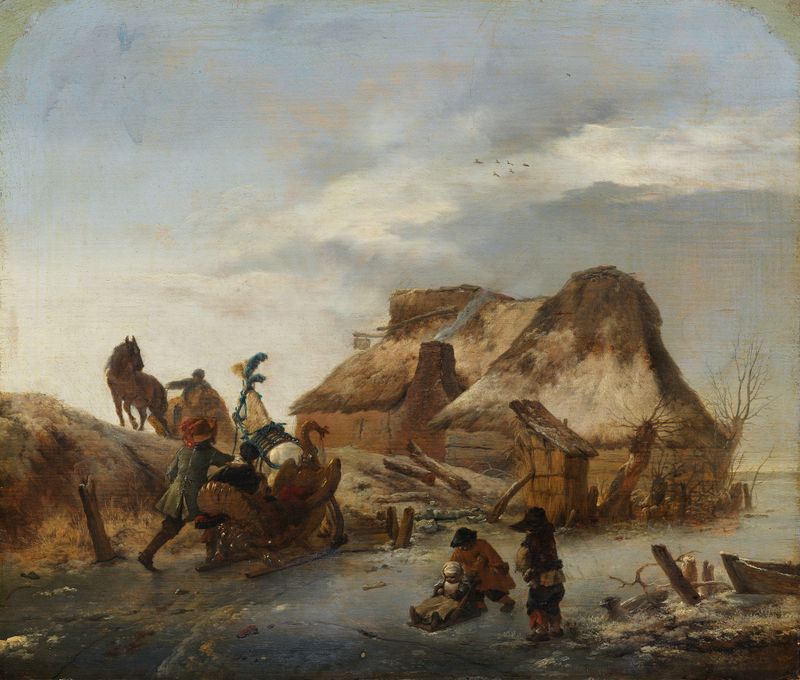
A Nobleman’s Sleigh on the Ice
Philips Wouwerman
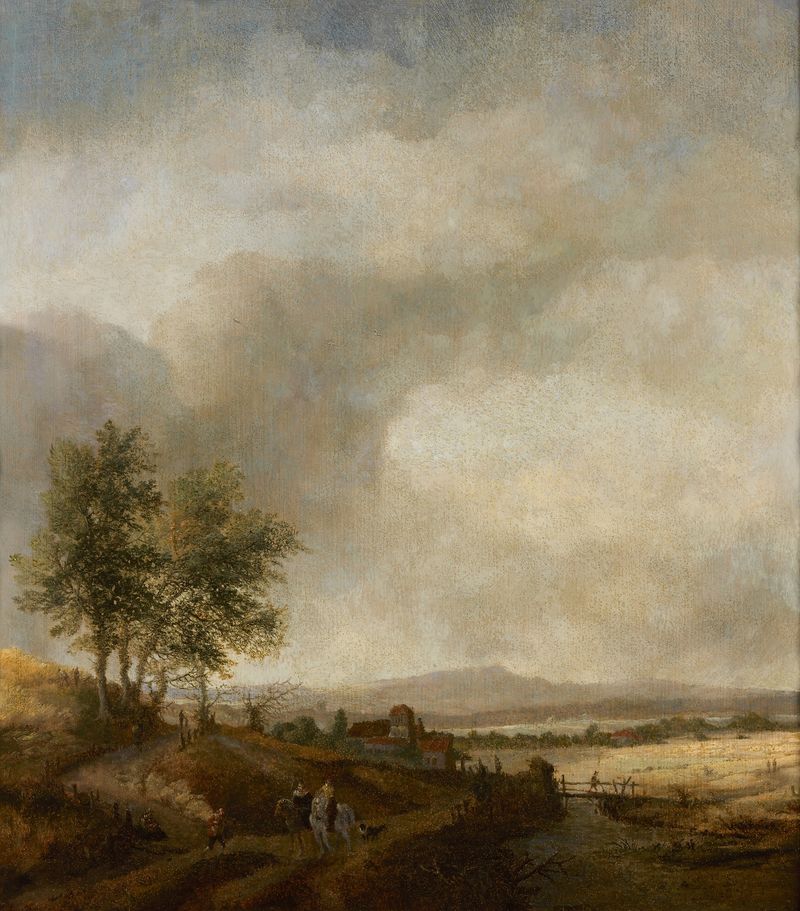
Landschap met ruiters
Philips Wouwerman
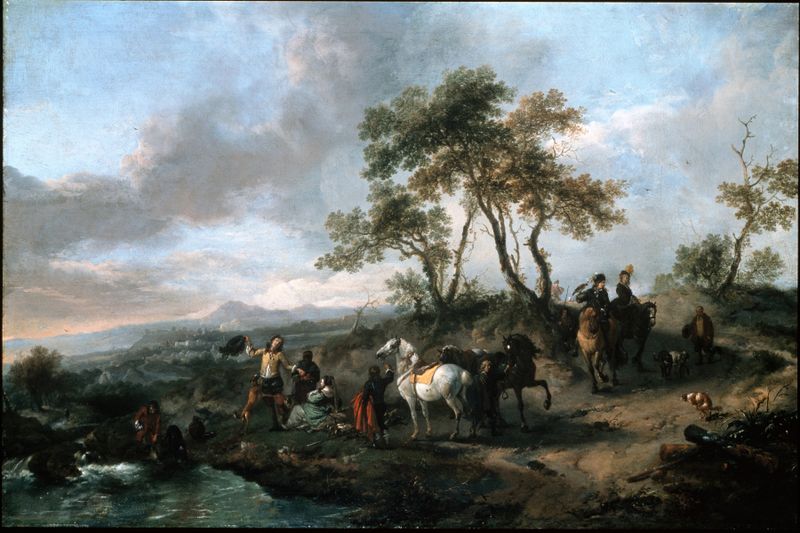
Halt of a Hunting Party
Philips Wouwerman
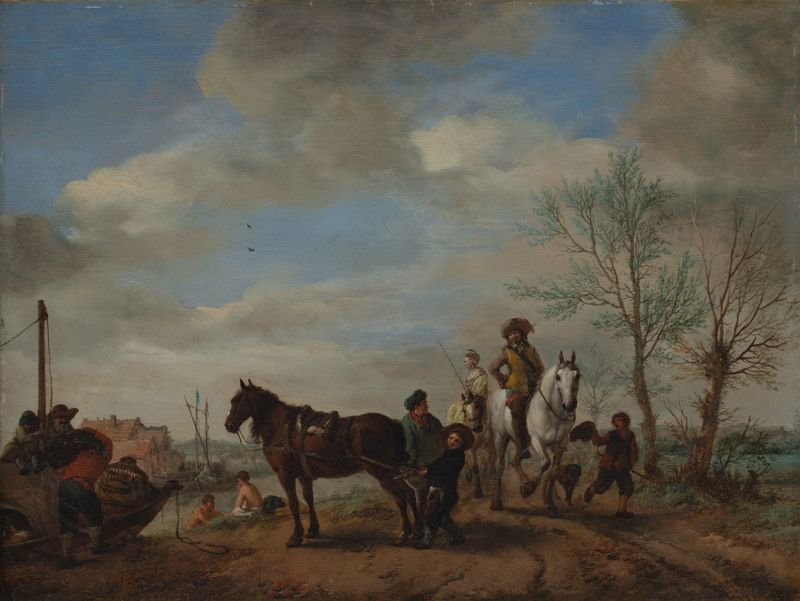
A Man and a Woman on Horseback
Philips Wouwerman
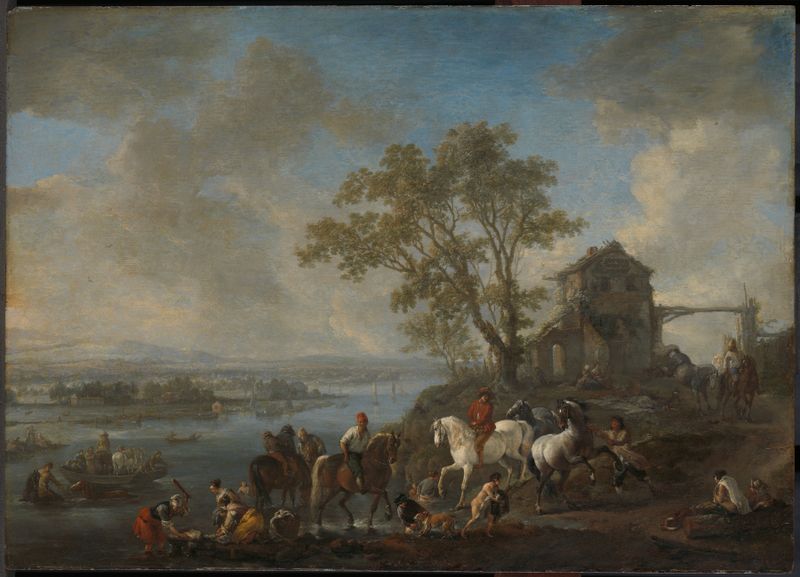
Horsepond on a River
Philips Wouwerman
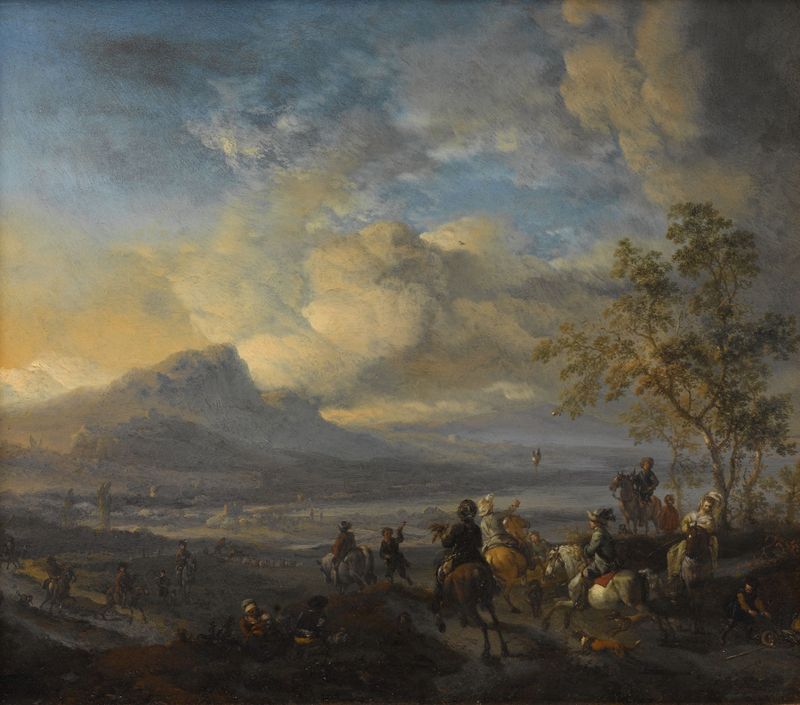
The Falcon Hunt
Philips Wouwerman

Riders at a Blacksmith’s
Philips Wouwerman





