
The house of the sacristan in Friesach — History & Facts
When did color learn to lie? In the hues of memory, the past can shimmer with both warmth and distortion, a delicate balance between reality and recollection. Look to the center, where a humble structure rises, its façade a patchwork of muted tones, blending seamlessly yet hauntingly into the surrounding landscape. Notice how the light dances, illuminating the house's edges with a soft glow, while shadows linger like whispers of forgotten tales. The palette—earthy and subdued—evokes a sense of nostalgia, inviting you to linger in its quiet embrace. As you examine the work, consider the contrast between the serene peace of the house and the vibrant life of the landscape that surrounds it.
Each brushstroke reveals an emotional tension—a longing perhaps for a simpler time or a deeper connection to one's roots. The juxtaposition of the house, a sanctuary, against the vast open fields suggests both belonging and isolation, sparking reflections on what memories we hold dear and what we choose to forget. In 1921, Fritz Lach painted this piece during a period when post-war Europe was grappling with its identity. He found himself immersed in the cultural revival of the time, capturing a moment that expressed both personal and collective memory.
As the world searched for meaning through the rubble of conflict, Lach’s artistry sought to evoke a sense of place, a reminder of the bonds that tether us to our histories.
More Artworks by Fritz Lach
Browse all →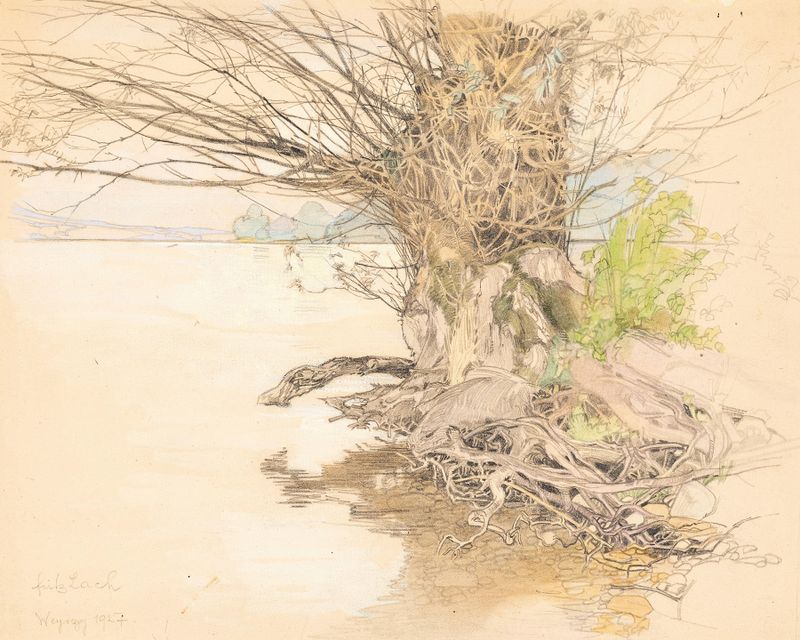
A willow tree at the lake shore
Fritz Lach
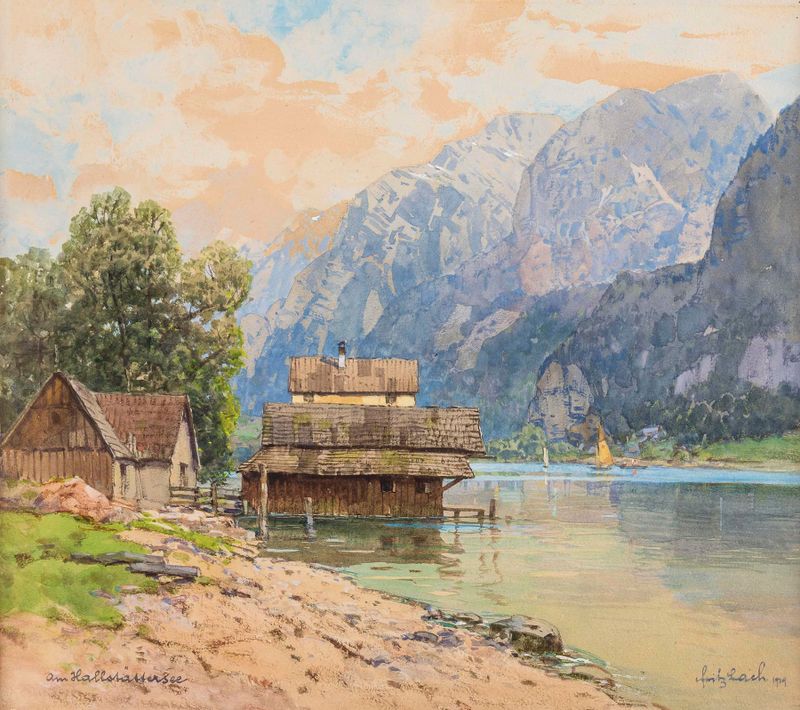
Bootshäuser am Hallstätter See
Fritz Lach
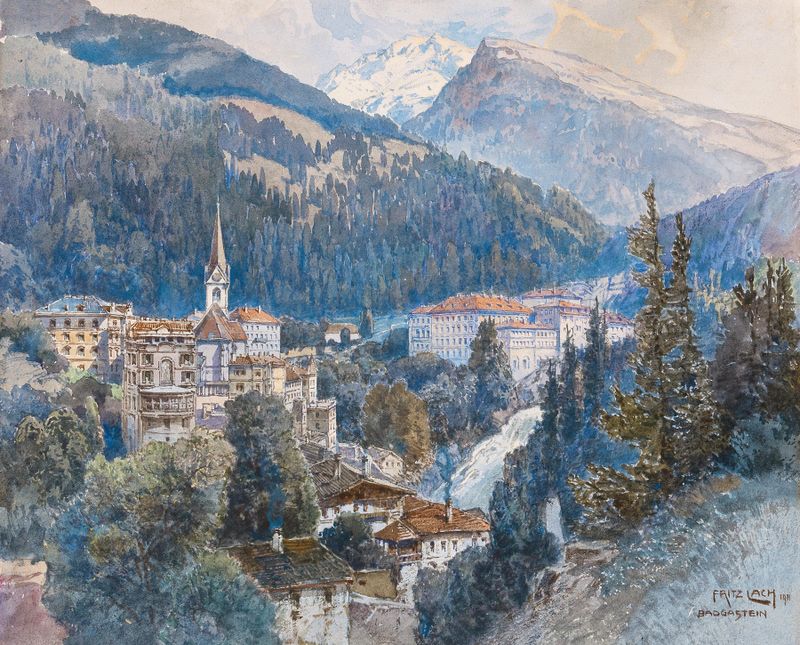
A view of Bad Gastein and the waterfall
Fritz Lach
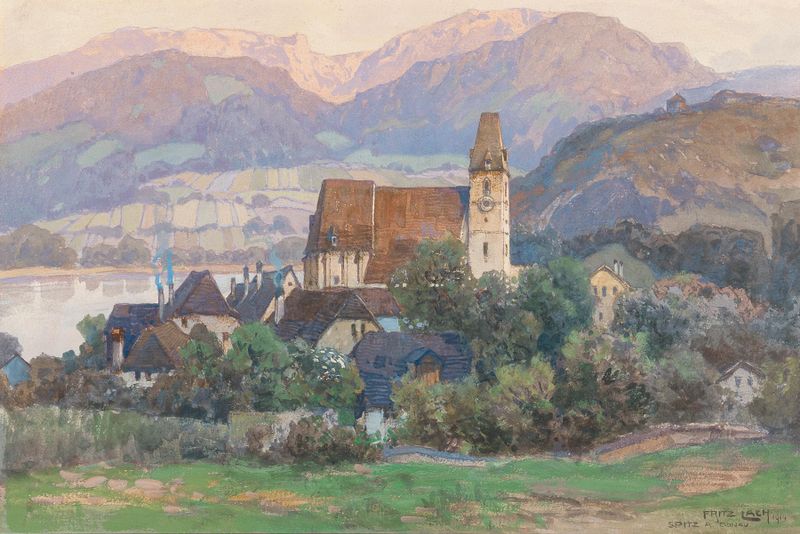
A view of Spitz in the Wachau valley
Fritz Lach
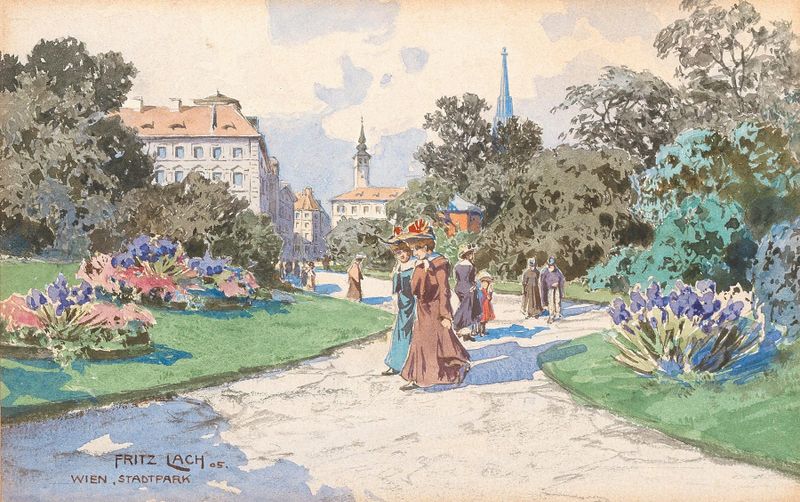
A walk in Vienna’s Stadtpark
Fritz Lach
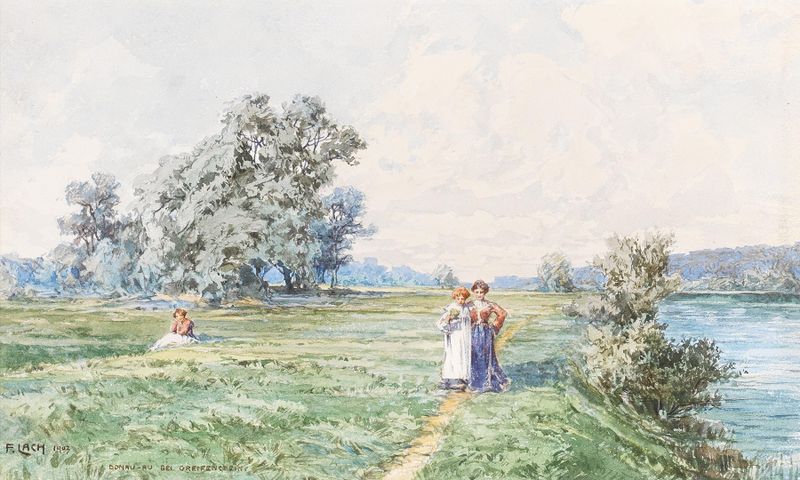
At the Danube near Greifenstein
Fritz Lach
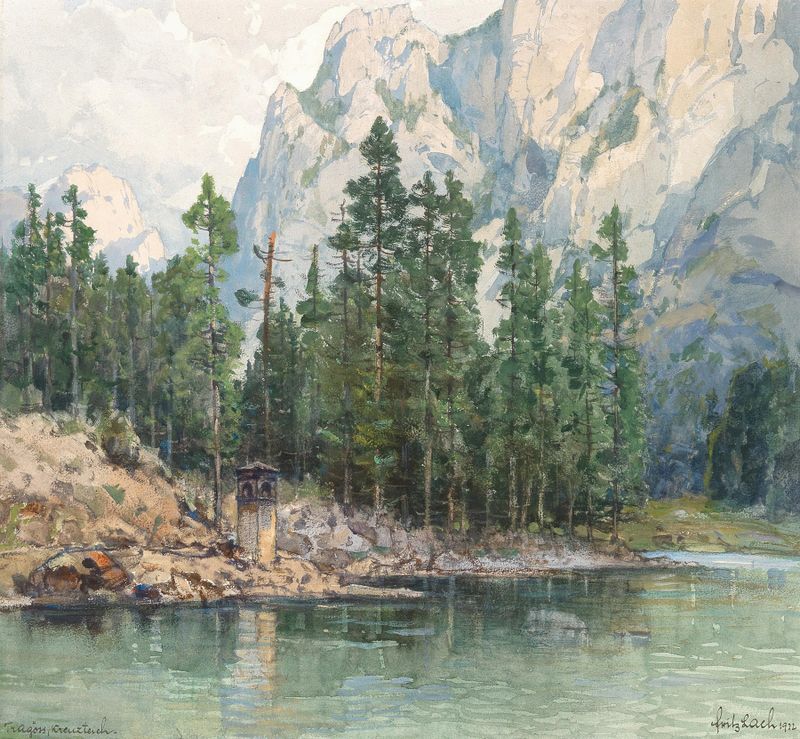
Kreuzteich near Tragöss
Fritz Lach
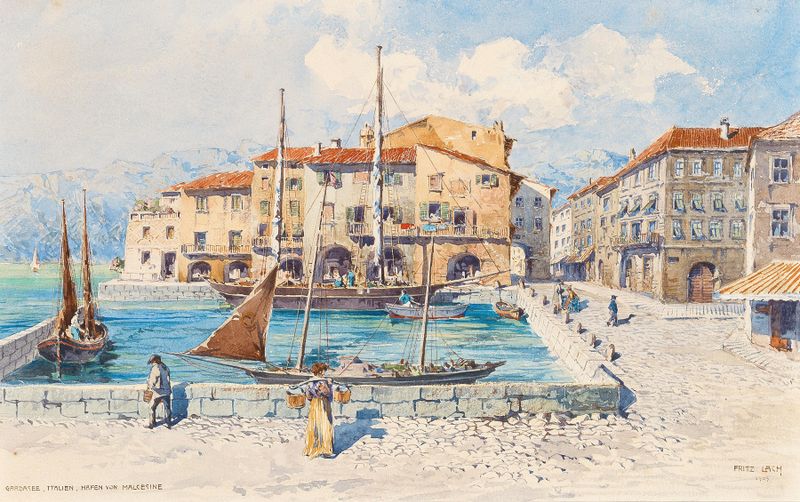
Malcesine near Gardasee
Fritz Lach
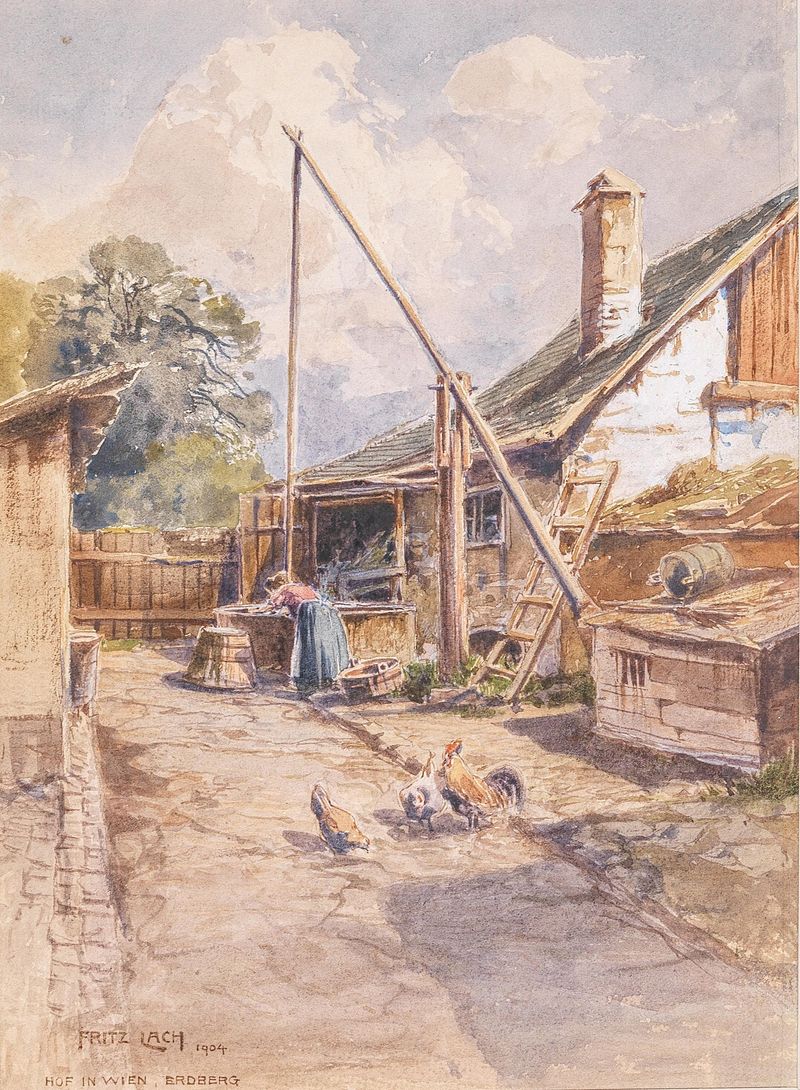
Hof in Wien Erdberg
Fritz Lach
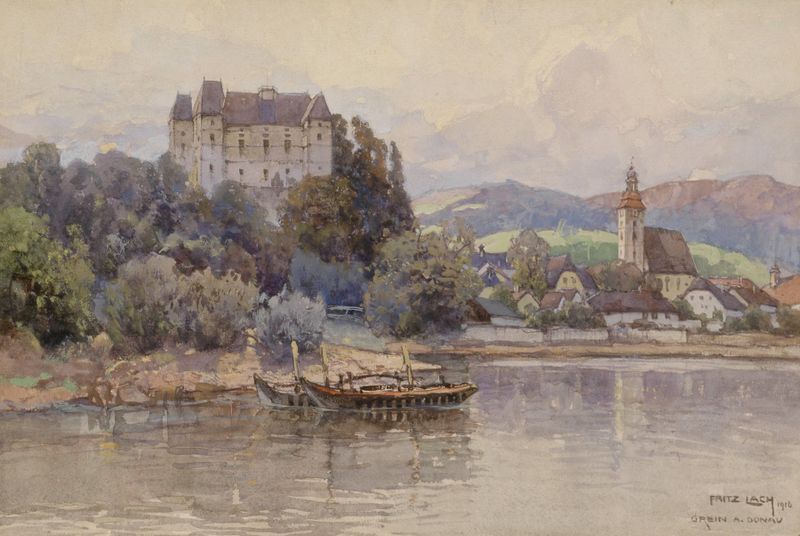
Blick auf Grein an der Donau
Fritz Lach
More Architecture Art
Browse all →
The statue of Liberty
Frédéric Auguste Bartholdi

View of Houses in Delft, Known as ‘The Little Street’
Johannes Vermeer

View of Houses in Delft, Known as ‘The Little Street’
Johannes Vermeer

The Cathedral in Rouen. The portal, Grey Weather
Claude Monet

The yellow house
Vincent van Gogh

The Church in Auvers-sur-Oise, View from the Chevet
Vincent van Gogh