
The Jetty At Feste Near Moss — History & Facts
Who listens when art speaks of silence? In The Jetty at Feste Near Moss, the stillness resonates deeply, hinting at revolutions both quiet and profound. Focus on the gentle ripples of water that beckon your gaze, drawing you toward the dilapidated jetty stretching into the calm expanse. Notice how the muted palette of blues and grays envelops the scene, while soft light dances on the water’s surface, creating a delicate interplay of shadow and reflection. The composition, with its simple yet evocative lines, invites a sense of longing, urging the viewer to ponder the stories of those who have tread this path. Amidst the tranquility lies an undercurrent of tension.
The worn wooden planks, hinting at past journeys, whisper of abandonment and the passage of time, while the distant horizon suggests possibilities yet to be realized. The juxtaposition of the serene landscape against the rugged jetty symbolizes both stability and change, a silent witness to the ebb and flow of life. Each detail, from the subtle curl of the waves to the fading light, encapsulates a moment of reflection on connection and solitude. Created in 1898, this work emerged during a transformative period for Hans Gude, a prominent Norwegian painter.
At this time, he was deeply influenced by the natural beauty of Norway as well as the shifting tides of modernism in art. As the world began to embrace new ideas and revolutionary movements, Gude captured the essence of both the landscape and humanity’s relationship with it, merging realism with the whispers of change.
More Artworks by Hans Gude
Browse all →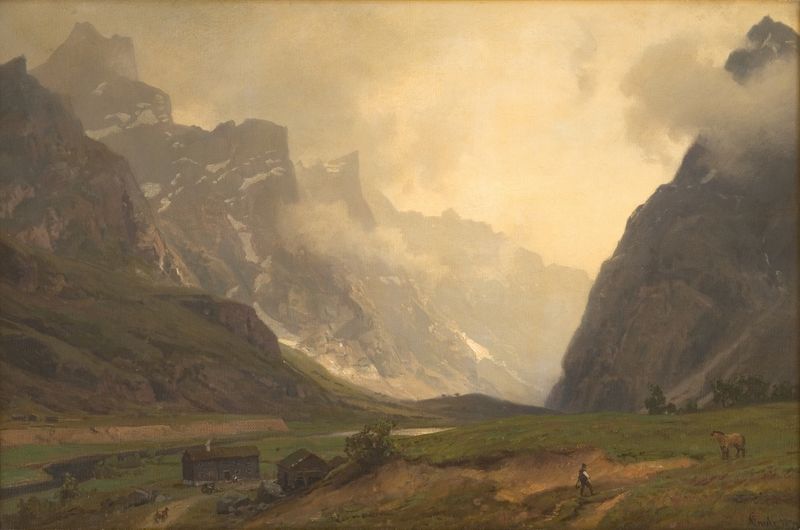
The Troll Peaks in Romsdalen, The Foot of Romsdalshorn to the Right
Hans Gude
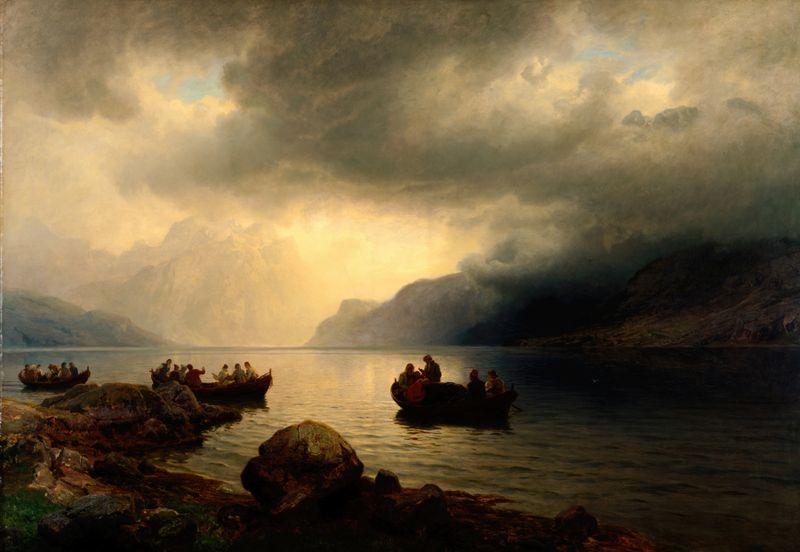
Funeral Procession on the Sogne Fjord
Hans Gude
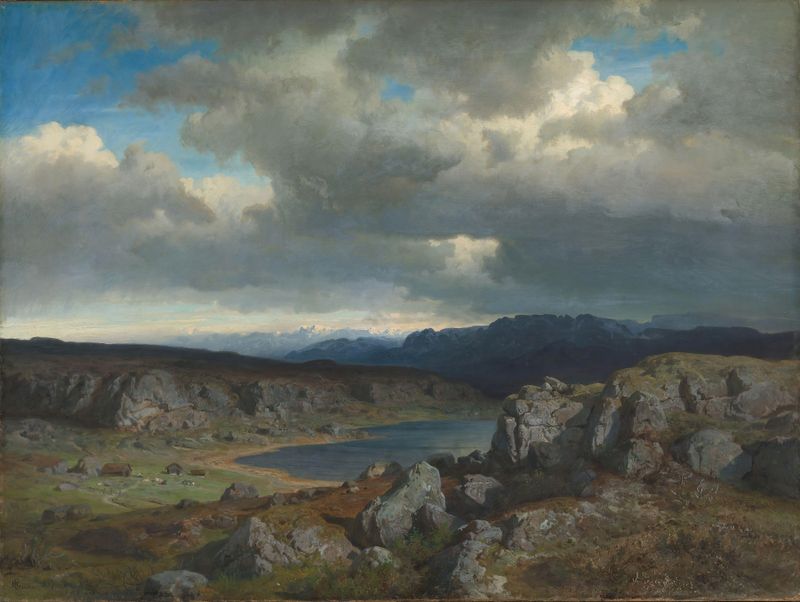
Norwegian Highlands
Hans Gude
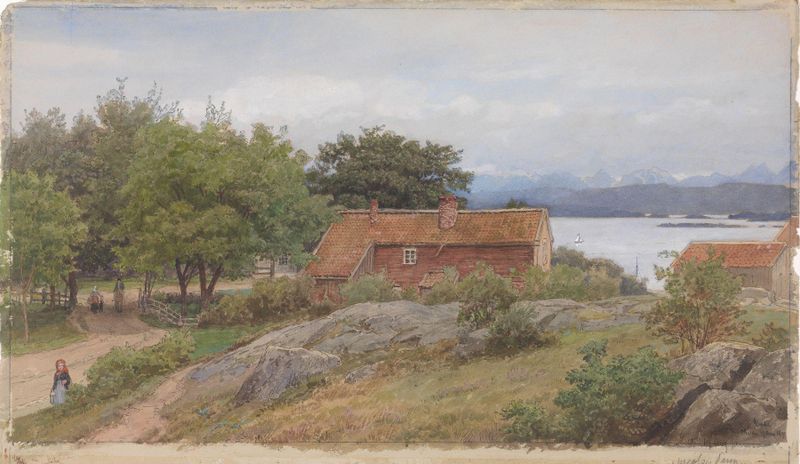
Landskap med bondegård ved Molde
Hans Gude
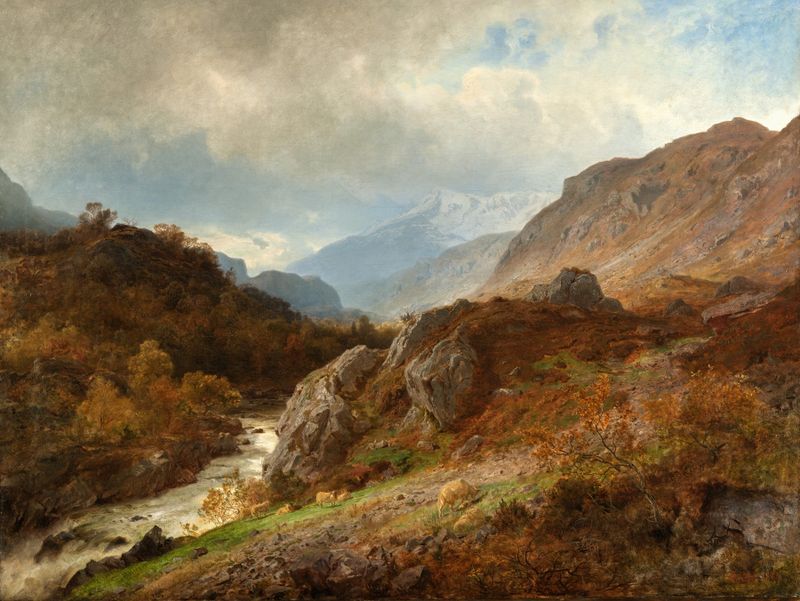
Mountain Landscape
Hans Gude
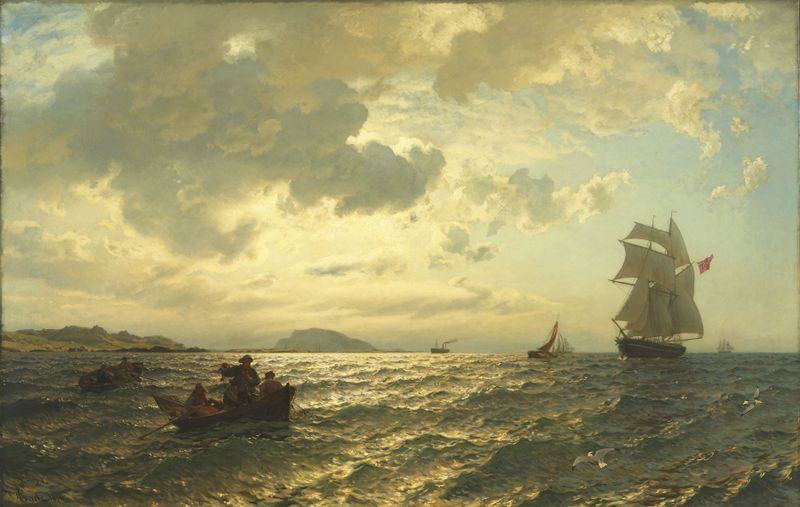
Fresh Breeze on the Norwegian Coast
Hans Gude
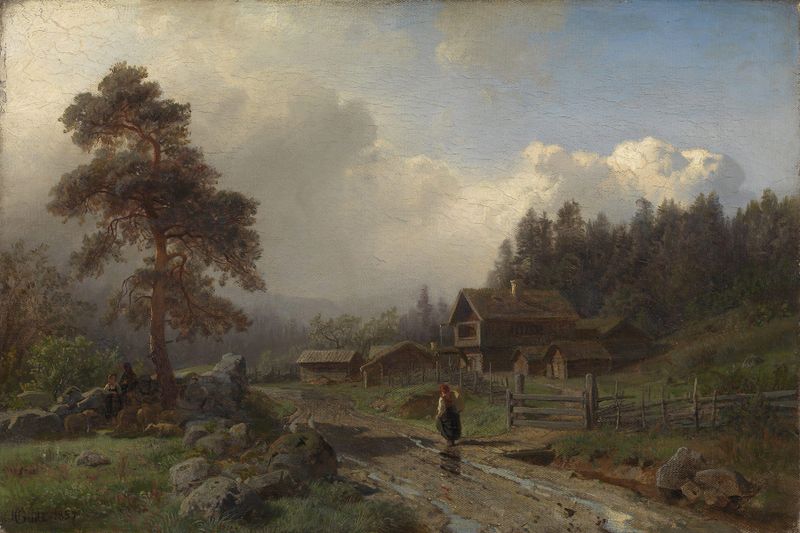
Norwegian Landscape in Rain
Hans Gude
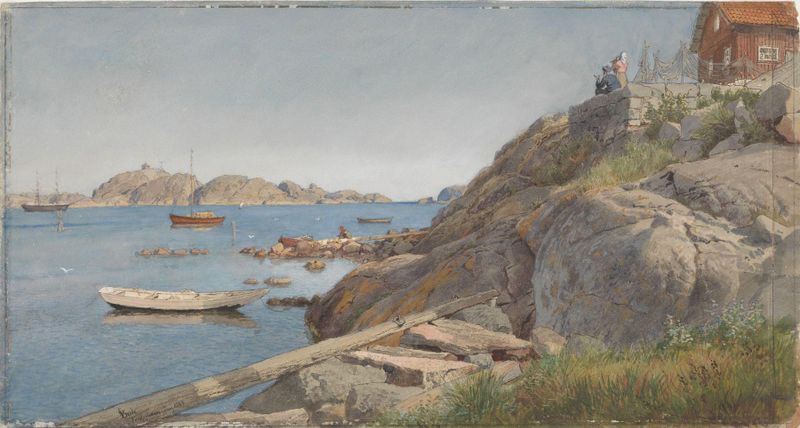
Landscape by Stavern
Hans Gude
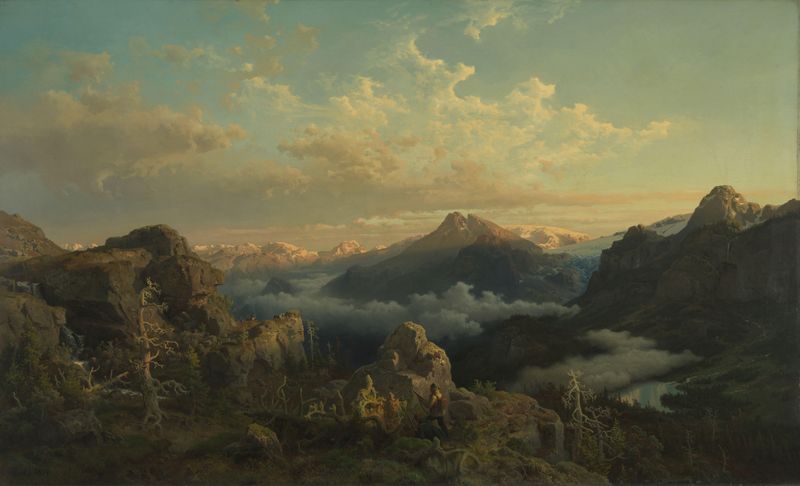
Norwegian Highlands in Sunrise
Hans Gude
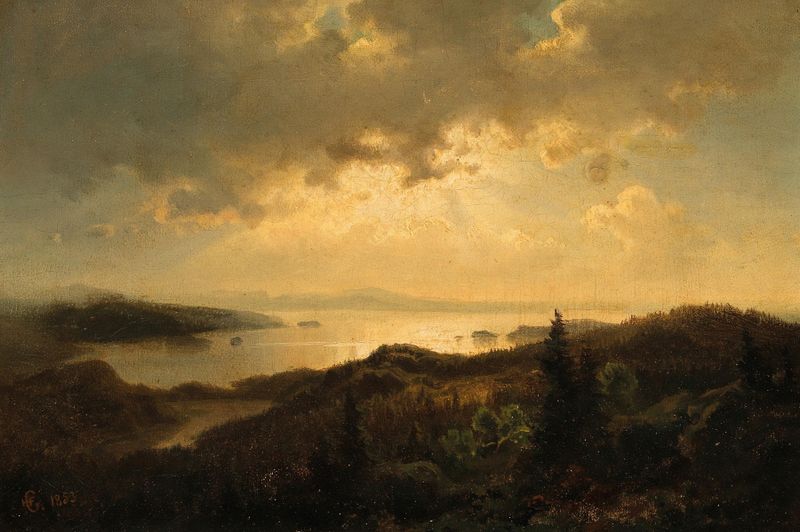
A Scene at Dusk in Norway
Hans Gude





