
The Madonna and Child with Saints — History & Facts
What draws the eye first is the electric intimacy between mother and child: the Christ Child, twisting toward his mother, presses his lips to her cheek, one tiny hand crowning her with a garland of flowers. This is not a distant Madonna, but a woman caught in a moment of living tenderness, her gaze both protective and inward. The cool light rakes across the figures, heightening the marble-smooth skin of the children and the Madonna’s luminous face, while the older woman behind—her features lined and shadowed—watches with a knowing, almost bittersweet smile.
The painter’s hand lingers over every fold of drapery, the crisp blue and rose of the Madonna’s dress setting her apart from the earthier, muted tones of the background. Even the golden halos, drawn with a hair’s breadth of paint, seem to hover just at the edge of vision. Painted around 1540 by Agnolo Bronzino, this work belongs to the world of Mannerist Florence, where elegance and artifice were prized as much as naturalism. Such paintings were often commissioned for private devotion, intended to bring the mysteries of faith into the intimate spaces of the home.
Bronzino, celebrated for his refined technique and cool, polished surfaces, was a favorite among the Medici and their circle, and his Madonnas are known for their statuesque beauty and subtle emotional charge. Today, The Madonna and Child with Saints hangs in the National Gallery, London, its origins and early journey largely unrecorded—yet its quiet drama and painterly precision invite us to look again, searching for the silent stories written in gesture and glance.
More Artworks by Agnolo Bronzino

Eleonora Of Toledo
Agnolo Bronzino
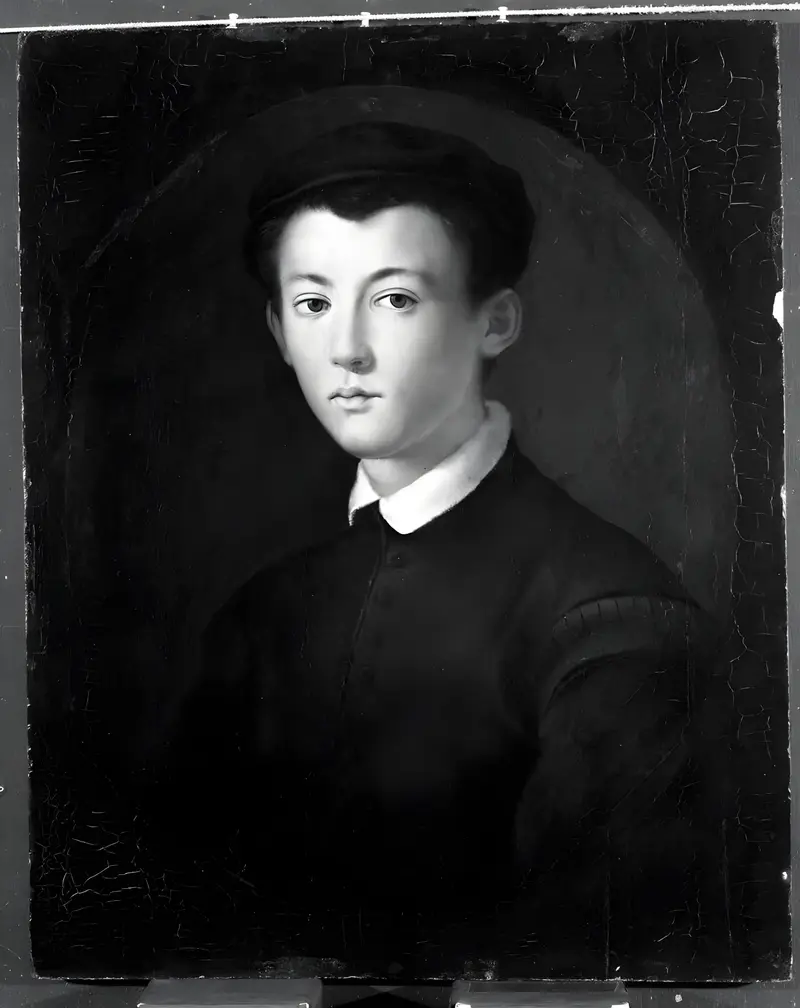
Portrait of a Young Man
Agnolo Bronzino
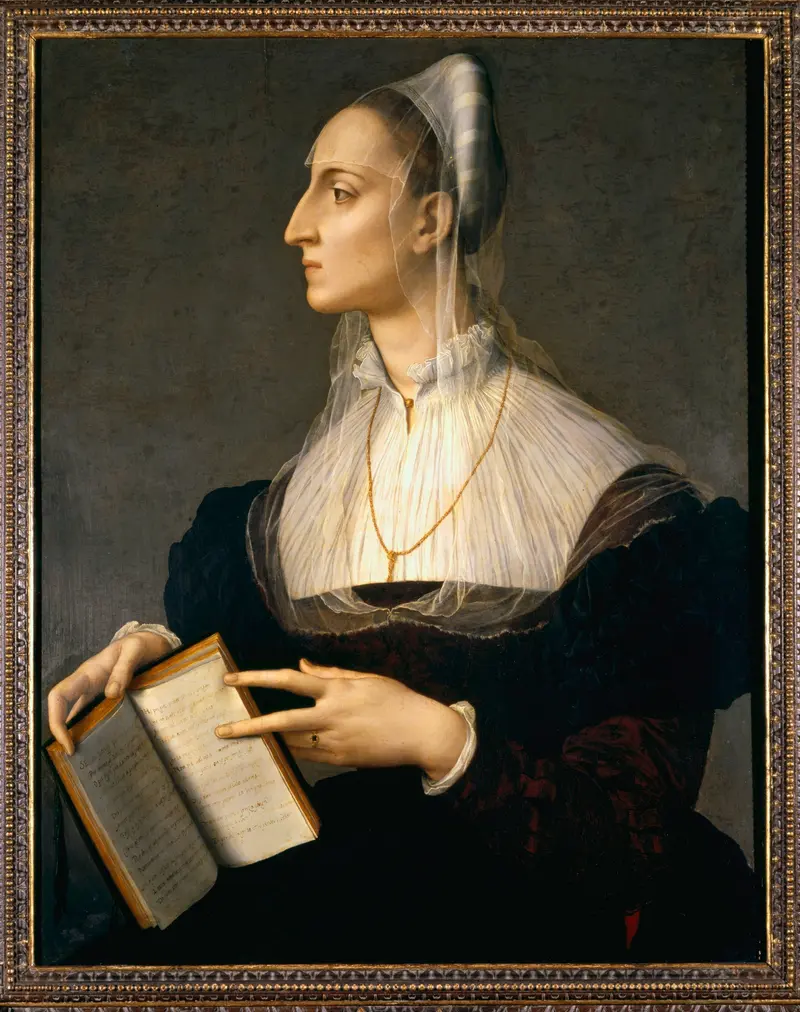
Portrait Of Laura Battiferri
Agnolo Bronzino
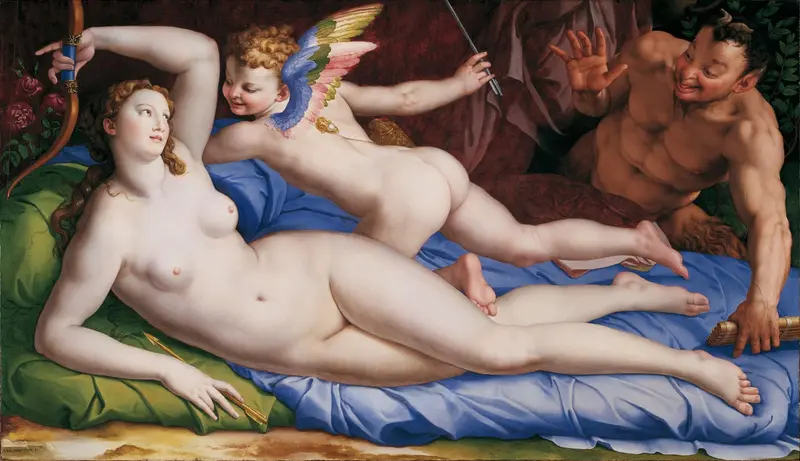
Venus, Cupid And Satyr
Agnolo Bronzino
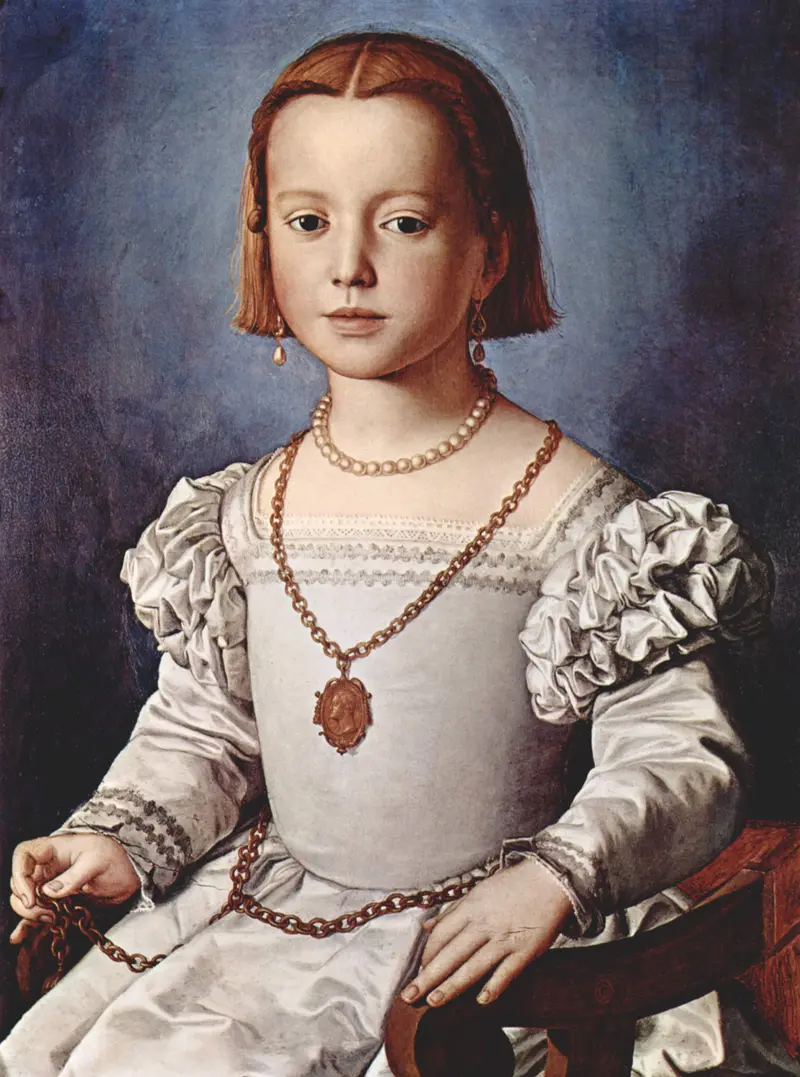
Bia Di Cosimo De‘ Medici
Agnolo Bronzino
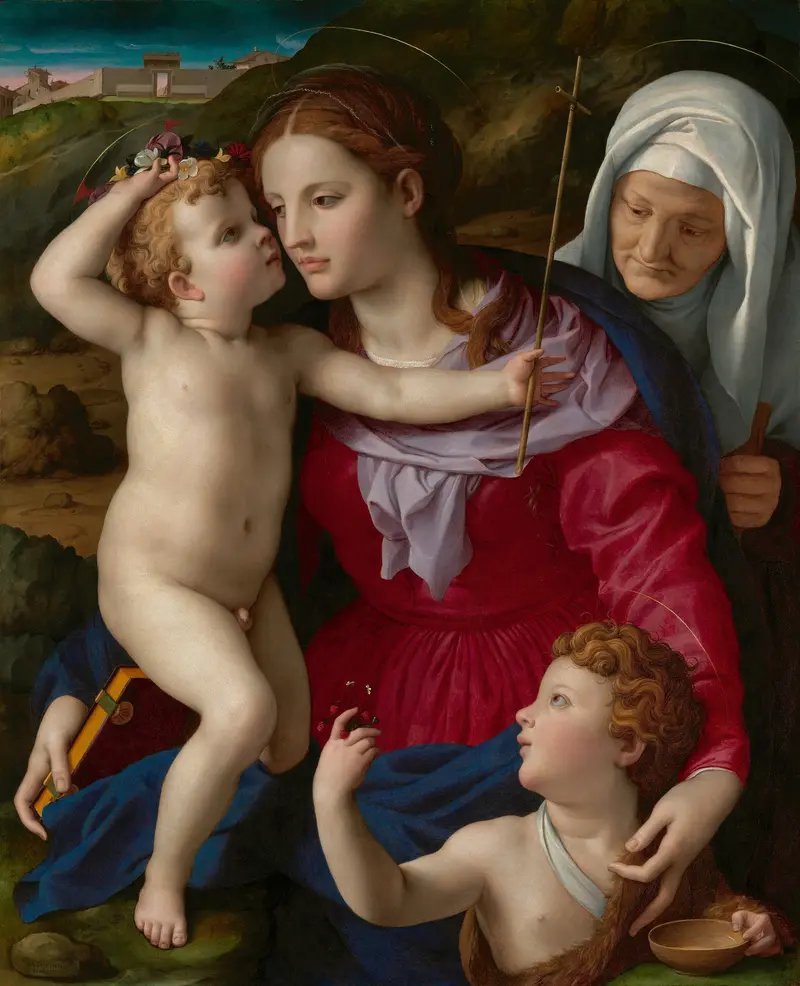
Virgin and Child with Saint Elizabeth and Saint John the Baptist
Agnolo Bronzino
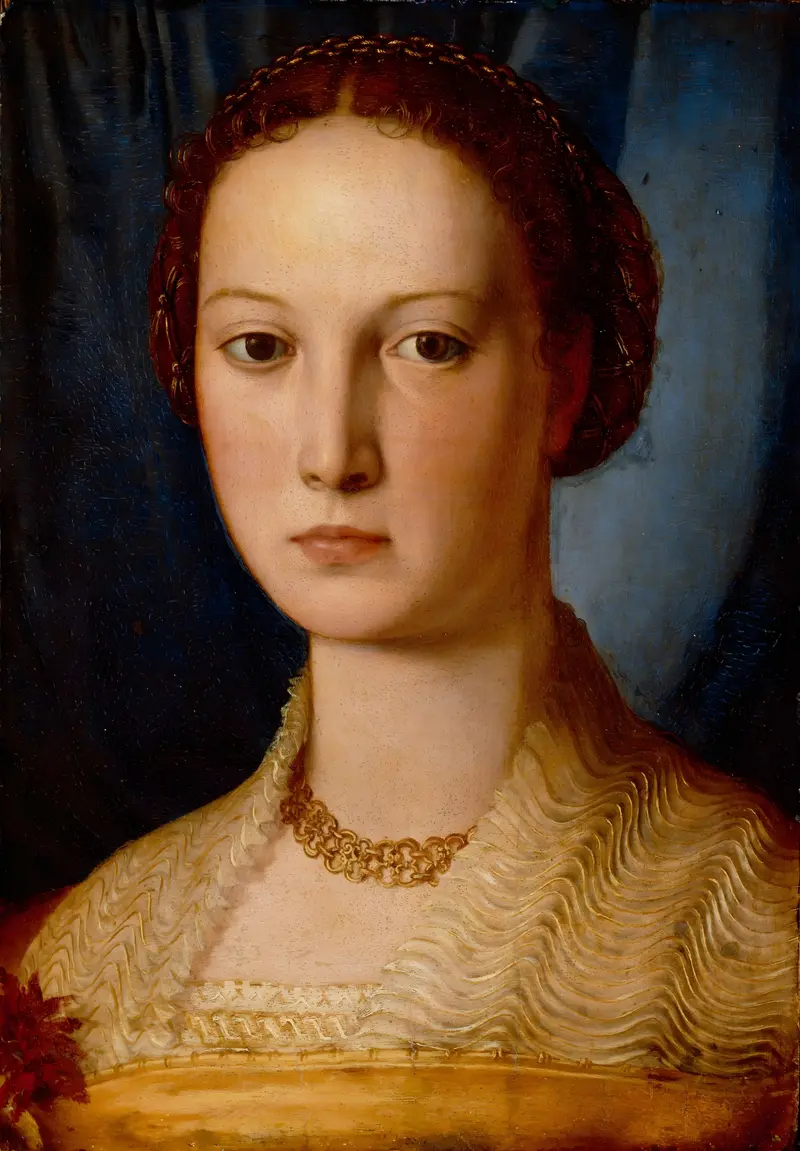
Costanza Da Sommaia
Agnolo Bronzino
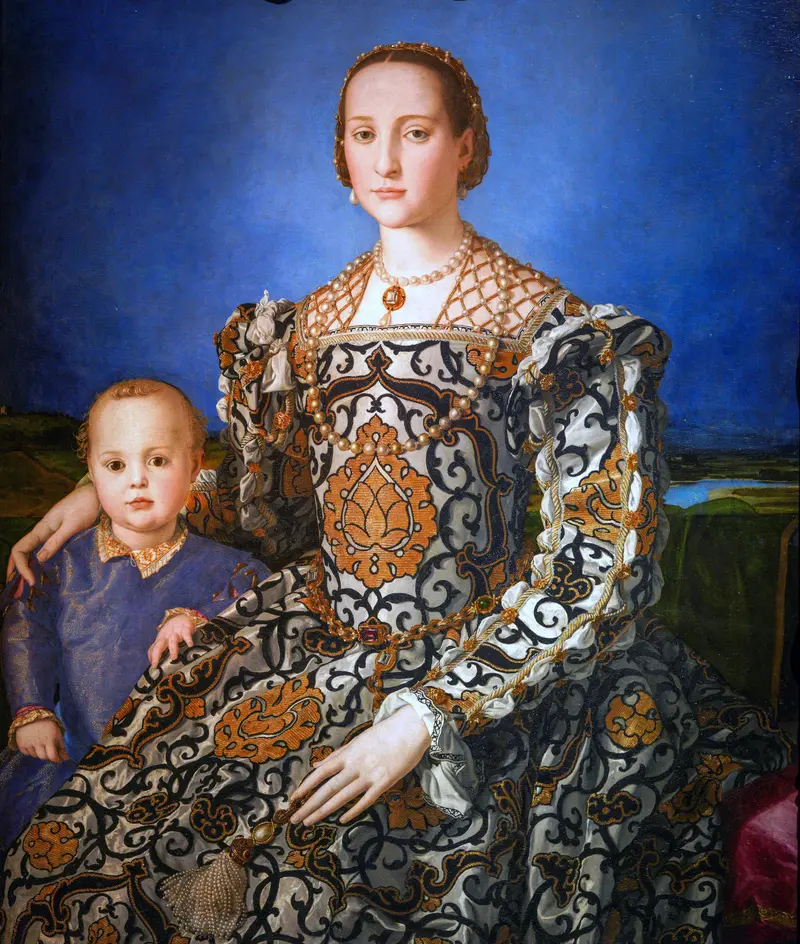
Portrait of Eleanor of Toledo with Her Son Giovanni de’ Medici
Agnolo Bronzino
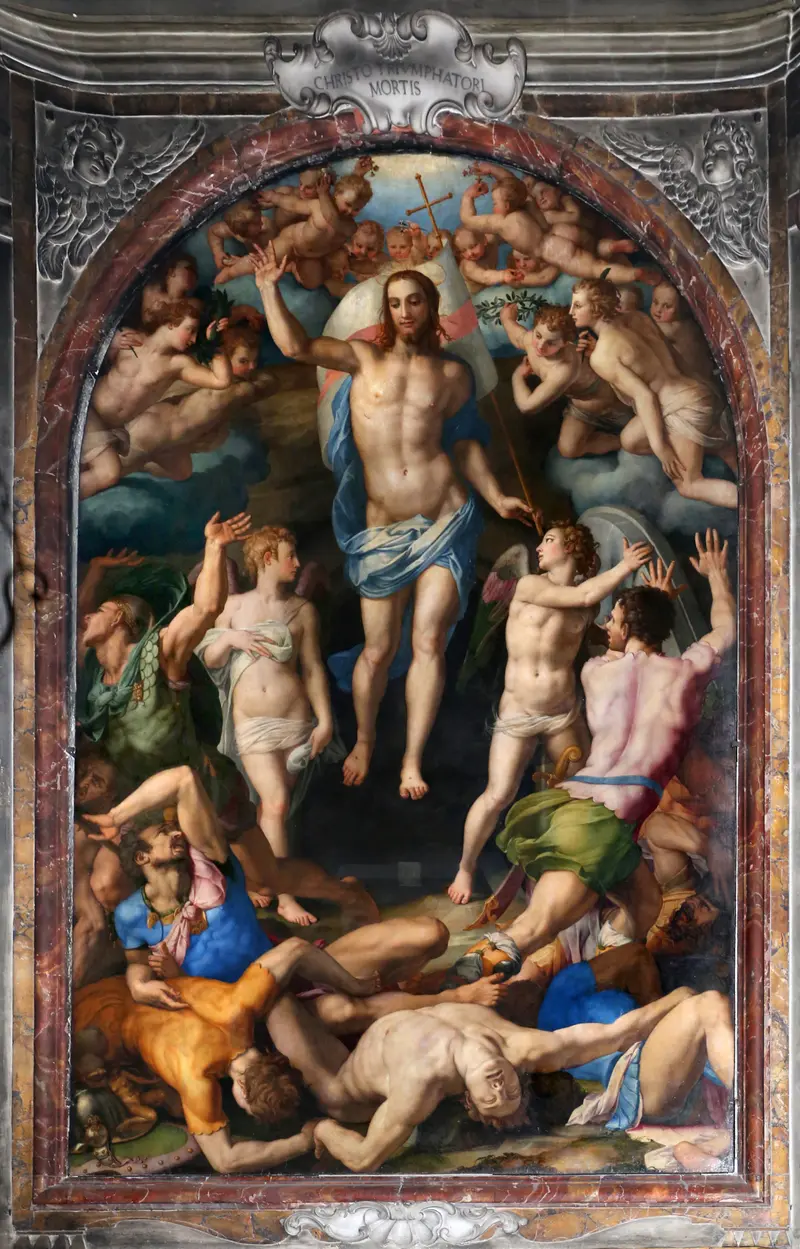
Resurrection Of Christ
Agnolo Bronzino
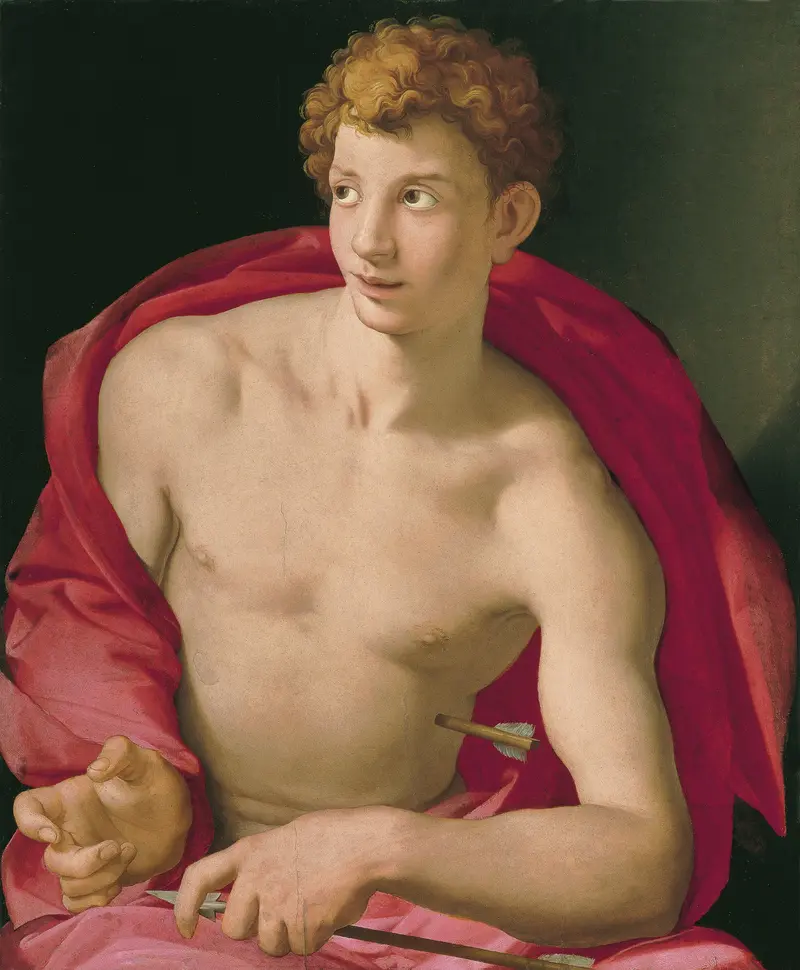
Saint Sebastian
Agnolo Bronzino





