
The Merwede River with the Flight of Hugo Grotius — History & Facts
A river scene unfolds beneath a sky thick with billowing clouds, where the drama is not in storm or battle, but in the quiet tension of movement and escape. Your eye is drawn first to the cluster of boats: one, its sails catching the last light, is heavy with figures, while another, smaller and darker, slips away toward the right edge. The water, brushed with the reflections of hulls and sky, acts as both stage and silent witness.
The painter’s use of light—golden on the sails, cool on the distant towers—guides your gaze from the busy foreground to the looming ship at mid-distance, and finally to the far-off riverbank, where the world seems to wait, uncertain. Every detail, from the flags to the careful arrangement of figures, is there to heighten the sense of a story in motion, a secret crossing at the edge of day. Works like this, painted between 1818 and 1866, belong to a Dutch tradition that prized both the grandeur of the nation’s waterways and the subtlety of human drama. Artists such as Antonie Waldorp found inspiration in the interplay of history and landscape, often for collectors who valued reminders of national pride or personal memory.
The river is not just a backdrop but a character, its openness a symbol of possibility and peril. This painting, now in the collection of Museum Boijmans Van Beuningen, stands as a testament to a period when Dutch painters looked both backward to their Golden Age and forward to new ways of seeing. Let your eyes linger on the horizon—the story here is not just in the boats, but in the space between them.
More Artworks by Antonie Waldorp
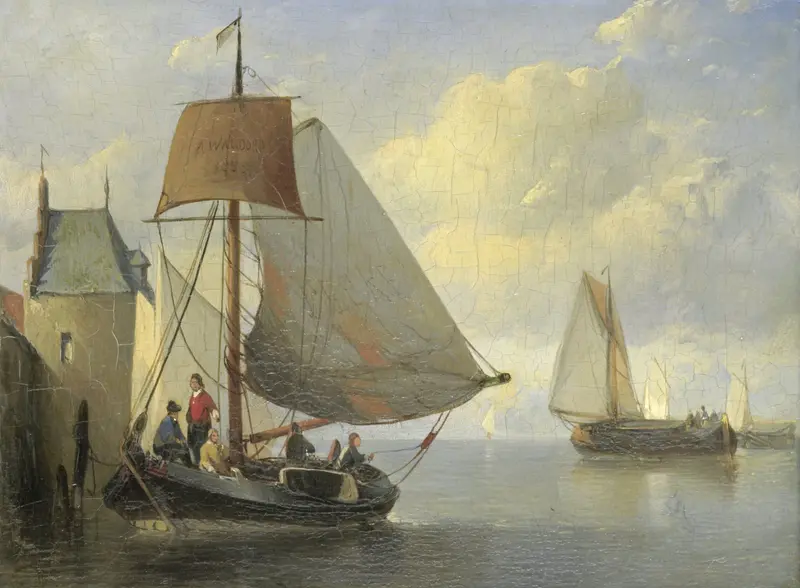
Riviergezicht met een waltoren geïnspireerd op de Camperveerse toren te Veere
Antonie Waldorp
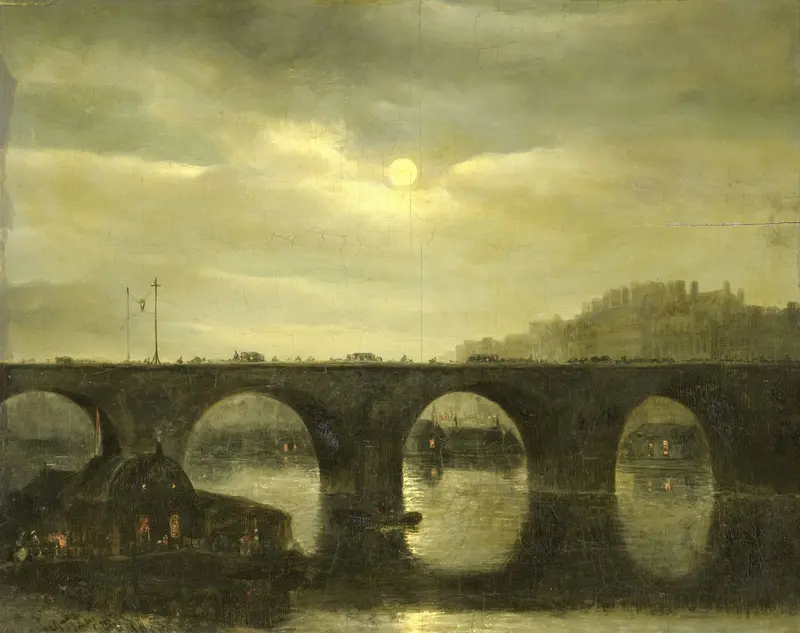
One of the Bridges over the Seine, Paris, in the Moonlight
Antonie Waldorp
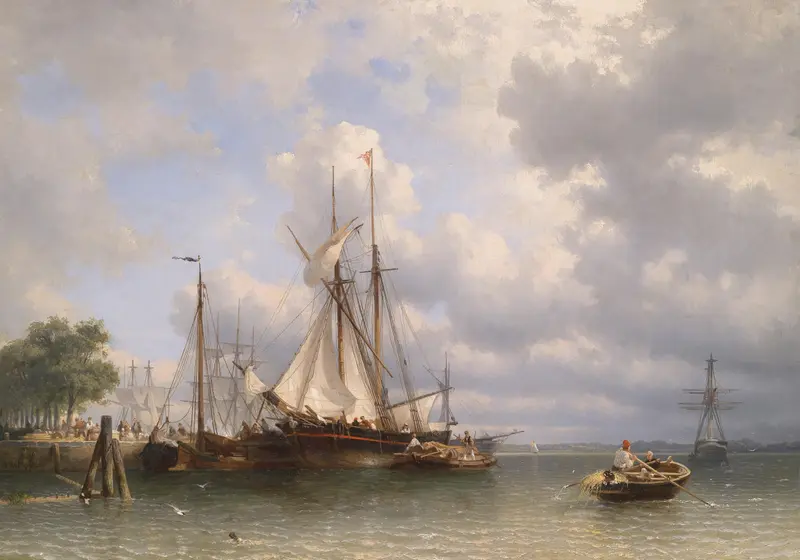
Sailing ships in the harbor
Antonie Waldorp
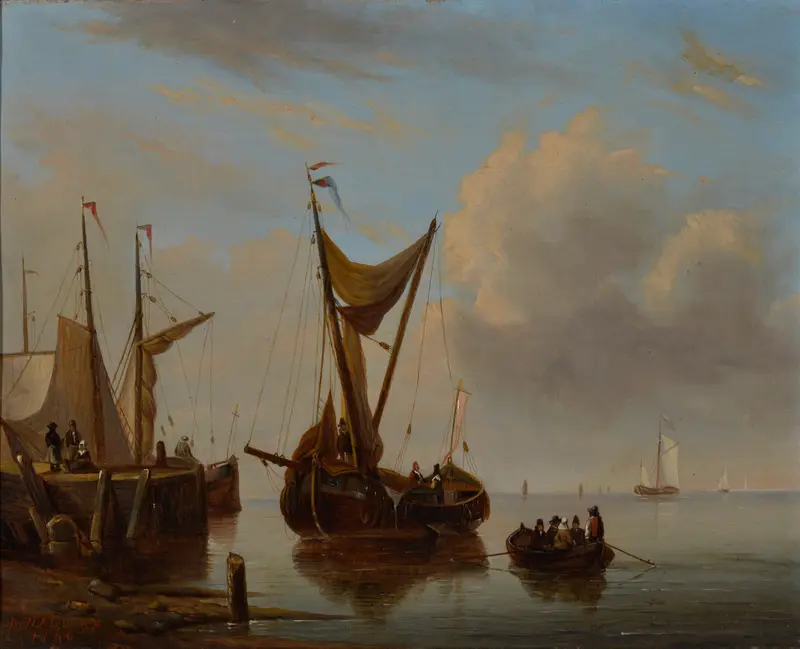
Zeegezicht met schepen DM 012 995 Dordrechts Museum
Antonie Waldorp
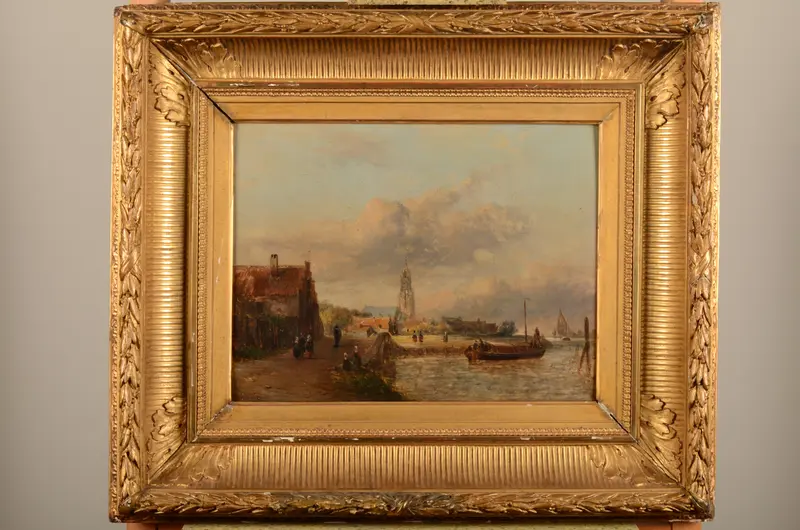
Stadsgezicht 021657 Stedelijk Museum Alkmaar
Antonie Waldorp
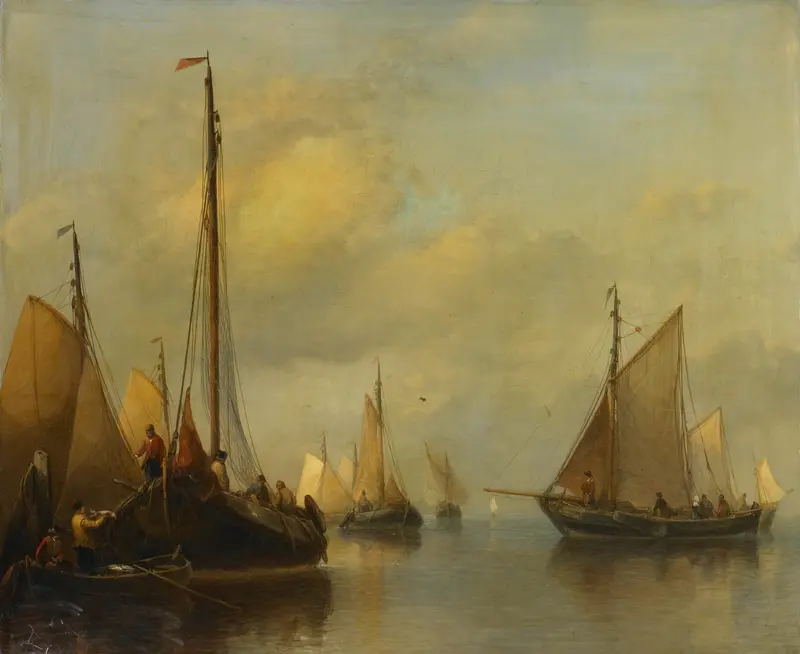
Fishing Boats on calm Water
Antonie Waldorp
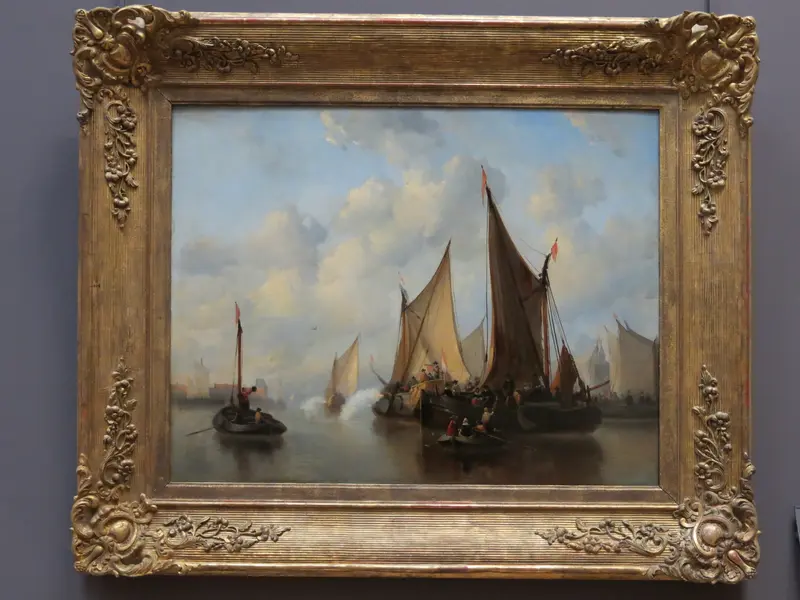
Arrivée de hauts personnages dans un port hollandais (Louvre, MI 90)
Antonie Waldorp
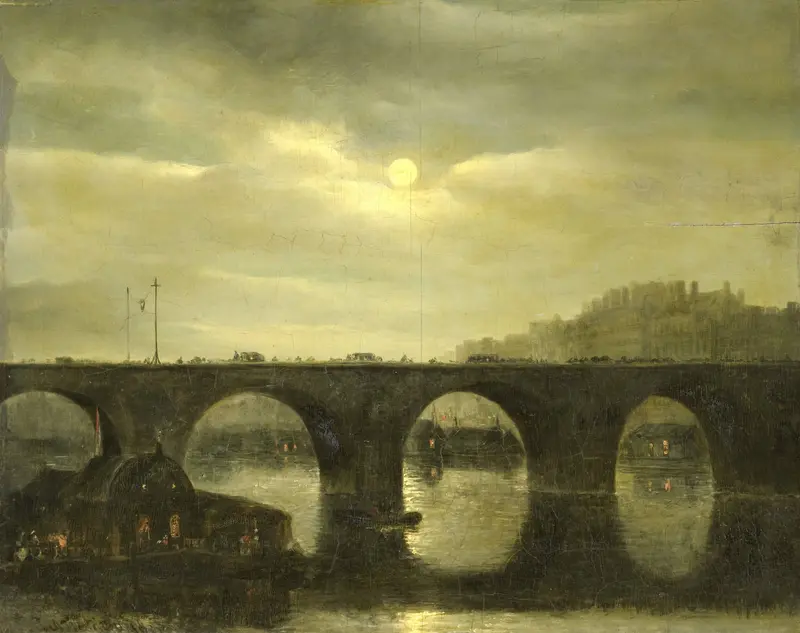
View of a Bridge of the Seine in Paris by Moonlight
Antonie Waldorp
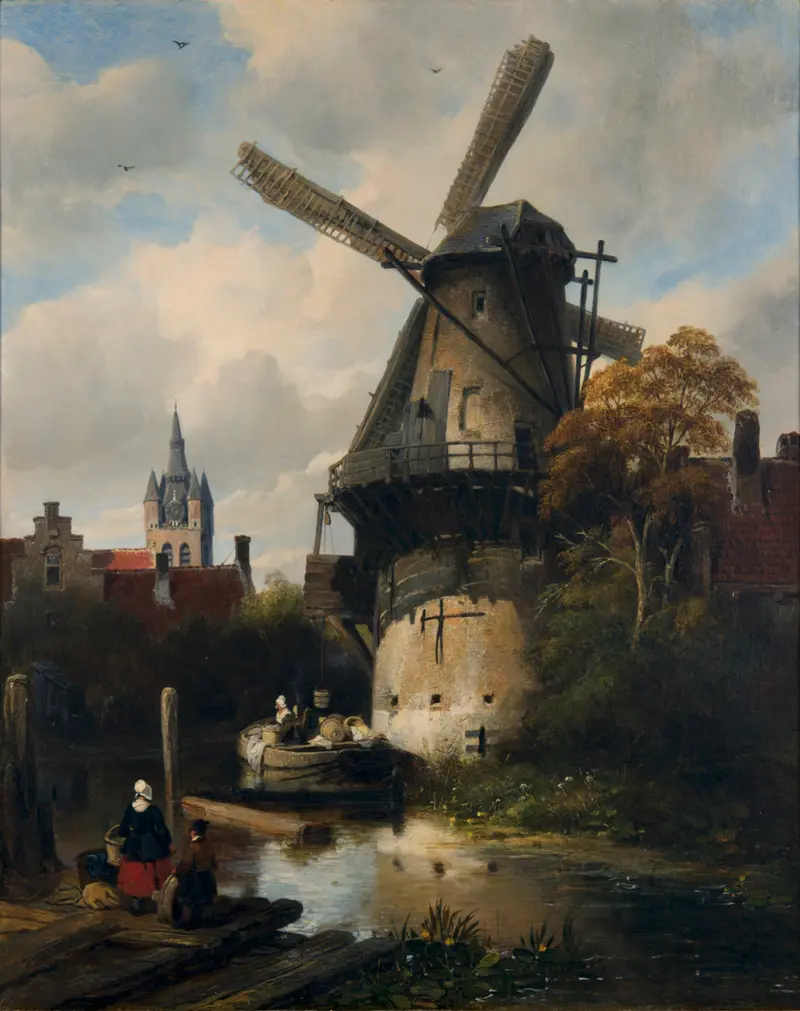
Mill with sight of Delft
Antonie Waldorp

Beurtschip Zaandam
Antonie Waldorp





