The milking shed — History & Facts
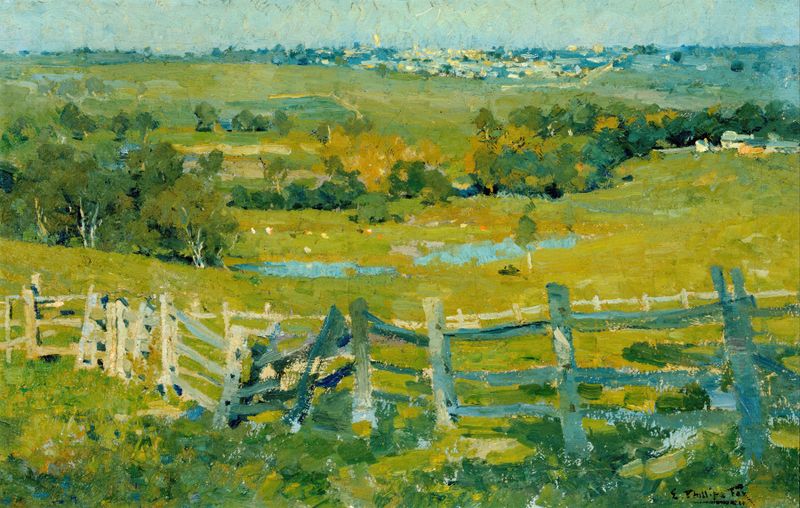
Can paint confess what words never could? In The Milking Shed, the ephemeral act of milking unfurls in a tender hush, where life and mortality entwine in silence. Look to the left, where the soft light streams through the open shed entrance, illuminating the farmer's hands as they tenderly grasp the warm udders of the cow. The delicate brushwork renders every detail—each strand of hay on the ground, the subtle glint of light on the cow's glossy coat, and the gentle curve of the farmer’s back. The hues of earthy browns and sunlit golds create a warm palette, encapsulating a moment both serene and vital. Beyond the evident pastoral scene lies an exploration of human connection to nature and the fragility of life.
The juxtaposition of the farmer's labor with the serene presence of the cow evokes a sense of ritual, reminding us of the delicate balance between sustenance and mortality. The shadows linger at the periphery, hinting at the inevitable cycles that define existence, creating a poignant contrast between the act of nurturing and the fleeting nature of life itself. E Phillips Fox painted this work in 1893 during a period marked by the rise of Australian Impressionism. Living in Melbourne, he was influenced by both European techniques and the local landscape, capturing everyday moments with a fresh, emotive lens.
This artwork emerged while the world was undergoing rapid changes, reflecting not only the beauty of rural life but also an awareness of its impermanence.