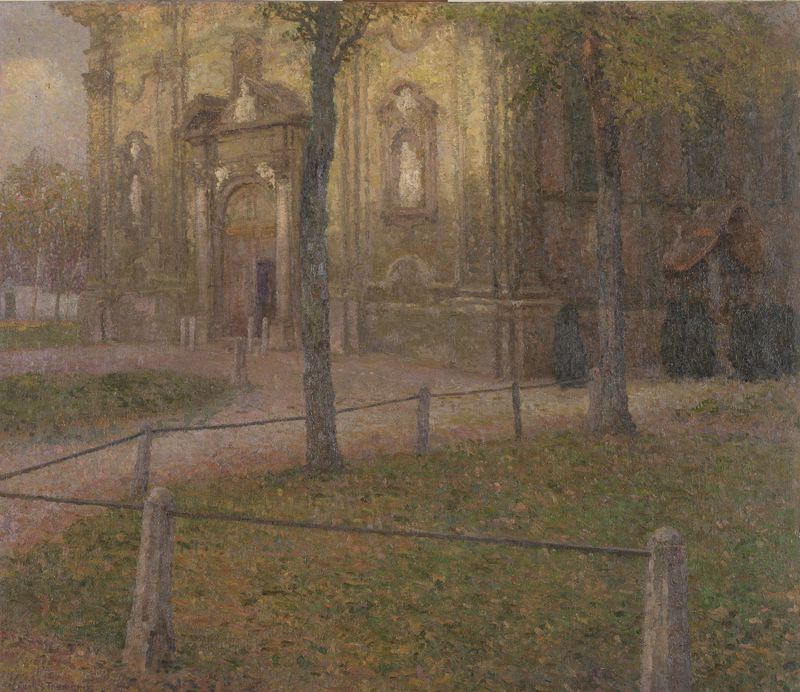
The Morgue (Onze-Lieve-Vrouw Ter Hoye Beguinage in Ghent) — History & Facts
Did the painter know this moment would outlive them? In the hushed stillness of The Morgue, a sense of profound betrayal lingers, revealing the stark intersection of life and death. Focus on the forlorn figure draped in shadows, almost hidden in the stark, whitewashed room. The pallor of the deceased contrasts sharply with the cool gray tones surrounding them, creating a chilling atmosphere. Look closely at the way the soft light spills over the lifeless form, accentuating the delicate folds of fabric while casting deep shadows that suggest stories untold.
The meticulous attention to detail in texture invites the viewer to feel the weight of loss, reinforcing the isolation of the scene. Betrayal permeates the air, evident not only in the stillness of death but also in the juxtaposition of life just beyond the thin walls. The figures of the living are mere silhouettes, their presence barely acknowledged yet hauntingly persistent. Perhaps they embody the unspoken tensions that arise in the face of mortality, echoing the silent stories of those left behind.
There’s a painful contrast between the serene acceptance of death and the unresolved conflicts that may linger among the living. In 1899, Carolus Tremerie created this evocative piece while navigating the changing tides of Belgian art, marked by the emergence of Symbolism. Living in Ghent, a city steeped in rich history and burgeoning artistic expression, he found inspiration in the interplay of ethereal themes and stark realities. This work serves as a poignant reflection on both the fragility of existence and the silent betrayals we endure in the shadows of our lives.