
The Mosque Doorway, Cairo — History & Facts
In the stillness of the portrayed doorway, a haunting obsession unfolds, inviting the viewer to step closer and unlock its secrets. Look to the left at the intricately carved archway, where the shadows dance delicately across the textured stone, revealing the craftsmanship that speaks of centuries past. The warm hues of ochre and deep sienna evoke the sun-baked walls of Cairo, while a whisper of teal hints at the lush life beyond the doorway. The composition draws the eye inward, creating a sense of depth that lures you into the mosque's sacred space, inviting contemplation and reverence. Within the painting lies a tension between the solidity of the stone and the ethereal light that spills through the arch.
Notice how the interplay of light and shadow mirrors the duality of the physical and the spiritual, hinting at a world just out of reach. The doorway becomes a threshold, not just between two spaces, but between the known and the unknown, compelling the viewer to consider what lies beyond and the obsession of the quest for understanding. David Young Cameron painted The Mosque Doorway in 1910 during a transformative period in art history. Living in Scotland, he was immersed in the Arts and Crafts movement, which emphasized traditional craftsmanship and a connection to nature.
This work reflects both his skill in capturing architectural beauty and the growing fascination with Eastern aesthetics that characterized the early 20th century, marking a moment of cultural dialogue and exploration.
More Artworks by David Young Cameron
Browse all →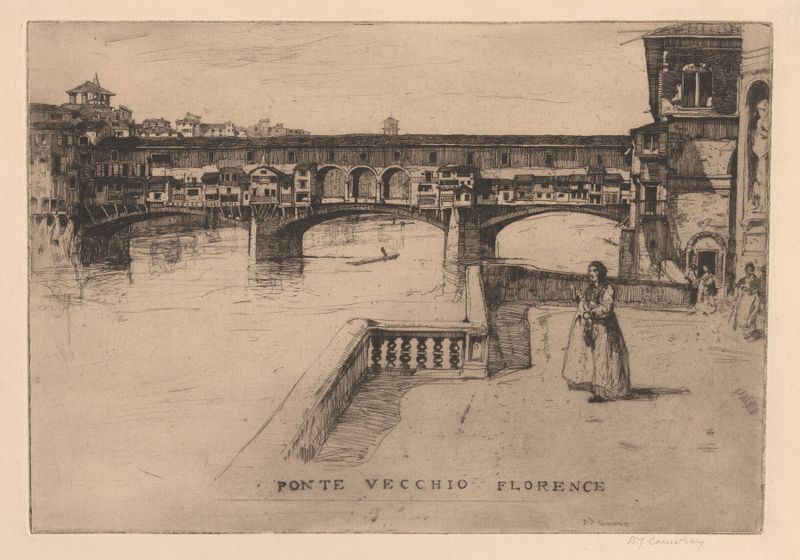
Ponte Vecchio
David Young Cameron

The Deanery, Winchester
David Young Cameron
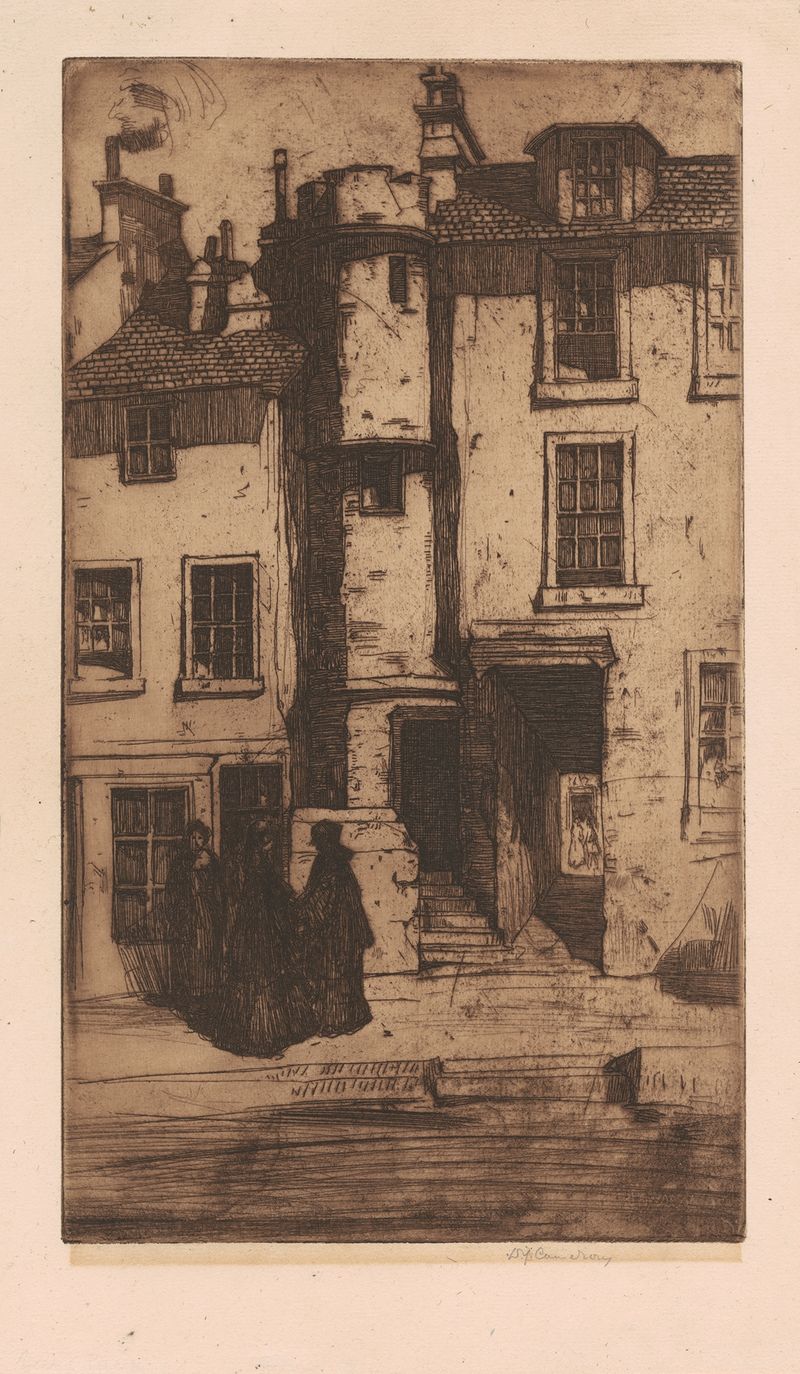
Old Houses, Stirling
David Young Cameron
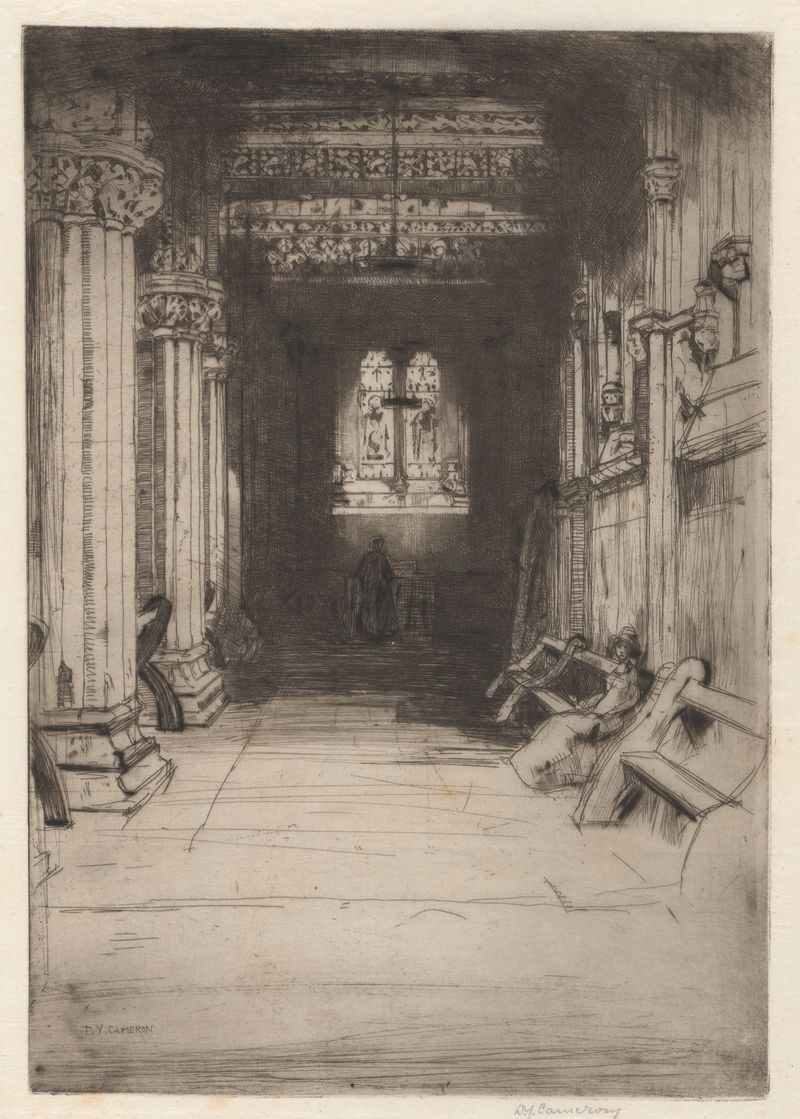
Rosslyn Chapel
David Young Cameron

The Old Museum, Beauvais
David Young Cameron
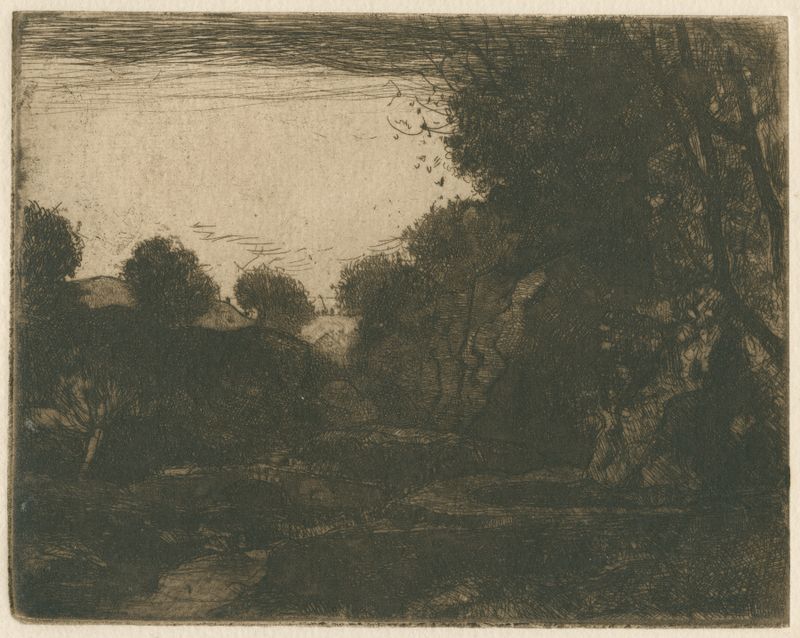
On the Bradford
David Young Cameron

The Smithy
David Young Cameron
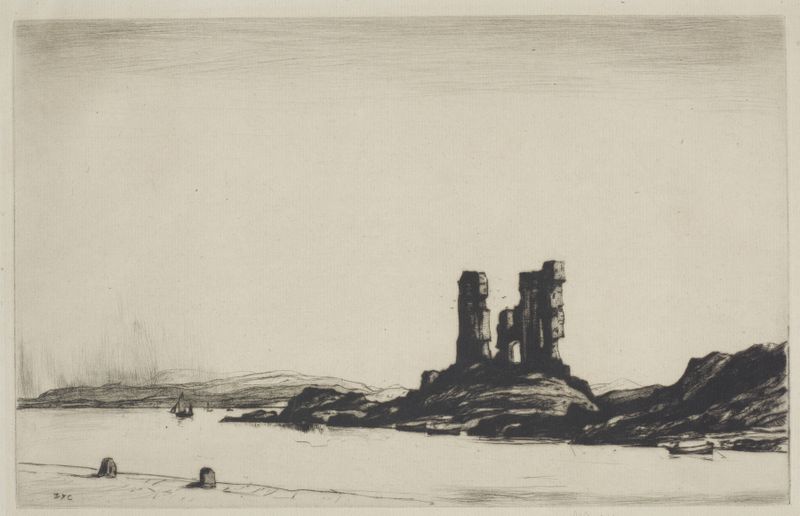
Castle Moyle
David Young Cameron
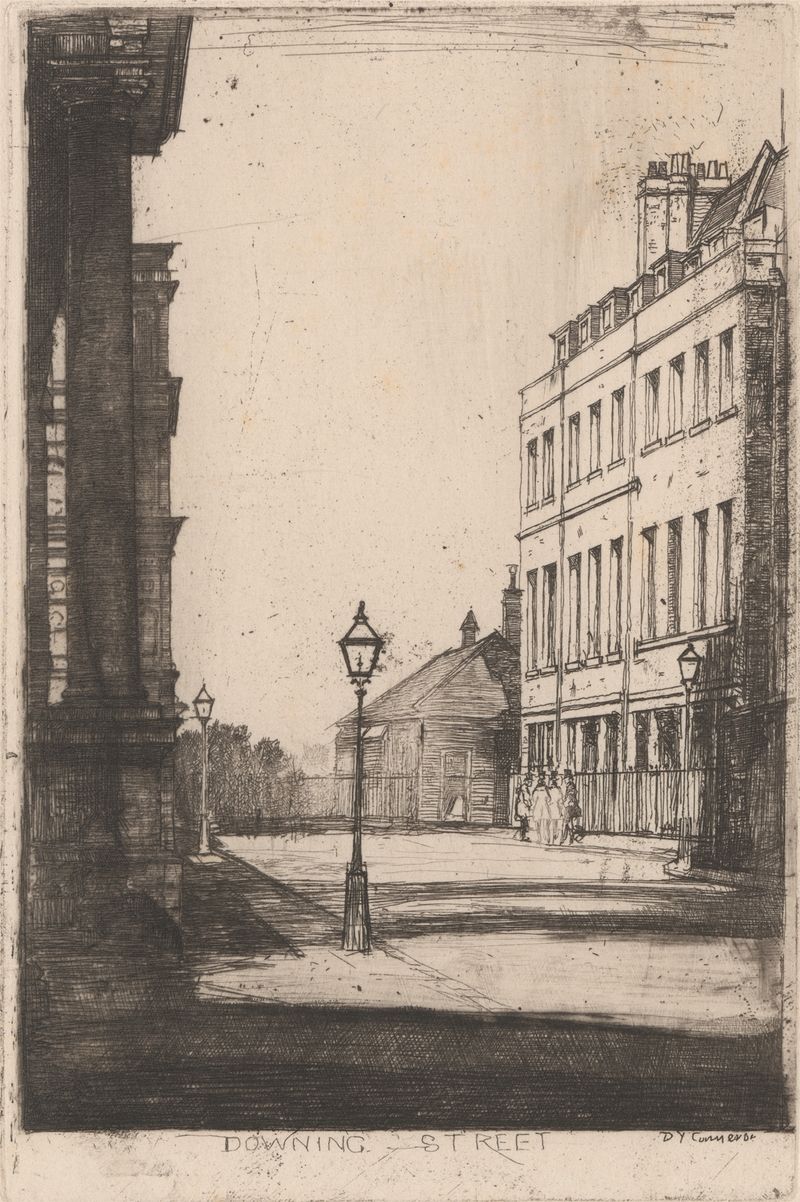
Downing Street
David Young Cameron

Glasgow Cathedral
David Young Cameron
More Architecture Art
Browse all →
The statue of Liberty
Frédéric Auguste Bartholdi

View of Houses in Delft, Known as ‘The Little Street’
Johannes Vermeer

View of Houses in Delft, Known as ‘The Little Street’
Johannes Vermeer

The Cathedral in Rouen. The portal, Grey Weather
Claude Monet

The yellow house
Vincent van Gogh

The Church in Auvers-sur-Oise, View from the Chevet
Vincent van Gogh