
The Mouth of a Cave — History & Facts
Who listens when art speaks of silence? The stillness captured in this moment invites reflection, urging us to explore the depths of both the cave and our own thoughts. Look to the left at the rocky entrance, where shadows dance against the textured surface, creating an alluring contrast between light and darkness. Notice how the sunlight spills into the cave, illuminating a narrow path while hinting at the mysteries that lie within. The delicate brushwork and muted colors enhance the sense of tranquility, drawing the viewer's eye deeper into the composition. Amidst the serene landscape, there lies a tension between the known and the unknown.
The cave’s mouth serves as a metaphor for introspection, suggesting that discovery comes from within rather than from the external world. The juxtaposition of the lush greenery surrounding the entrance with the ominous darkness inside creates a compelling dialogue about curiosity and fear. Each detail—from the gentle slope of the hill to the distant figures—invites contemplation on the intersection of nature and human experience. In 1784, the artist crafted this piece during a period marked by the rise of neoclassicism and romanticism, exploring the evocation of emotion through landscapes.
Operating primarily in Paris, Robert was influenced by the burgeoning interest in naturalism and the sublime. This work reflects not only the artist's personal explorations but also the broader artistic movement striving to balance nature's beauty with the profound silence it often holds.
More Artworks by Hubert Robert
Browse all →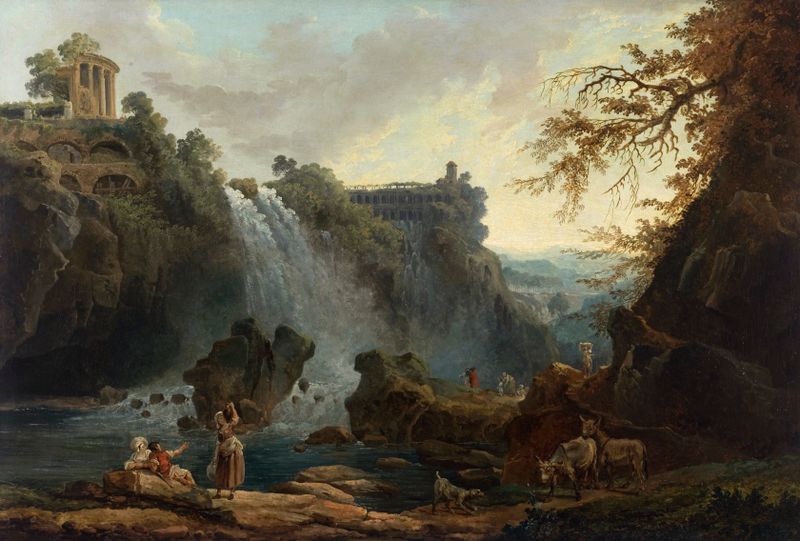
Les Cascatelles de Tivoli
Hubert Robert
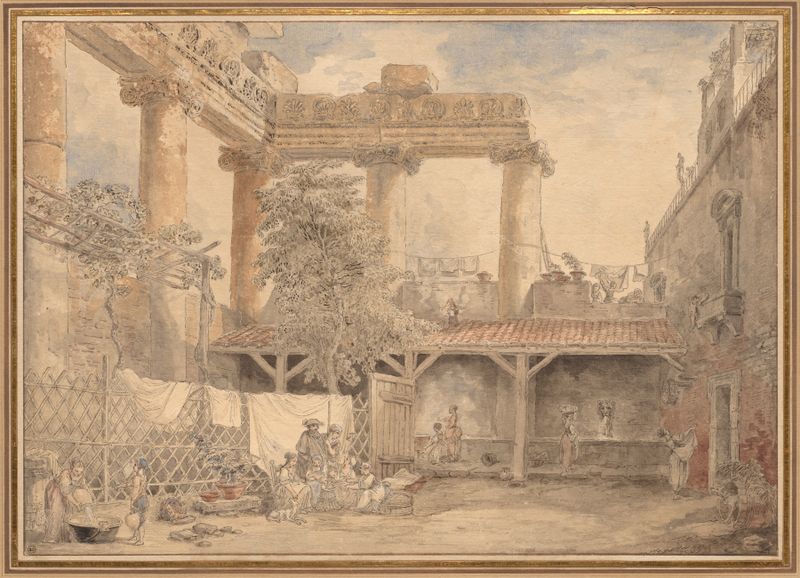
Roman Ruins, Villa Pamfili
Hubert Robert

The Rustic Bridge, Château de Méréville, France
Hubert Robert

The Portico of a Country Mansion
Hubert Robert

Architectural Capriccio
Hubert Robert

The Obelisk
Hubert Robert
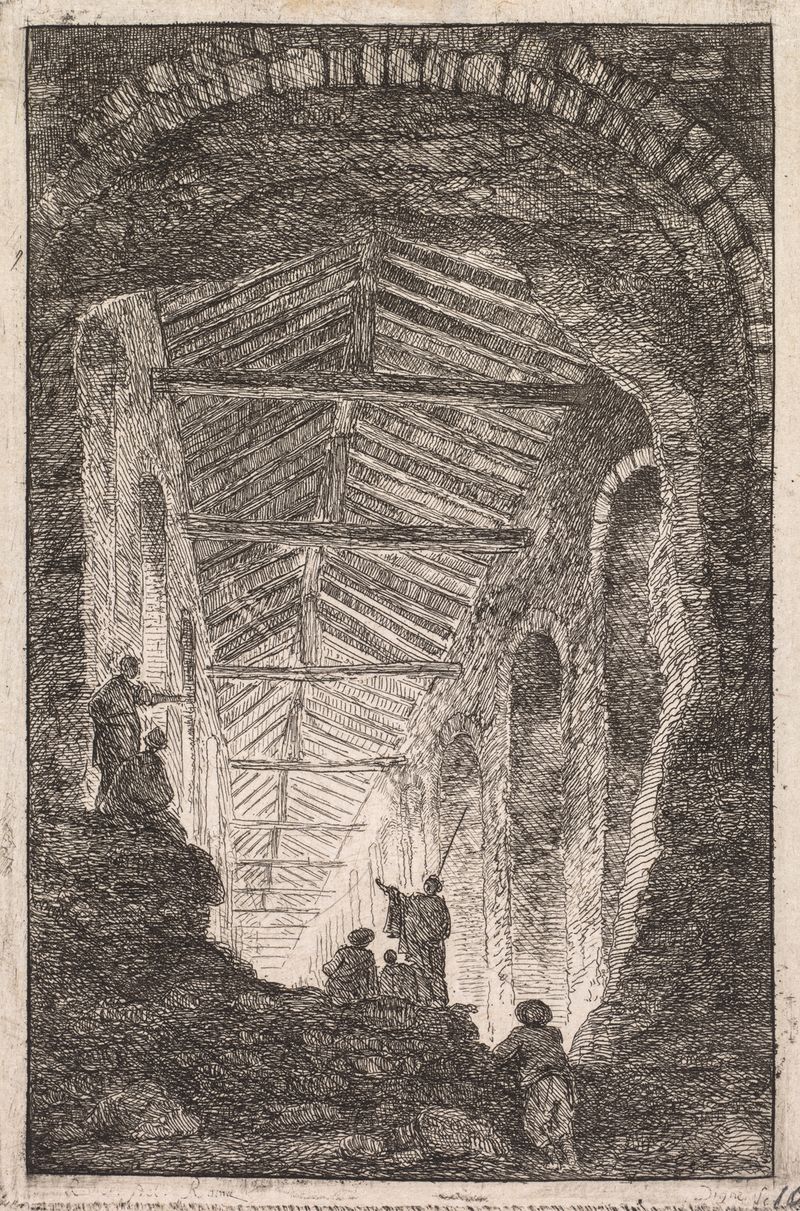
The Antique Gallery
Hubert Robert

L’incendie de l’Opéra, vu des jardins du Palais-Royal, le 8 juin 1781
Hubert Robert
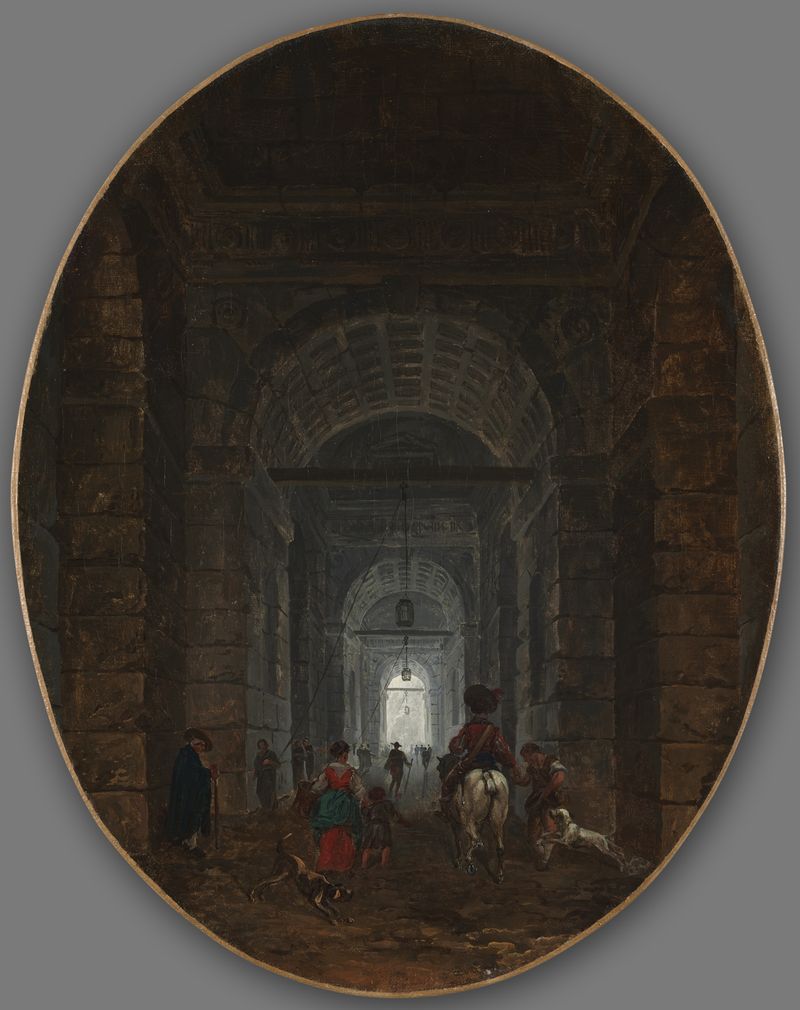
The Grotto of Posillipo
Hubert Robert

Architectural Capriccio with ruins of the Temple of Saturn and the Colosseum in the background
Hubert Robert





