
The Navy’s Frigate ‘Rotterdam’ on the Maas off Rotterdam — History & Facts
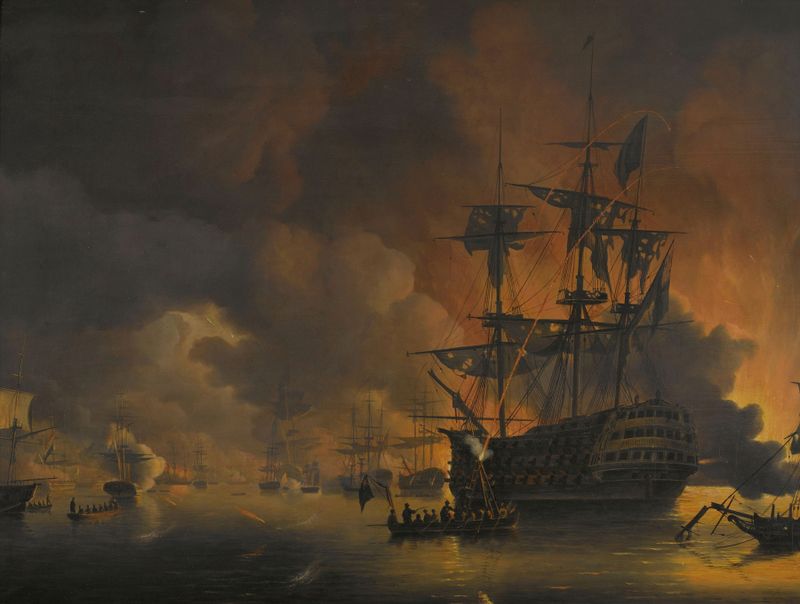
The violent dance of the sea, with its turbulent waves and the ship’s unyielding resilience, evokes a sense of struggle and beauty intertwined. Within this dynamic tableau, one can sense the weight of the water and the strength of the vessel — a testament to humanity's desire to conquer nature's fury. Look closely at the foreground, where the ship, the frigate Rotterdam, stands proud against the backdrop of roiling waters. The sails are taut, capturing the wind as if in a fierce embrace.
Notice how the artist uses a palette of deep blues and whites, contrasting the ominous clouds overhead with the ship's determined posture. The strokes are both rigorous and fluid, merging the turmoil of the sea with the steadfastness of the frigate, invoking a palpable tension between chaos and control. Delve deeper into the work, and you might discern the emotional undercurrents that flow beneath the surface. The juxtaposition of the ship's solidity against the ever-shifting waters serves as a metaphor for resilience in the face of uncertainty.
The chaotic sky, swirling with hues of gray, hints at the stormy nature of existence itself, while the ship symbolizes human endeavor and courage amidst adversity. This interplay of elements invites contemplation of our relationship with the natural world, revealing the delicate balance of power and vulnerability. In 1807, Nicolaas Baur created this piece during a time of significant naval activity and conflict in Europe. The early 19th century was marked by naval rivalries and the rise of maritime power, as countries sought dominance over the seas.
Baur, an accomplished marine painter in the Netherlands, drew inspiration from the tumultuous spirit of his time, capturing not just a moment but the essence of an era defined by conflict and exploration.
More Artworks by Nicolaas Baur
Browse all →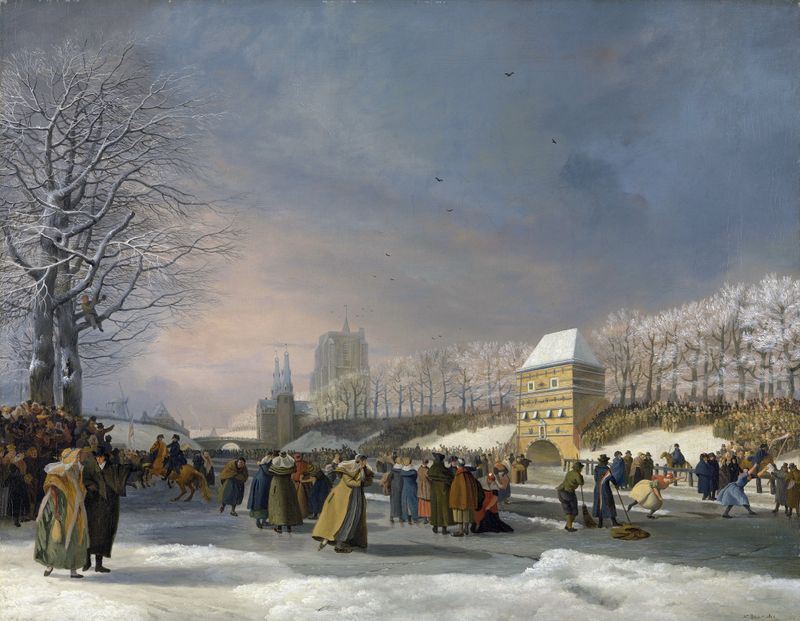
Women’s Skating Competition on the Stadsgracht in Leeuwarden, 21 January 1809
Nicolaas Baur
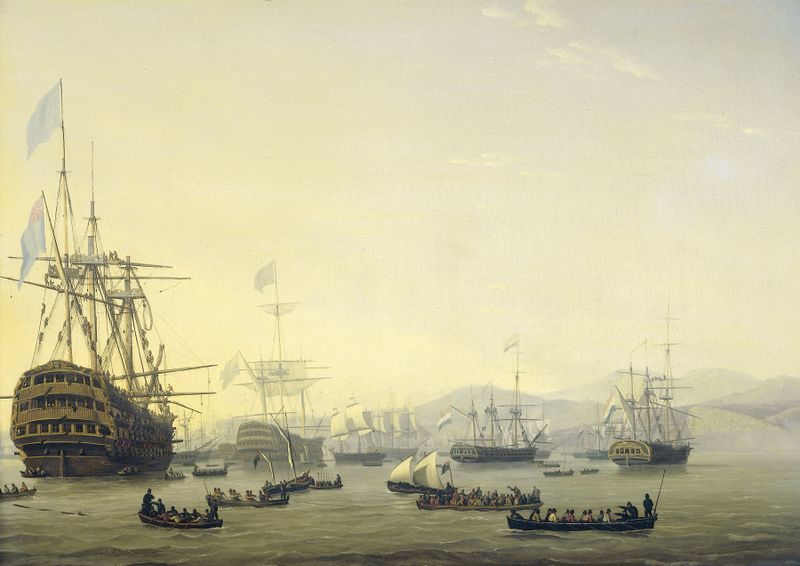
Council of War on board the ‘Queen Charlotte’, commanded by Lord Exmouth, prior to the Bombardment of Algiers, 26 August 1816
Nicolaas Baur
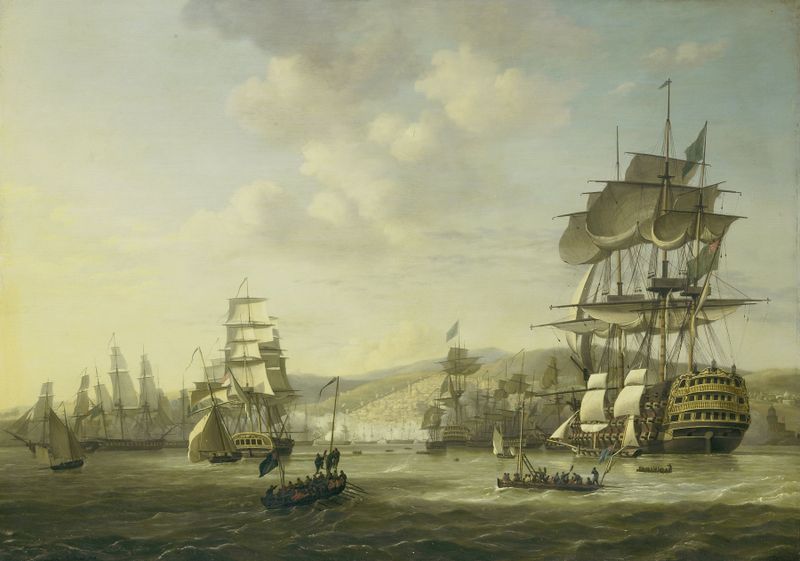
The Anglo-Dutch Fleet in the Bay of Algiers Backing up the Ultimatum to Release the Christian Slaves, 26 August 1816
Nicolaas Baur
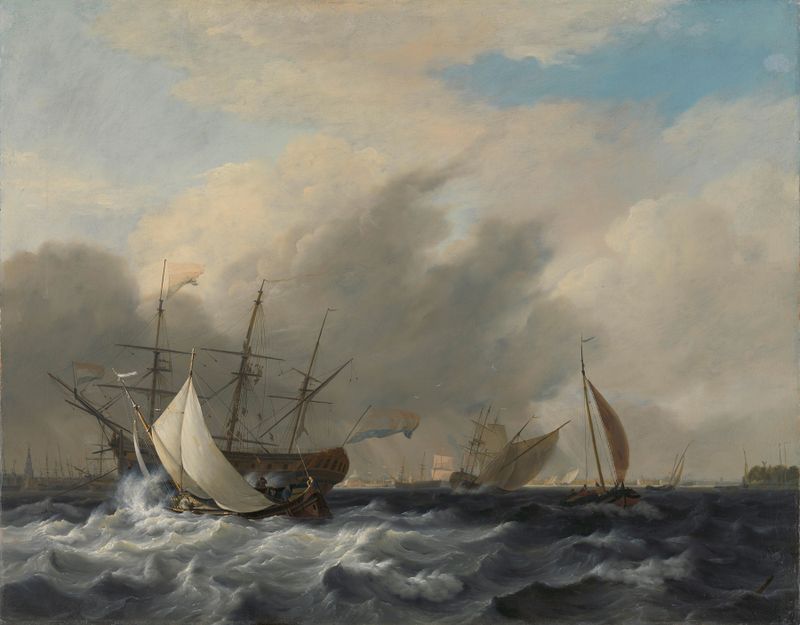
The Navy’s Man-of-War ‘Amsterdam’off the Westerlaag on Y at Amsterdam
Nicolaas Baur
The fire on the Wharves of Algiers, shortly after the commencement of the Bombardment by the Anglo-Dutch Fleet, 27 August 1816
Nicolaas Baur





