
Council of War on board the ‘Queen Charlotte’, commanded by Lord Exmouth, prior to the Bombardment of Algiers, 26 August 1816 — History & Facts
Where does light end, and longing begin? In Council of War on board the ‘Queen Charlotte’, the interplay of hope and impending conflict breathes life into a moment steeped in historical weight. Look to the center of the canvas, where the figures of naval officers gather, deep in discussion. The soft, diffused light illuminates their faces, revealing a spectrum of emotions: determination mingled with apprehension. Notice how the tension is palpable, as each gesture—hands raised in argument or furrowed brows—portrays the gravity of their impending decision.
The rich, dark tones of the ship’s wood contrast sharply against the bright glimmer of gold and brass, emphasizing the solemn nature of this council. Within this scene lies a poignant duality; the officers’ unity is juxtaposed with the isolation of their purpose. The heavy, billowing sails above them symbolize both the promise of victory and the uncertainty of war. Each face tells a story of personal sacrifice, hinting at the toll that such a command will take on their lives.
The shadows cast by the sails seem to echo the weight of their collective responsibility, creating an emotional tension that reverberates through time. Nicolaas Baur painted this significant piece in 1818, capturing a pivotal moment leading up to the Bombardment of Algiers in 1816. At that time, Baur was navigating the complex landscapes of European art, which were heavily influenced by political upheaval and national pride. This painting not only reflects the strategic military discussions of the era but also embodies the artist's struggle to balance dramatic narrative with historical accuracy.
More Artworks by Nicolaas Baur
Browse all →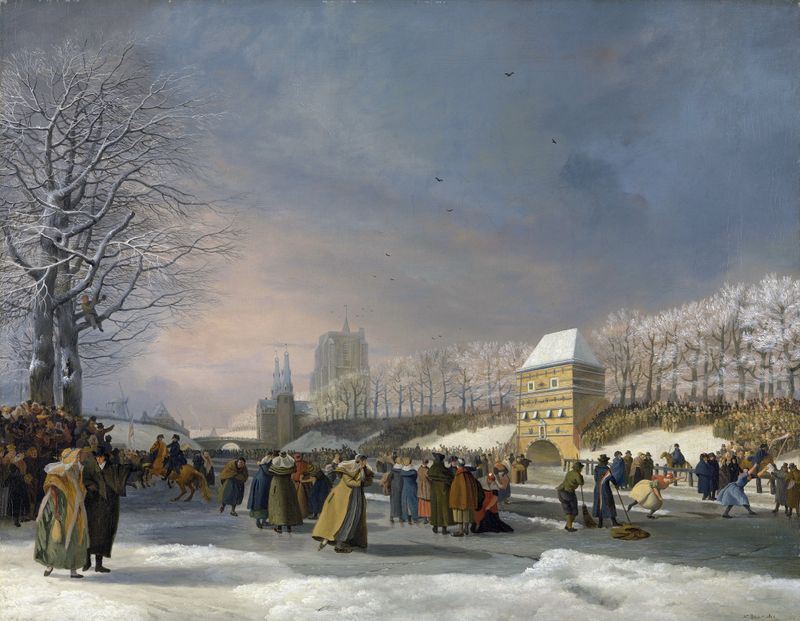
Women’s Skating Competition on the Stadsgracht in Leeuwarden, 21 January 1809
Nicolaas Baur
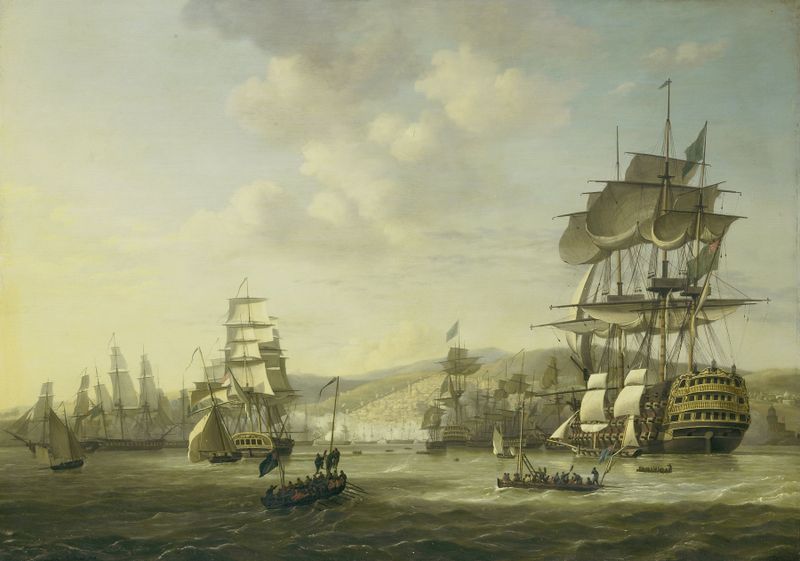
The Anglo-Dutch Fleet in the Bay of Algiers Backing up the Ultimatum to Release the Christian Slaves, 26 August 1816
Nicolaas Baur
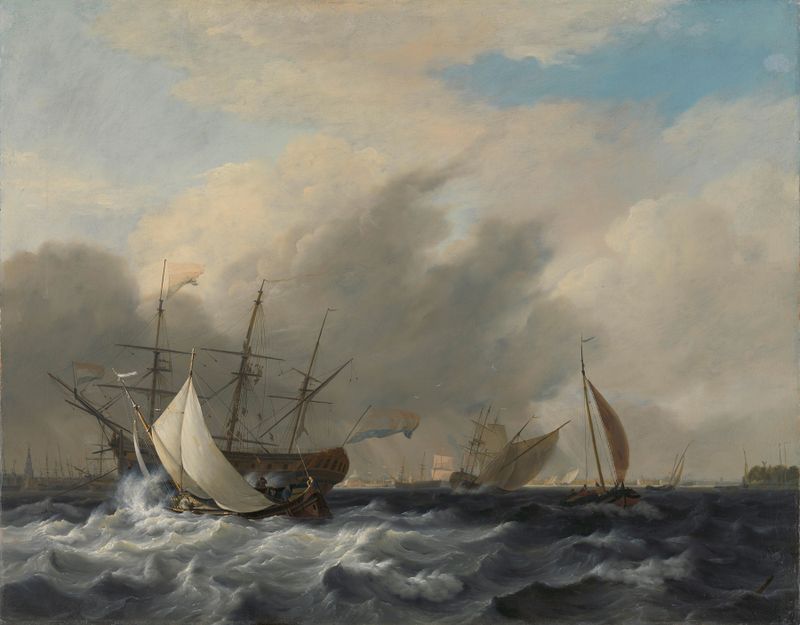
The Navy’s Man-of-War ‘Amsterdam’off the Westerlaag on Y at Amsterdam
Nicolaas Baur
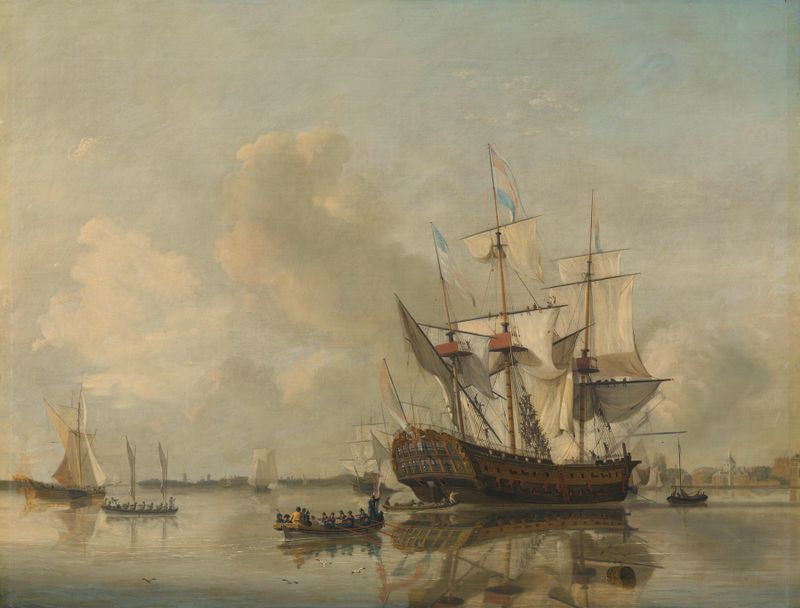
The Navy’s Frigate ‘Rotterdam’ on the Maas off Rotterdam
Nicolaas Baur
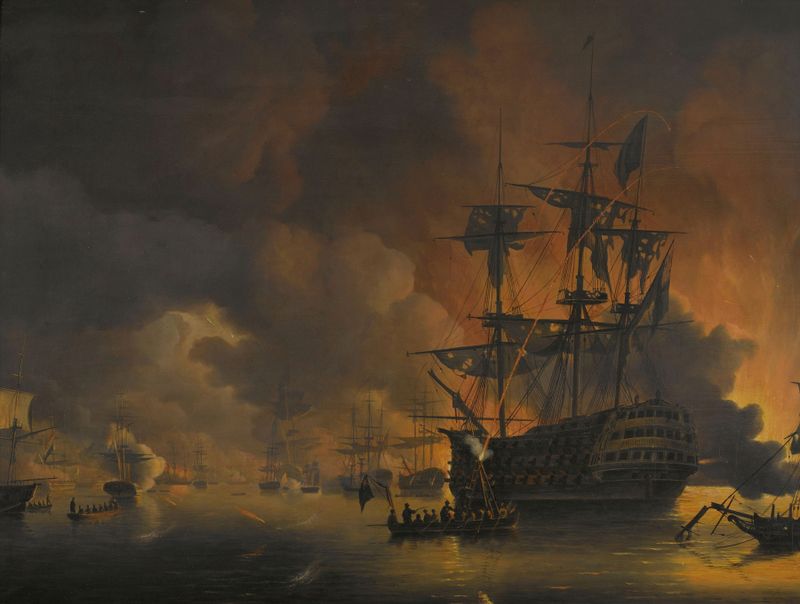
The fire on the Wharves of Algiers, shortly after the commencement of the Bombardment by the Anglo-Dutch Fleet, 27 August 1816
Nicolaas Baur
More Historical Art
Browse all →
The Night Watch Militia Company of District II under the Command of Captain Frans Banninck Cocq
Rembrandt van Rijn

Lincoln Memorial
Henry Bacon

The Third of May 1808
Francisco de Goya

Isaac and Rebecca, Known as ‘The Jewish Bride’
Rembrandt van Rijn

The Charge of the Mamelukes (1814)
Francisco de Goya

De vier ruiters van de apocalyps
Albrecht Dürer