
The Anglo-Dutch Fleet in the Bay of Algiers Backing up the Ultimatum to Release the Christian Slaves, 26 August 1816 — History & Facts
When did color learn to lie? It whispers of battles fought and the silent cries of captives yearning for freedom, entwining hope with despair in a single frame. The canvas encapsulates a moment steeped in moral complexity, where the vibrant hues of the sea and sky contrast starkly with the plight of the enslaved. Focus on the foreground, where the ships of the Anglo-Dutch fleet loom large, their sails billowing against a backdrop of dynamic clouds. The meticulous brushwork captures the intricate details of rigging and hull, inviting your gaze to wander along the gleaming waves reflecting sunlight.
The use of saturated blues and golds amplifies the majesty of the fleet, yet hints at an underlying tension — the juxtaposition of beauty and brutality in this historical setting. As you delve deeper, the emotional weight of the scene reveals itself. The ships symbolize both power and a desperate call for justice, while the distant horizon suggests the unresolved fate of the Christian slaves. There’s a palpable yearning that transcends the immediate action; it invites contemplation of sacrifice, freedom, and the moral dilemmas faced in warfare.
Each stroke embodies the uncertainty intertwined with hope, illustrating the fine line between action and inaction. Created in 1818, this artwork emerged during a time of political upheaval in Europe, where concerns over slavery began to intersect with naval power dynamics. Baur painted this piece after the Anglo-Dutch fleet's intervention in Algiers, an event meant to pressure the local rulers into releasing captives. This historical context not only shaped the subject matter but also reflects a broader movement in art, as narratives of social justice began to find their way into the public consciousness.
More Artworks by Nicolaas Baur
Browse all →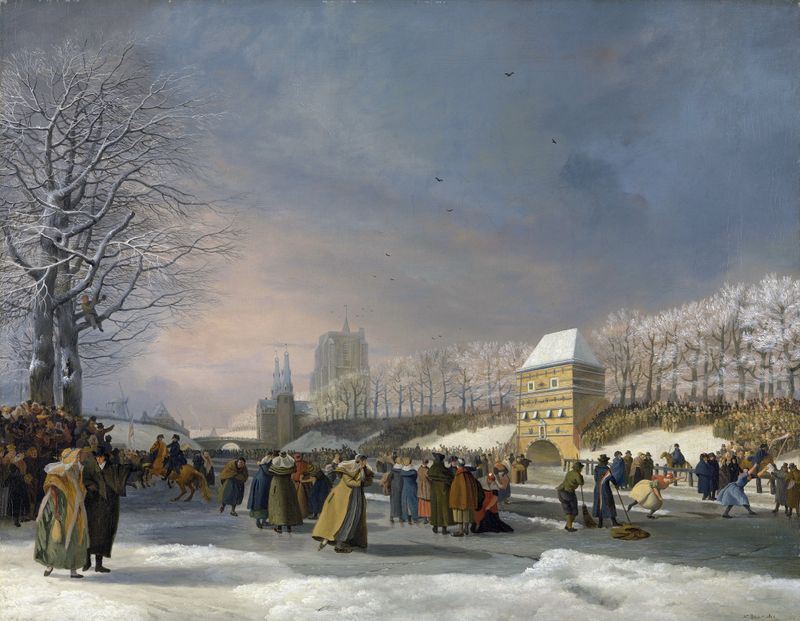
Women’s Skating Competition on the Stadsgracht in Leeuwarden, 21 January 1809
Nicolaas Baur
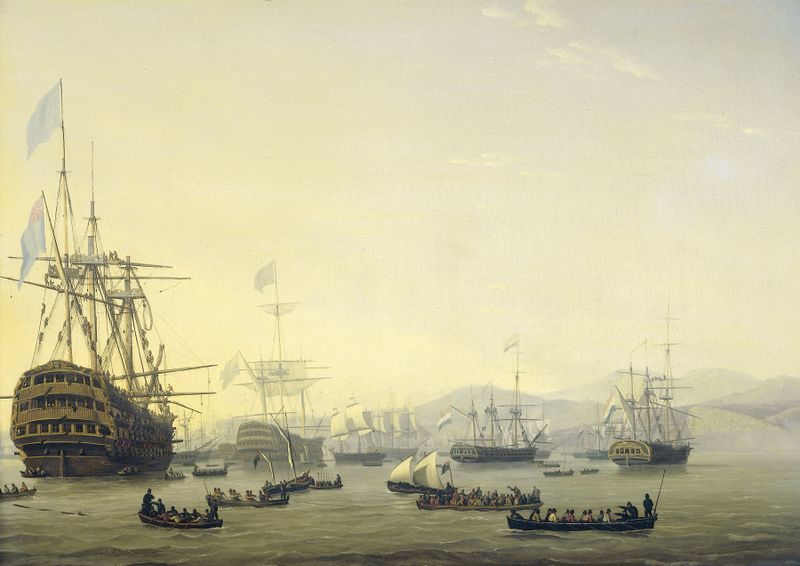
Council of War on board the ‘Queen Charlotte’, commanded by Lord Exmouth, prior to the Bombardment of Algiers, 26 August 1816
Nicolaas Baur
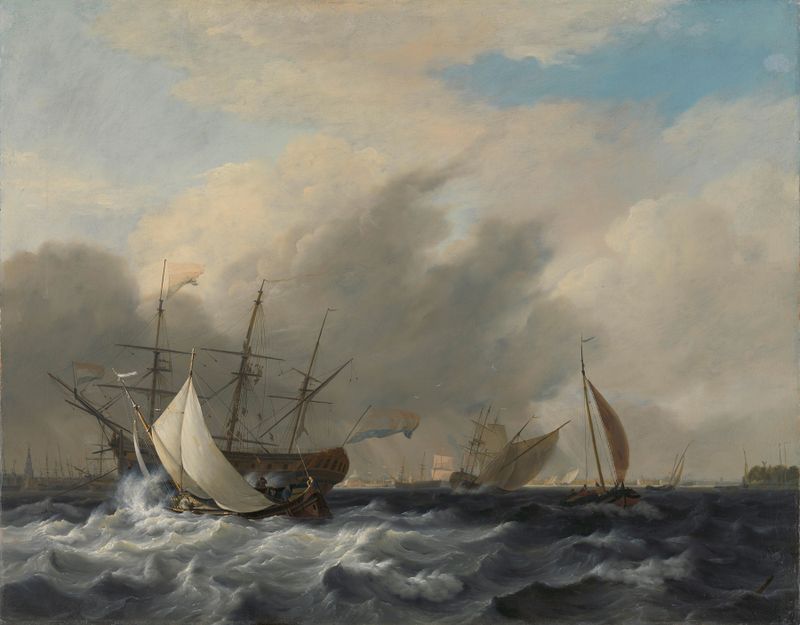
The Navy’s Man-of-War ‘Amsterdam’off the Westerlaag on Y at Amsterdam
Nicolaas Baur
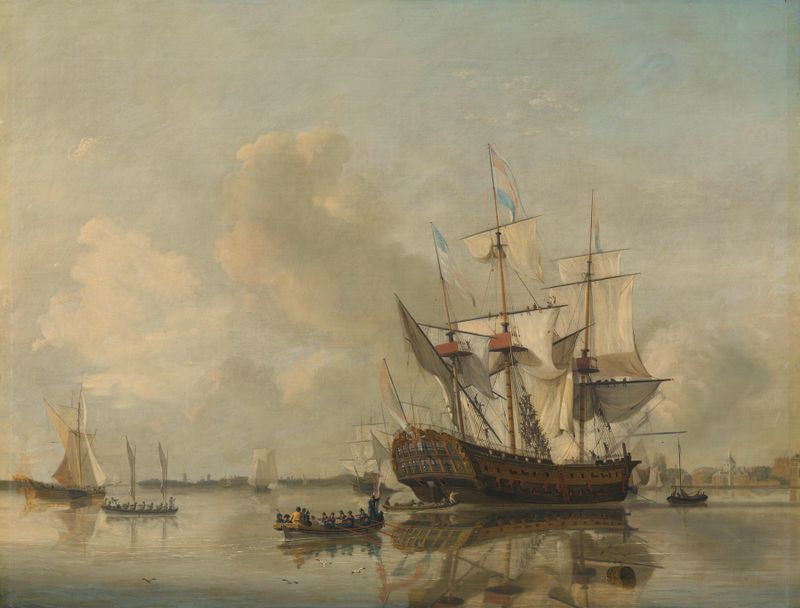
The Navy’s Frigate ‘Rotterdam’ on the Maas off Rotterdam
Nicolaas Baur
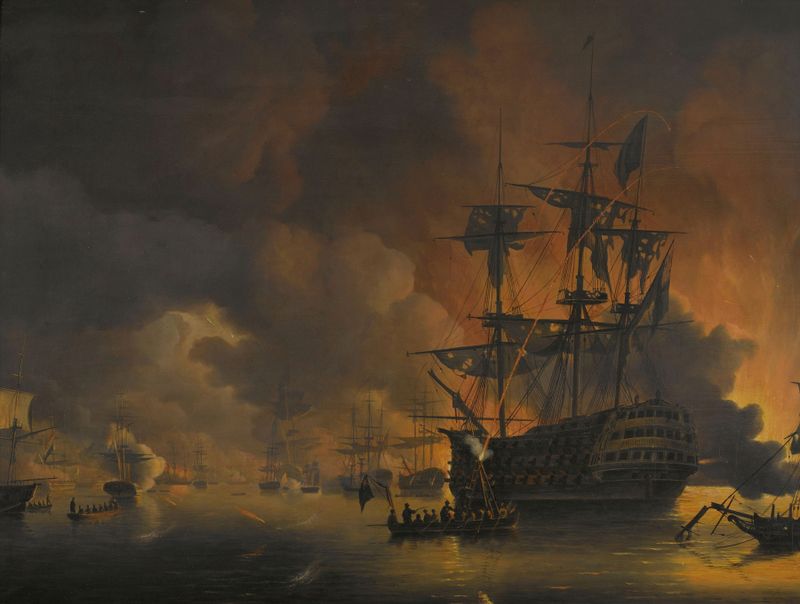
The fire on the Wharves of Algiers, shortly after the commencement of the Bombardment by the Anglo-Dutch Fleet, 27 August 1816
Nicolaas Baur
More Historical Art
Browse all →
The Night Watch Militia Company of District II under the Command of Captain Frans Banninck Cocq
Rembrandt van Rijn

Lincoln Memorial
Henry Bacon

The Third of May 1808
Francisco de Goya

Isaac and Rebecca, Known as ‘The Jewish Bride’
Rembrandt van Rijn

The Charge of the Mamelukes (1814)
Francisco de Goya

De vier ruiters van de apocalyps
Albrecht Dürer