
The Nymphaeum of the Villa di Papa Giulio, Rome — History & Facts
When did color learn to lie? The allure of vibrancy often masks a deeper truth, casting spells over those who dare to gaze within its depths. A world emerges from the canvas, inviting reflection on the interplay of beauty and decay, a whisper of nature's grand design entangled with human ambition. Look to the center of the painting, where the majestic ruins of the Nymphaeum rise, bathed in a golden light that seems to pulse with life. The interplay of shadows and highlights captures the passage of time, while lush greenery spills over crumbling stone, creating a vivid contrast between the thriving flora and the remnants of man-made splendor.
Notice how the cool blues and warm earth tones harmonize, suggesting an eternal dialogue between nature and architecture, echoing the spirit of the landscape. Hidden within this serene composition are layers of meaning; the juxtaposition of opulence and neglect speaks to the impermanence of human endeavors. The cascading water, both inviting and tranquil, hints at rejuvenation while simultaneously reminding us of its eventual retreat. In the background, figures engage with their surroundings, yet their smallness in the grand scene suggests humanity’s fleeting existence against the enduring passage of time. Hubert Robert painted this scene in 1761, during his time in Rome, where he was captivated by the ruins that spoke of history and nostalgia.
The neoclassical movement was sweeping through Europe, and artists were increasingly drawn to the idealization of nature and the past. Amidst this evolving artistic landscape, Robert's work reflects both a reverence for antiquity and an emerging romantic sensibility, positioning him as a bridge between tradition and innovation.
More Artworks by Hubert Robert
Browse all →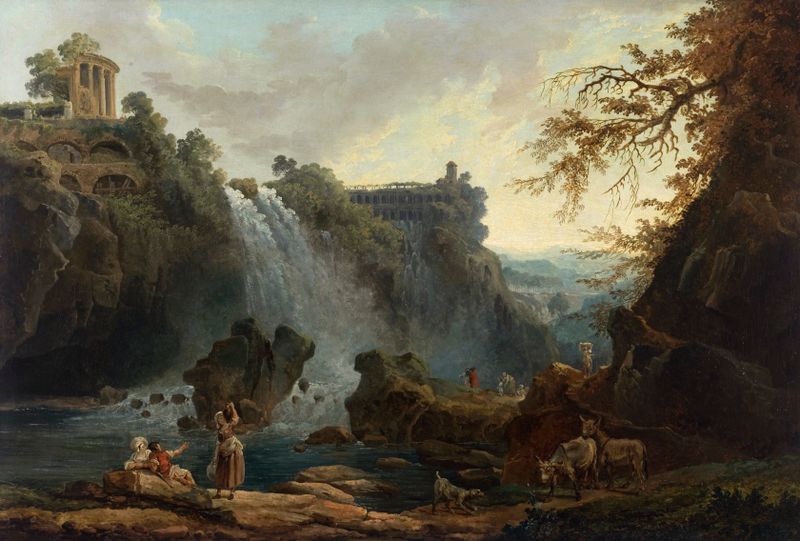
Les Cascatelles de Tivoli
Hubert Robert
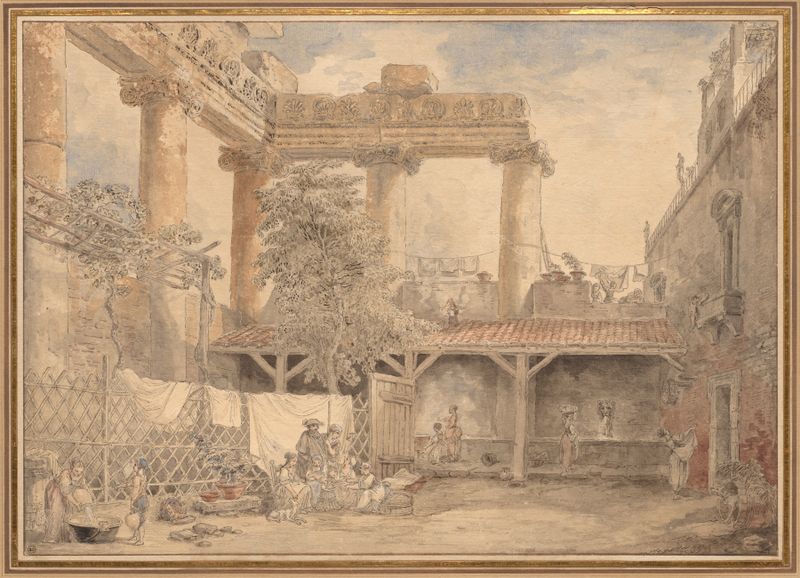
Roman Ruins, Villa Pamfili
Hubert Robert

The Rustic Bridge, Château de Méréville, France
Hubert Robert

The Portico of a Country Mansion
Hubert Robert

Architectural Capriccio
Hubert Robert

The Obelisk
Hubert Robert
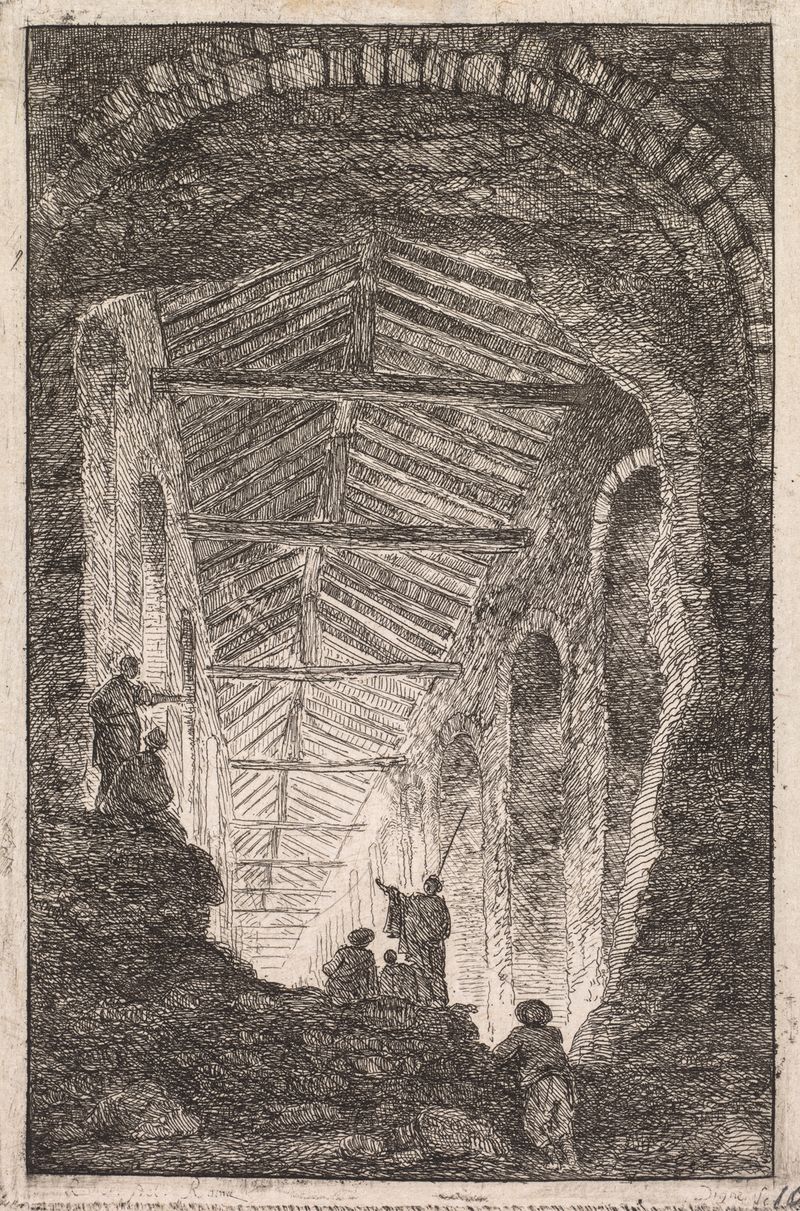
The Antique Gallery
Hubert Robert

L’incendie de l’Opéra, vu des jardins du Palais-Royal, le 8 juin 1781
Hubert Robert
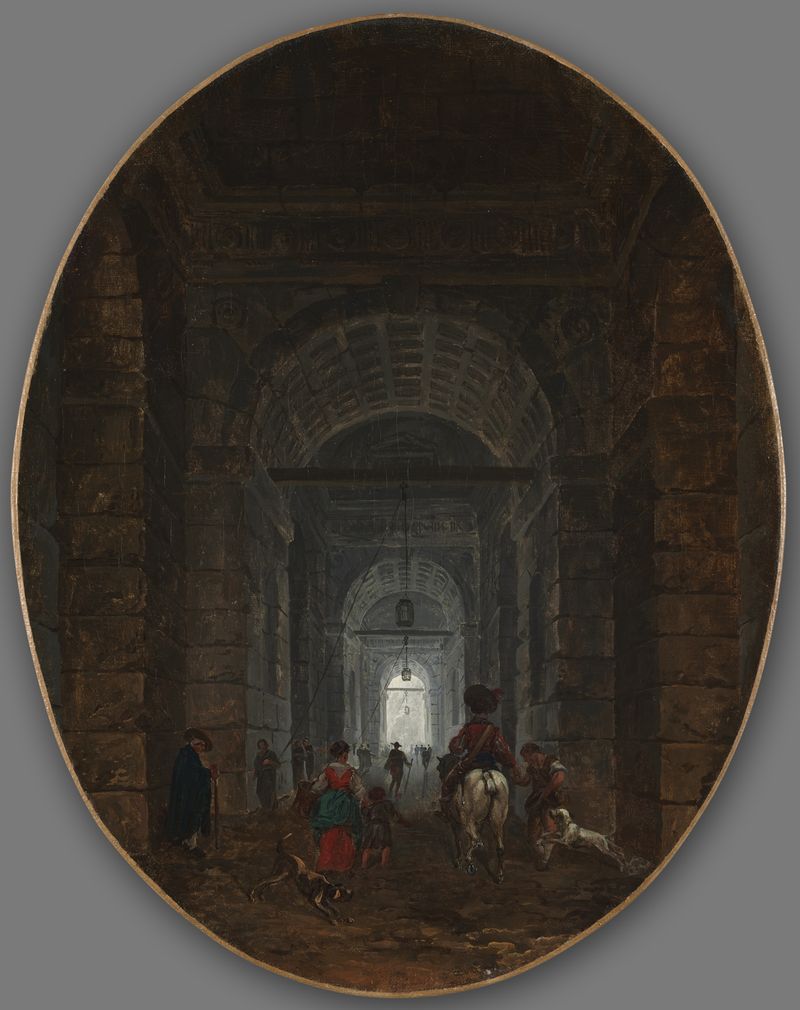
The Grotto of Posillipo
Hubert Robert

Architectural Capriccio with ruins of the Temple of Saturn and the Colosseum in the background
Hubert Robert
More Architecture Art
Browse all →
The statue of Liberty
Frédéric Auguste Bartholdi

View of Houses in Delft, Known as ‘The Little Street’
Johannes Vermeer

View of Houses in Delft, Known as ‘The Little Street’
Johannes Vermeer

The Cathedral in Rouen. The portal, Grey Weather
Claude Monet

The yellow house
Vincent van Gogh

The Church in Auvers-sur-Oise, View from the Chevet
Vincent van Gogh