
The Obelisk — History & Facts
In a world often filled with noise, what echoes of solitude linger amid grandeur? Look to the center, where the monumental obelisk towers against a backdrop of ochre and sky, casting long shadows on the ground. Its silhouette dominates the canvas, anchored by a scattering of crumbled ruins and lush greenery, inviting the viewer's gaze to traverse the interplay of light and shadow. Notice how the warm tones of the earth embrace the cool blues of the sky, creating a profound sense of contrast.
This juxtaposition captures solitude, as the solitary structure stands resilient against time, a witness to both decay and reverence. Delving deeper, observe the figures scattered at the base of the obelisk, small and seemingly insignificant. Their postures convey a sense of introspection and longing, suggesting a shared loneliness amidst the grandeur. This emotional tension plays out against the monument’s stoic presence, prompting reflections on memory and the passage of time.
The vibrant foliage encroaching upon the ruins serves as a metaphor for nature reclaiming space, adding to the underlying theme of isolation in the face of monumental history. In 1787, Robert painted this work during a time when he was deeply entrenched in the neoclassical movement, inspired by antiquities and Roman ruins. Living in Paris, he sought to capture the intersection of nature and architecture, reflecting the Enlightenment ideals of his era. Amidst the changing tides of art, he navigated personal struggles, channeling feelings of loneliness into his art, crafting a space where monumental beauty resonates with human emotion.
More Artworks by Hubert Robert
Browse all →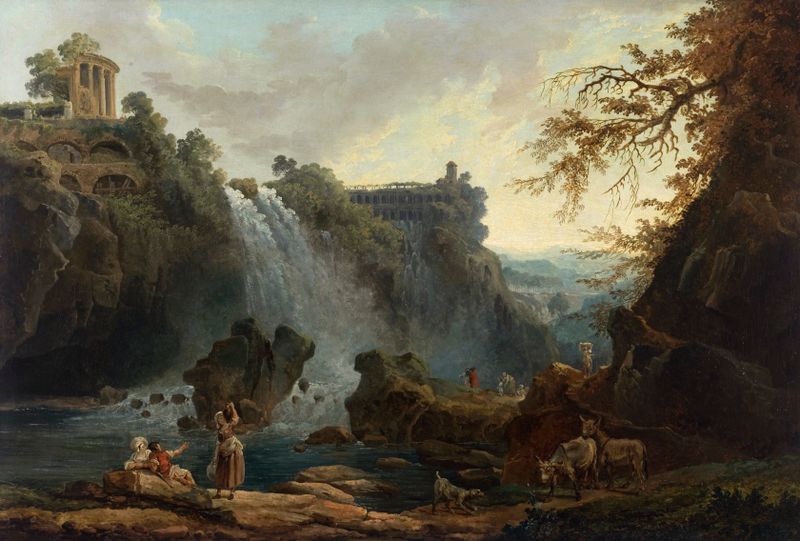
Les Cascatelles de Tivoli
Hubert Robert
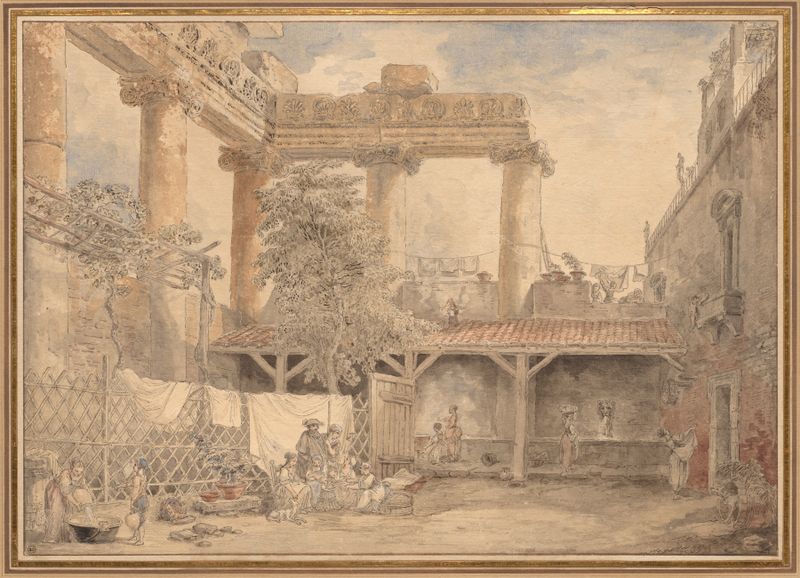
Roman Ruins, Villa Pamfili
Hubert Robert

The Rustic Bridge, Château de Méréville, France
Hubert Robert

The Portico of a Country Mansion
Hubert Robert

Architectural Capriccio
Hubert Robert

The Obelisk
Hubert Robert
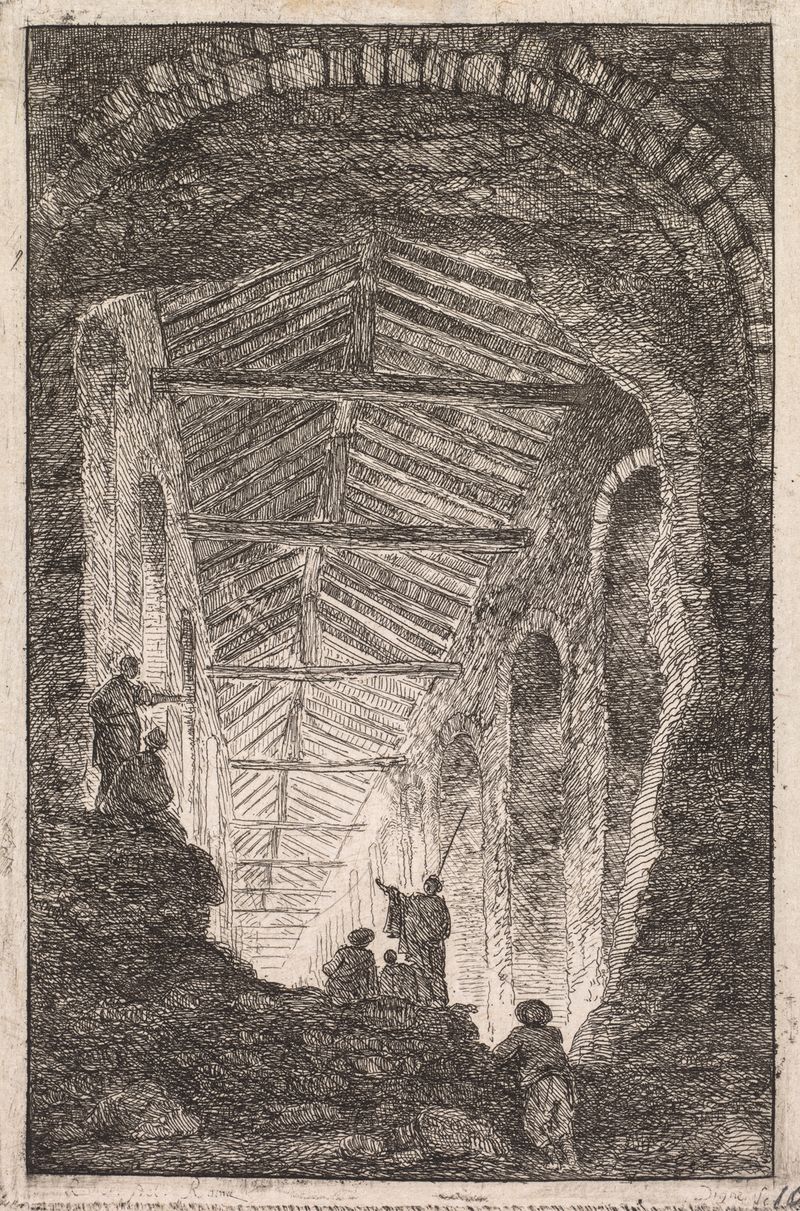
The Antique Gallery
Hubert Robert

L’incendie de l’Opéra, vu des jardins du Palais-Royal, le 8 juin 1781
Hubert Robert
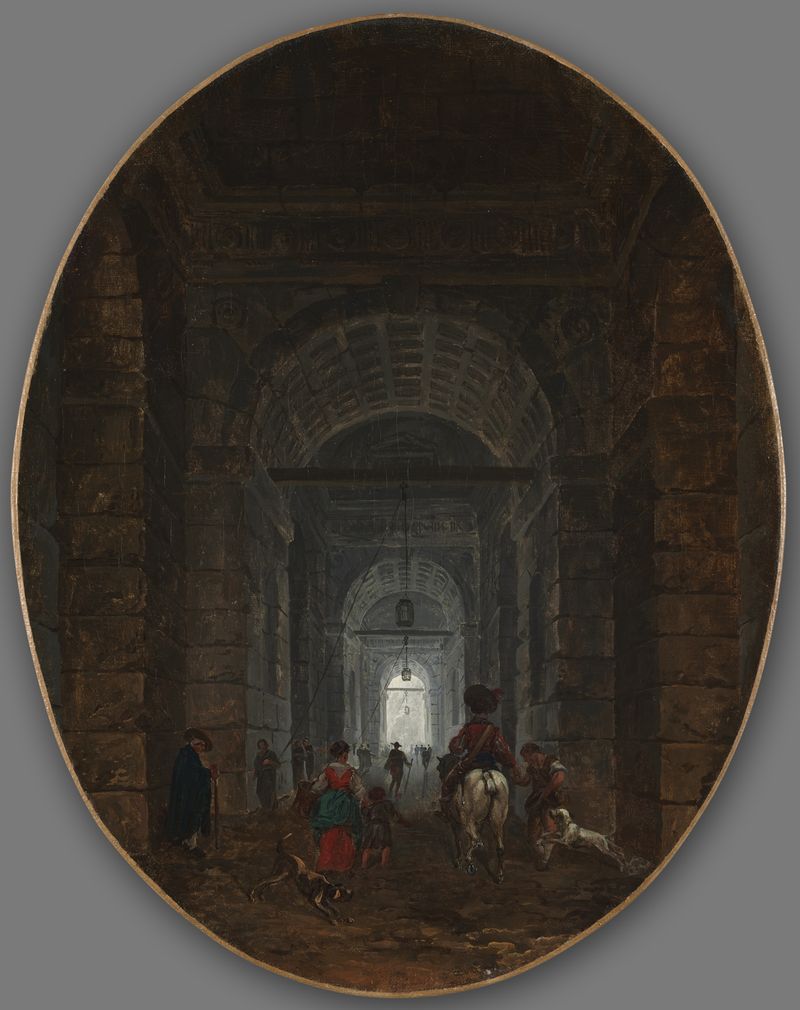
The Grotto of Posillipo
Hubert Robert

Architectural Capriccio with ruins of the Temple of Saturn and the Colosseum in the background
Hubert Robert





