
The Old Temple — History & Facts
Who listens when art speaks of silence? In The Old Temple, the stillness envelops the ruins, inviting a profound contemplation of time's passage and the stories etched in stone. Look to the left at the weathered columns, their once-magnificent capitals now softened by the hand of time. Notice how the gentle light bathes the structure, creating a serene contrast between the earthy tones of the stone and the lush greenery that encroaches around it. The composition draws you in, with the delicate interplay of shadows and highlights suggesting both decay and eternal beauty, guiding the viewer’s gaze toward the harmonious balance of nature reclaiming its space. Deeper insights reveal a dialogue between humanity and nature; the temple, a relic of past grandeur, stands in quiet surrender to the inevitable embrace of decay.
The figure seated in the foreground, seemingly lost in thought, embodies the connection between the observer and the observed, bridging the gap between history and personal reflection. The vibrant foliage serves as a reminder of nature’s resilience, contrasting the permanence of stone with the ephemeral quality of life itself. Hubert Robert created The Old Temple between 1787 and 1788 in Paris, a time of great artistic exploration and change. Amidst the backdrop of the French Revolution, he was influenced by neoclassical ideals, yet sought to capture the beauty of nature intertwined with man-made structures.
His work reflected a growing fascination with ruins, symbolizing the transitory nature of existence and the awakening of new ideas in art.
More Artworks by Hubert Robert
Browse all →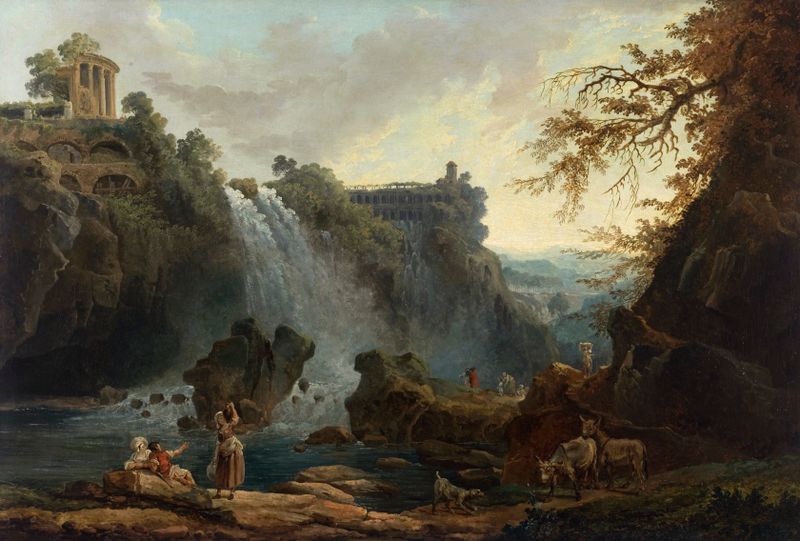
Les Cascatelles de Tivoli
Hubert Robert
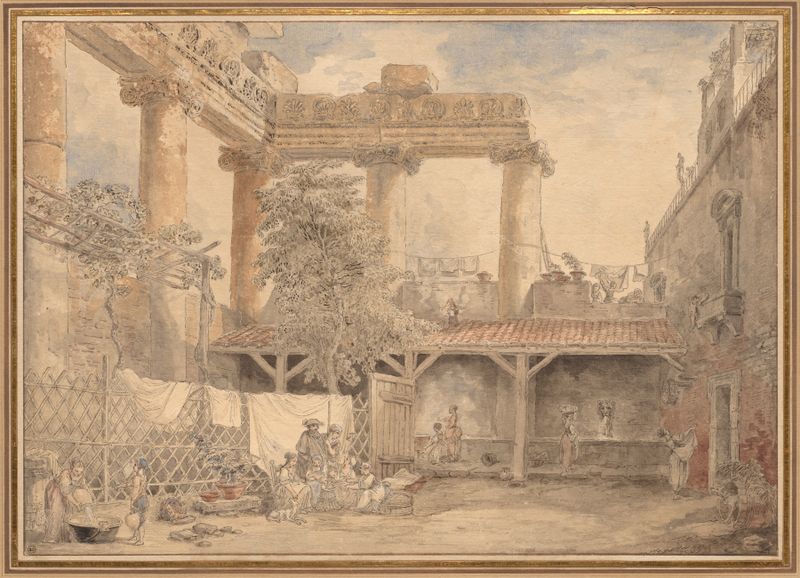
Roman Ruins, Villa Pamfili
Hubert Robert

The Rustic Bridge, Château de Méréville, France
Hubert Robert

The Portico of a Country Mansion
Hubert Robert

Architectural Capriccio
Hubert Robert

The Obelisk
Hubert Robert
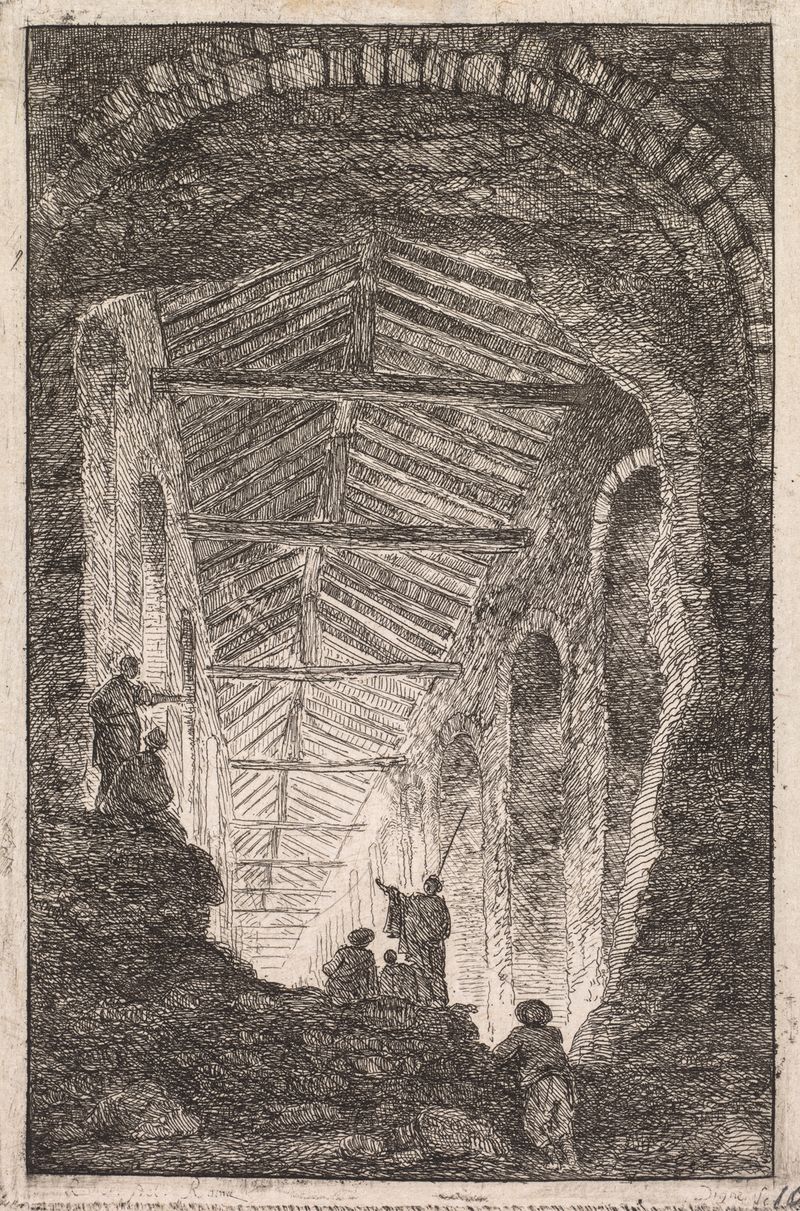
The Antique Gallery
Hubert Robert

L’incendie de l’Opéra, vu des jardins du Palais-Royal, le 8 juin 1781
Hubert Robert
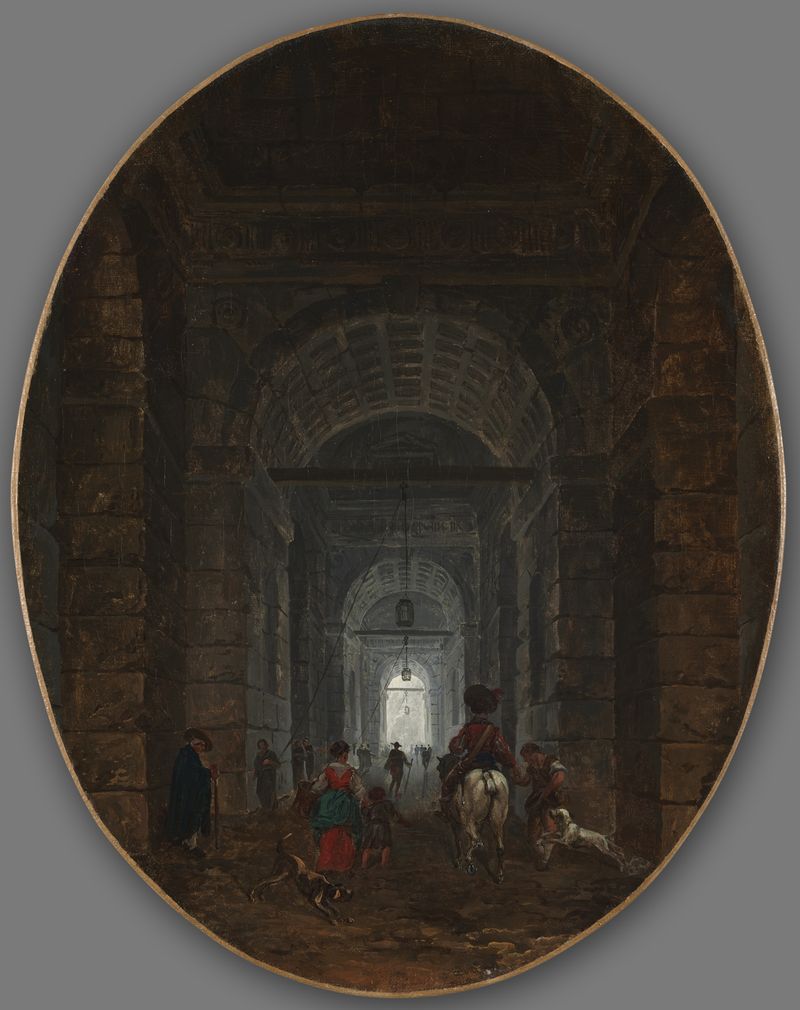
The Grotto of Posillipo
Hubert Robert

Architectural Capriccio with ruins of the Temple of Saturn and the Colosseum in the background
Hubert Robert
More Architecture Art
Browse all →
The statue of Liberty
Frédéric Auguste Bartholdi

View of Houses in Delft, Known as ‘The Little Street’
Johannes Vermeer

View of Houses in Delft, Known as ‘The Little Street’
Johannes Vermeer

The Cathedral in Rouen. The portal, Grey Weather
Claude Monet

The yellow house
Vincent van Gogh

The Church in Auvers-sur-Oise, View from the Chevet
Vincent van Gogh