
The Old Temple — History & Facts
Could a single brushstroke hold eternity? In The Old Temple, the artist captures a moment suspended between history and ruin, evoking the madness of time's relentless passage. Look to the left at the partially crumbled columns that reach toward the sky, their weathered surfaces a testament to countless ages. The gentle play of light highlights the shifting textures of stone and foliage, while verdant greens breathe life into the structure, creating a contrast between decay and vitality. The composition invites the viewer to wander, drawing the eye through the archways, where shadows linger like whispers of lost stories, making the space feel both expansive and confined. Within this serene chaos, contrasts pulse with emotional tension.
The juxtaposition of the vibrant vegetation against the remnants of human architecture speaks to the reclamation of nature over civilization, hinting at a madness that stems from man's ephemeral existence. The delicate balance between beauty and decay prompts reflection on the futility of permanence, urging us to confront our own fleeting moments. Each detail, from the intricately painted leaves to the crumbled stone, serves as a metaphor for the inevitable collapse of all that we build. Hubert Robert painted The Old Temple in 1787 amidst a rapidly changing artistic landscape in France, where neoclassicism was giving way to romantic sentiments.
Living in Paris, he was influenced by the emerging interest in ruins and nature, reflecting a society grappling with the tension between progress and nostalgia. This work exemplifies his fascination with the sublime, capturing the paradoxical beauty found in decay and the madness of fleeting time.
More Artworks by Hubert Robert
Browse all →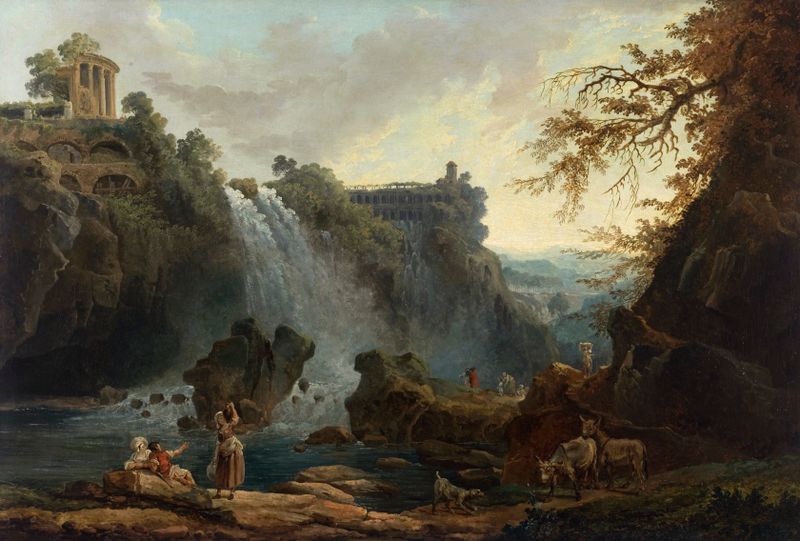
Les Cascatelles de Tivoli
Hubert Robert
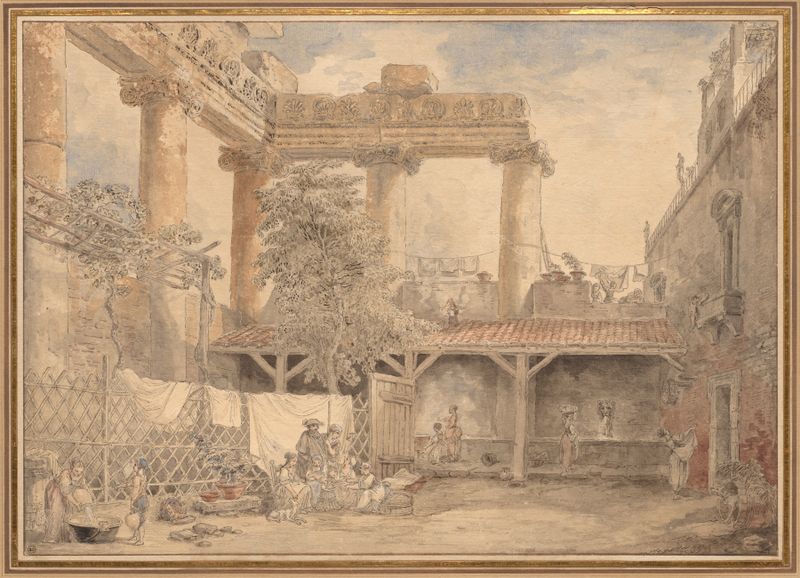
Roman Ruins, Villa Pamfili
Hubert Robert

The Rustic Bridge, Château de Méréville, France
Hubert Robert

The Portico of a Country Mansion
Hubert Robert

Architectural Capriccio
Hubert Robert

The Obelisk
Hubert Robert
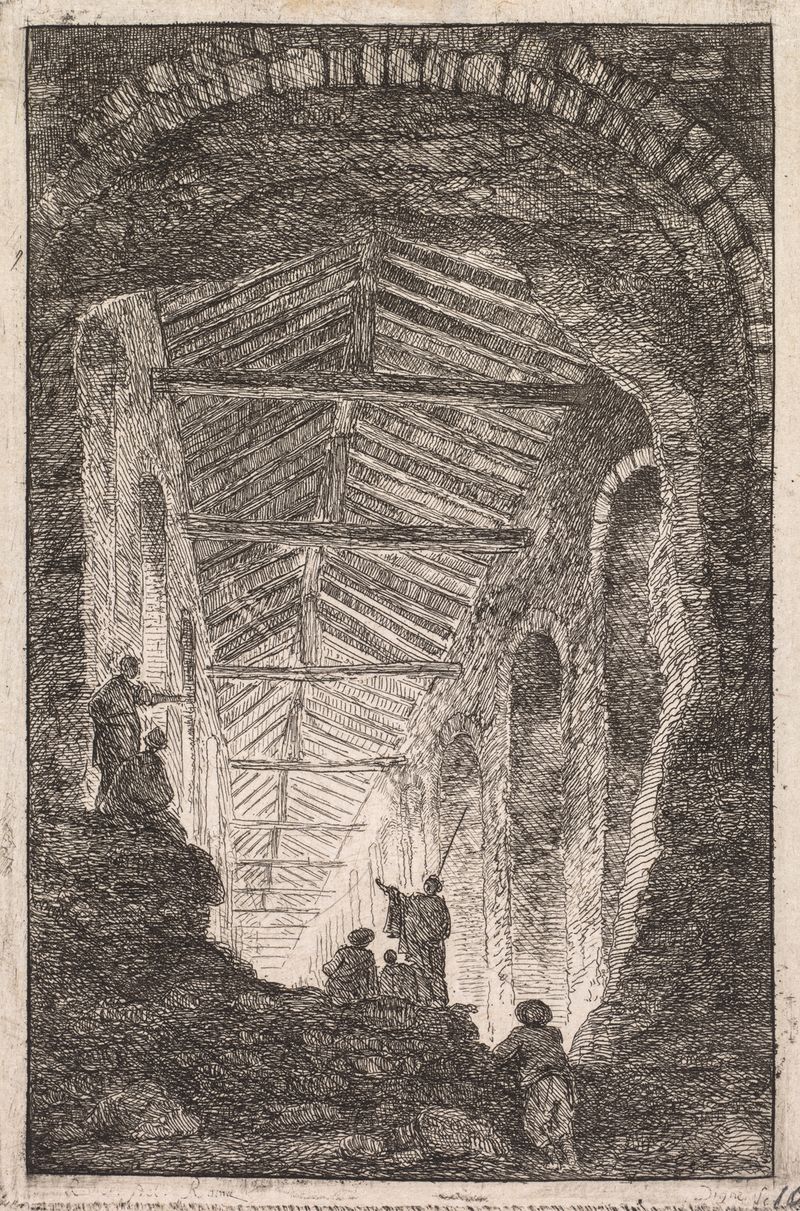
The Antique Gallery
Hubert Robert

L’incendie de l’Opéra, vu des jardins du Palais-Royal, le 8 juin 1781
Hubert Robert
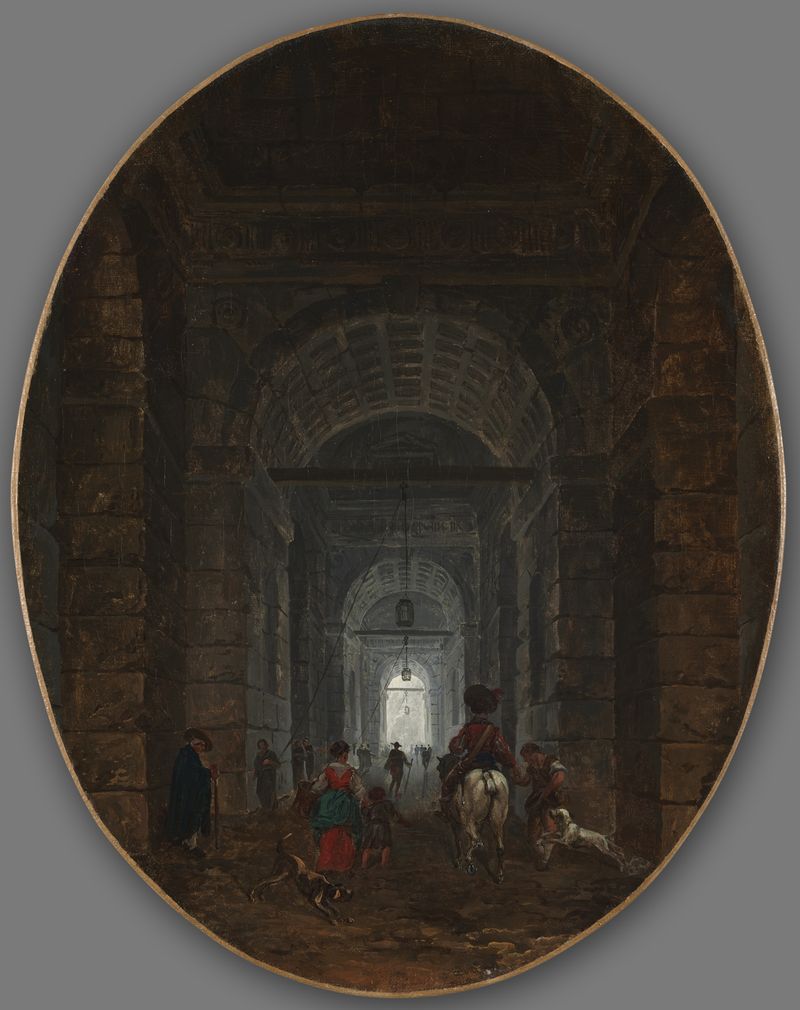
The Grotto of Posillipo
Hubert Robert

Architectural Capriccio with ruins of the Temple of Saturn and the Colosseum in the background
Hubert Robert
More Architecture Art
Browse all →
The statue of Liberty
Frédéric Auguste Bartholdi

View of Houses in Delft, Known as ‘The Little Street’
Johannes Vermeer

View of Houses in Delft, Known as ‘The Little Street’
Johannes Vermeer

The Cathedral in Rouen. The portal, Grey Weather
Claude Monet

The yellow house
Vincent van Gogh

The Church in Auvers-sur-Oise, View from the Chevet
Vincent van Gogh