
The old town hall — History & Facts
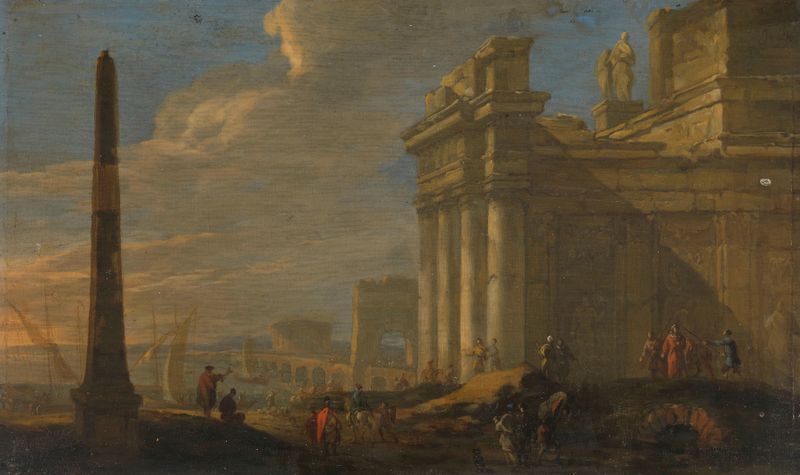
What secret hides in the quiet of the canvas? The stillness of the old town hall beckons us to unravel the stories embedded within its walls. Look to the left at the imposing yet serene facade, where the intricate details of the architecture come alive through careful brushwork. Notice how the golden hues of ochre and amber dance against the deep shadows, creating a sense of both warmth and mystery. The artist masterfully captures the play of light and shadow, guiding the viewer's gaze across the textured surfaces and inviting a deeper exploration of the town hall's storied presence. Delve into the contrasts present in this piece: the rigidity of the stone against the fluidity of nature, where the surrounding trees bend slightly, as if bowing in respect.
The juxtaposition between the towering structure and the small figures at its base hints at the dynamics of power and community. Each element, from the artisanship of the building to the calm sky overhead, contributes to a profound sense of awe, reminding us of the passage of time and the lives intertwined with this architectural monument. Jacob van der Ulft painted this work between 1657 and 1689, during a period of flourishing in Dutch art and architecture. Living in the Netherlands, where cities were embracing urban development, he focused on the intricate details of civic pride.
The era was marked by a keen interest in capturing both grandeur and the everyday, reflecting a society that valued both its historical roots and contemporary aspirations.
More Artworks by Jacob van der Ulft
Browse all →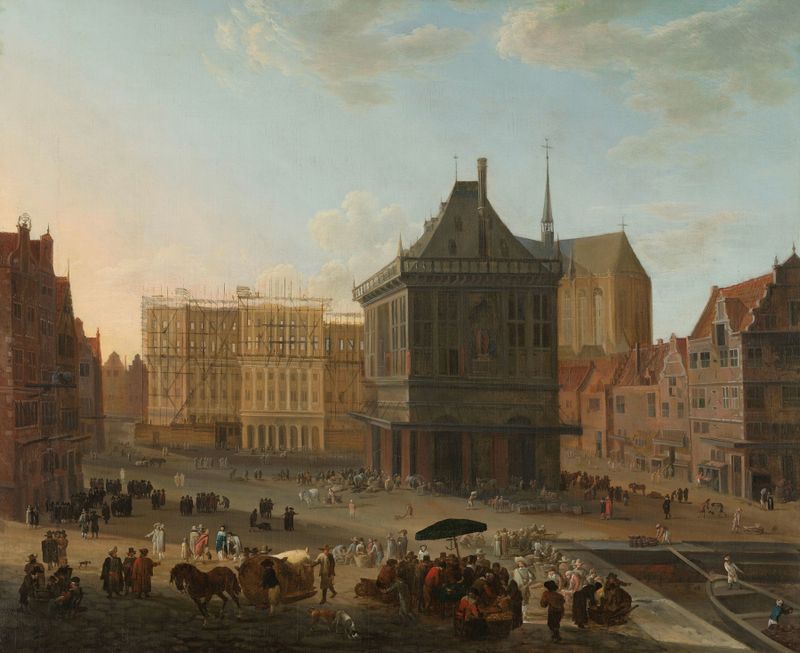
More Architecture Art
Browse all →
The statue of Liberty
Frédéric Auguste Bartholdi

View of Houses in Delft, Known as ‘The Little Street’
Johannes Vermeer

View of Houses in Delft, Known as ‘The Little Street’
Johannes Vermeer

The Cathedral in Rouen. The portal, Grey Weather
Claude Monet

The yellow house
Vincent van Gogh

The Church in Auvers-sur-Oise, View from the Chevet
Vincent van Gogh