The Orange Market, Venice — History & Facts
When did color learn to lie? In The Orange Market, Venice, vibrancy meets the subtleties of deception, inviting us to question the purity of our perceptions. Look to the foreground, where a bountiful display of oranges bursts forth, their sun-kissed skins glistening with a deceptive sheen. The luminous oranges stand in stark contrast to the cooler, muted hues of the market stalls and the shadowy figures of vendors. Notice how Holland deftly employs brushstrokes to capture the interplay of light and shadow, creating an illusion of depth that transcends mere representation.
The composition draws you in, guiding your gaze across the bustling scene, as the oranges seem ready to leap from the canvas. Beneath the exuberance lies a palpable tension; the bright oranges evoke a sense of warmth and abundance, yet the surrounding figures, shrouded in shadow, question the dreamlike allure of the market. Each orange becomes a symbol of temptation, contrasting the vibrancy of life with the muted existence of the market's vendors. This duality speaks to the complexities of desire and reality, inviting contemplation on what truly lies beneath the surface of such inviting abundance. In 1867, while residing in Venice, Holland painted this work during a period of artistic exploration and evolution.
The streets were alive with the influence of the Romantic and Realist movements, as artists sought to capture the essence of everyday life with emotional depth. Surrounded by the charm of Venetian culture and vibrant market scenes, Holland channeled the city's energy into a canvas that reflects both the beauty and underlying truths of commerce and desire.
More Artworks by James Holland
Browse all →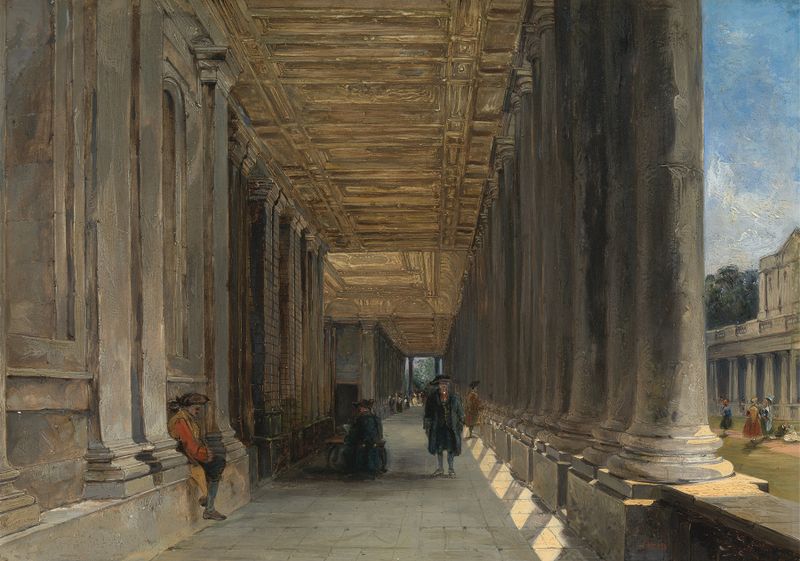
The Colonnade of Queen Mary’s House, Greenwich
James Holland
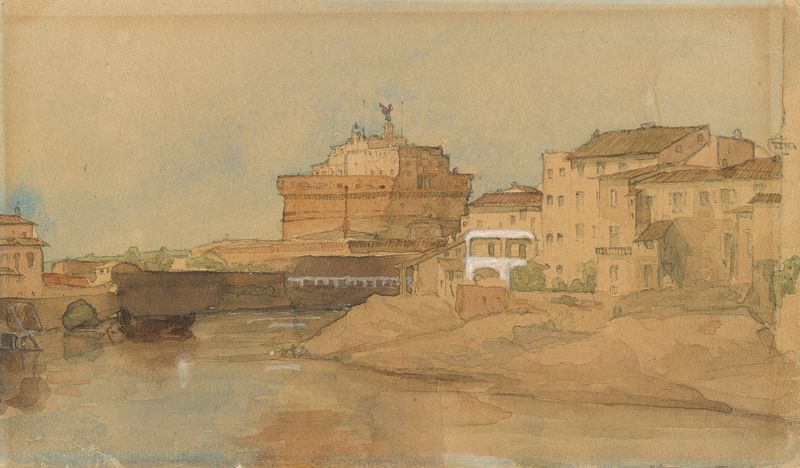
View of Castel Sant’ Angelo from the Tiber
James Holland
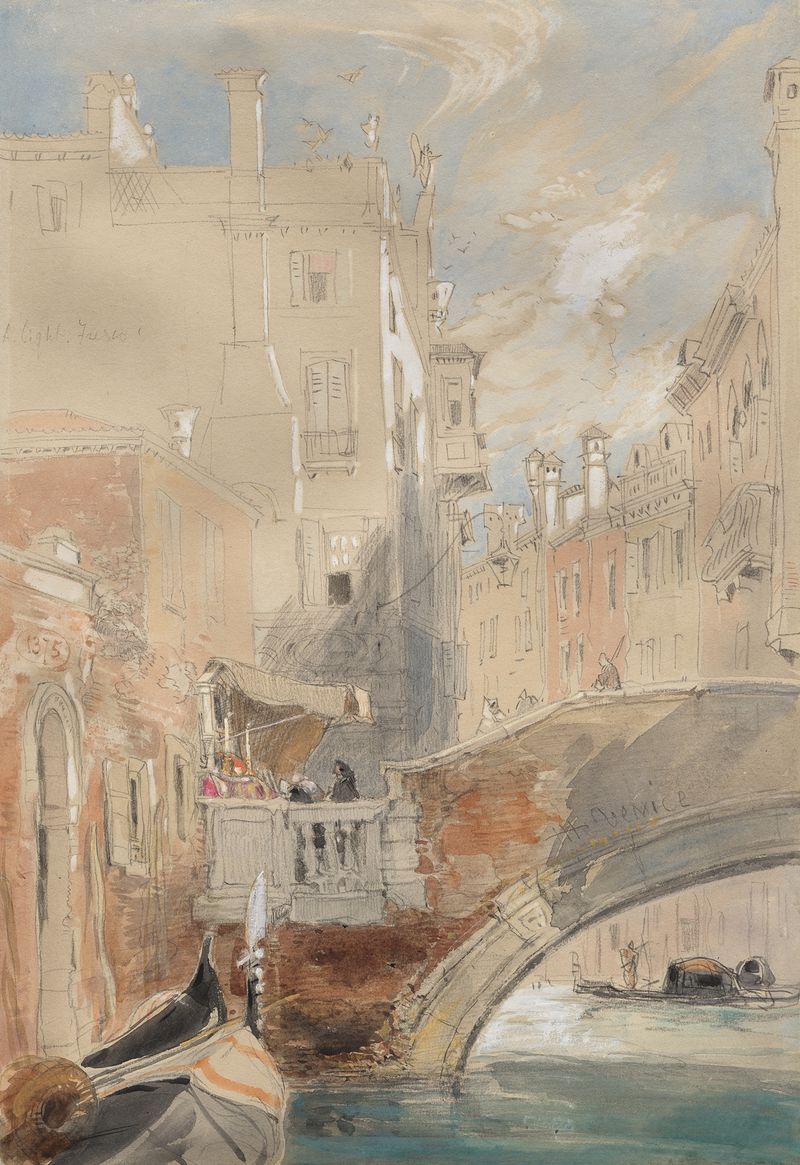
A Canal, Venice
James Holland
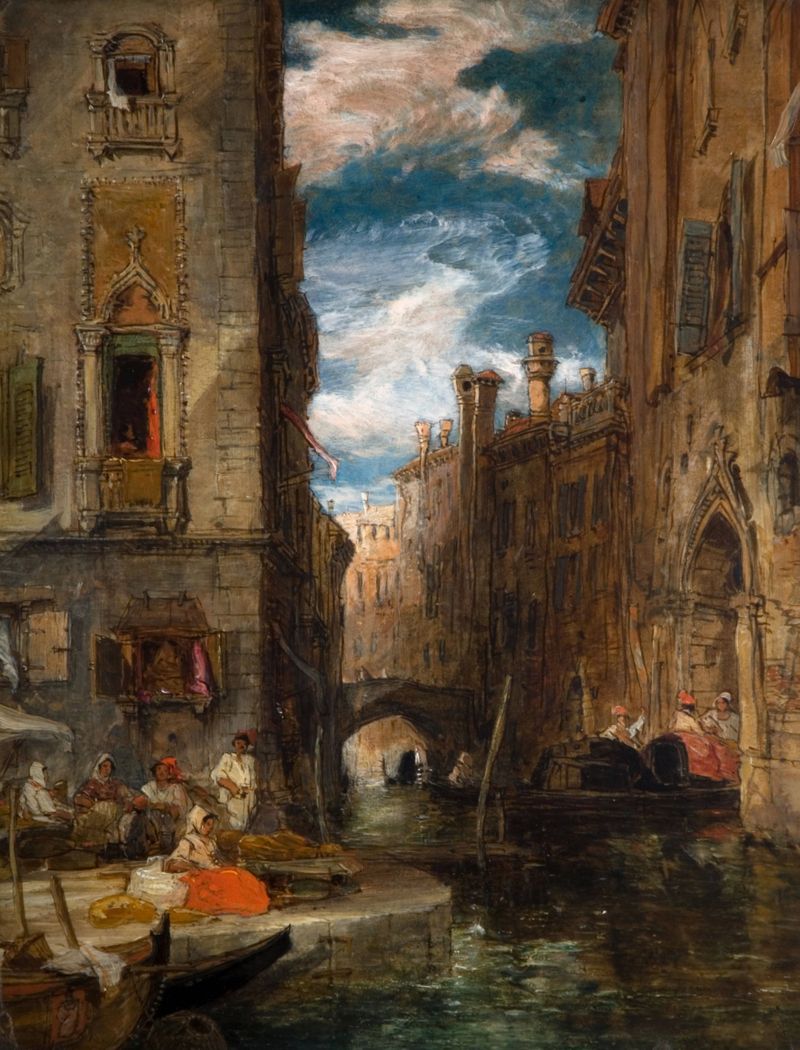
A Recollection Of Venice
James Holland
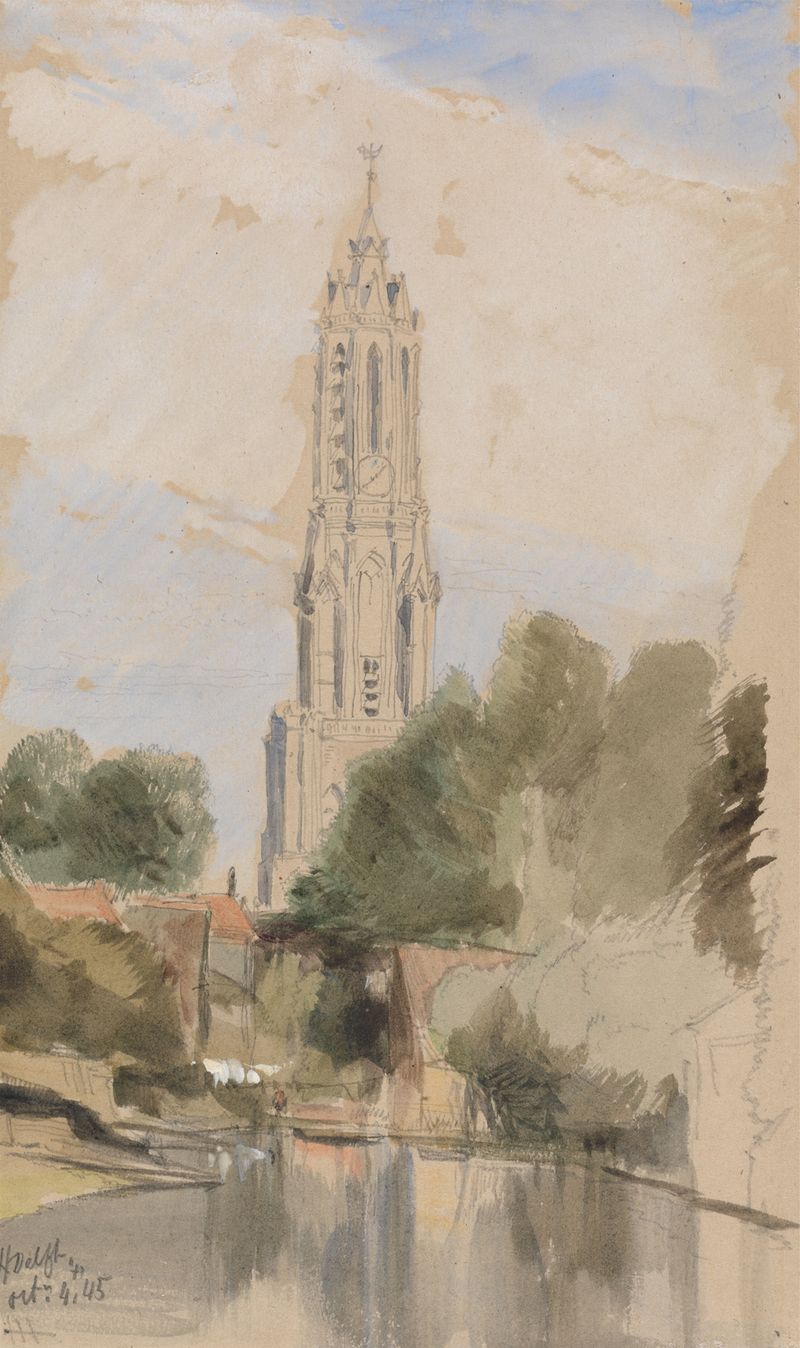
Delft
James Holland
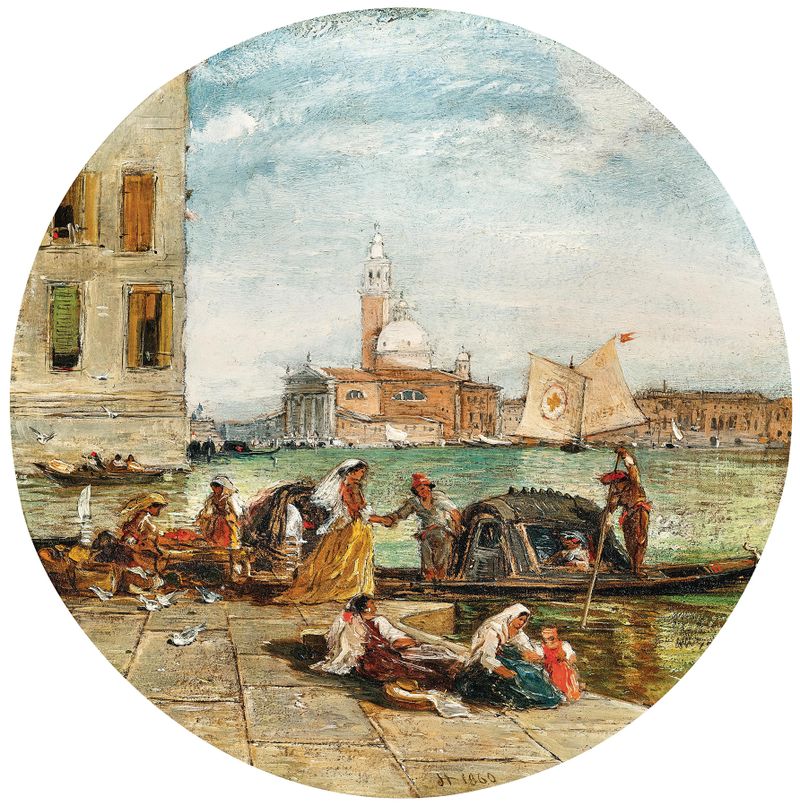
Venice, a view of San Giorgio Maggiore
James Holland
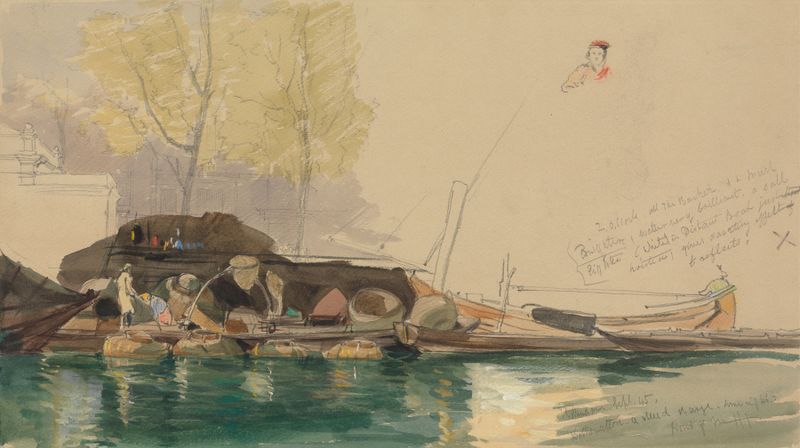
Barges on a Canal in Rotterdam
James Holland

Landschap bij Sintra, Portugal
James Holland
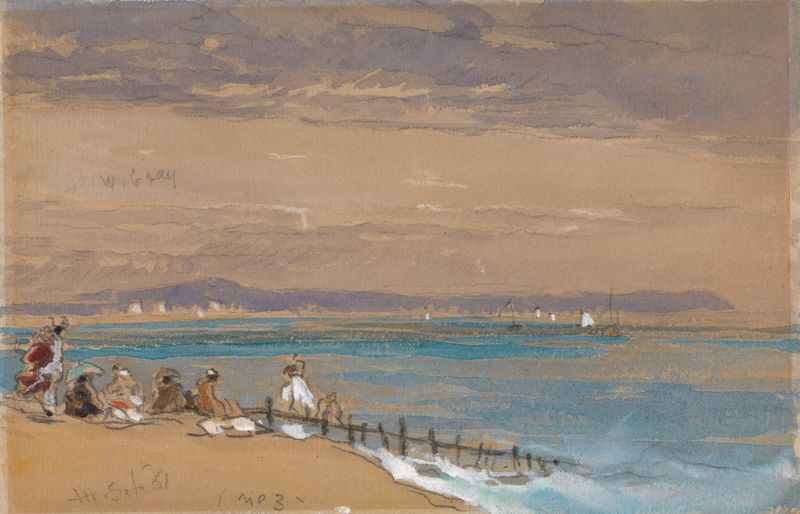
Beach Scene with Figures by a Breakwater
James Holland
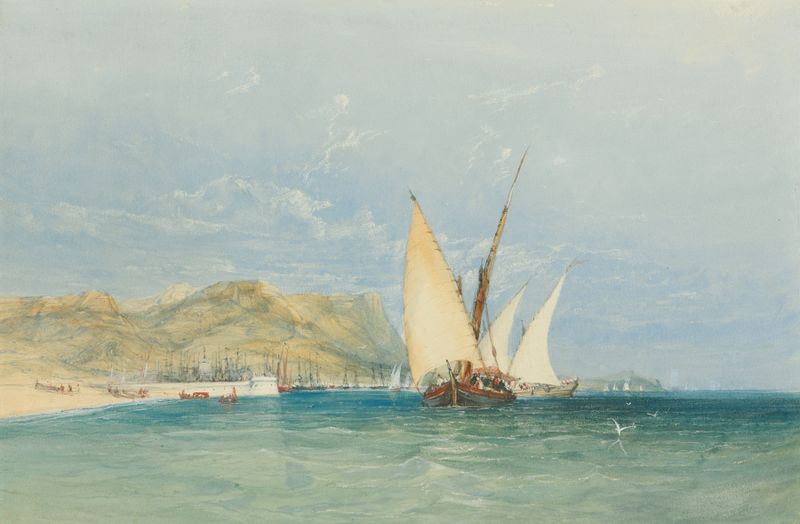
Coast Scene with Sailing Boats
James Holland