
The Palladian Bridge, Wilton House — History & Facts
What if beauty was never meant to be finished? In the delicate interplay between nature and architecture, one can sense an eternal longing—a void left unfilled, yet captivating in its essence. Look to the left at the graceful arches of the Palladian bridge, where the soft contours invite your gaze. The artist employs a restrained palette of greens and muted earth tones, allowing the structure to harmonize with its surroundings. Notice how the dappled sunlight filters through the leafy canopy, casting intricate shadows that dance upon the water’s surface.
Each brushstroke reveals a meticulous attention to detail that breathes life into the scene, drawing us toward a serene yet enigmatic narrative. As your eyes wander, consider the emotional tensions within the composition. The bridge, a symbol of connection, stands paradoxically isolated, an invitation to cross yet a reminder of the divide between nature and man-made beauty. The stillness of the water reflects not only the architectural marvel but also a sense of calm, contrasting the restless energy of the world outside the frame.
This juxtaposition speaks to an underlying theme of impermanence, echoing the artist's awareness of the passage of time. Wilfrid Gabriel de Glehn painted this piece in the early 20th century, while living in England and deeply engaged with the burgeoning Impressionist movement. During this period, he frequently embraced plein air painting, capturing the serene landscapes around him. The Palladian bridge at Wilton House became a focal point, representing both architectural grandeur and the subtle interplay of light and nature—an embodiment of the era's exploration of beauty and its fleeting nature.
More Artworks by Wilfrid Gabriel de Glehn
Browse all →
The Avon, near Great Dunsford
Wilfrid Gabriel de Glehn
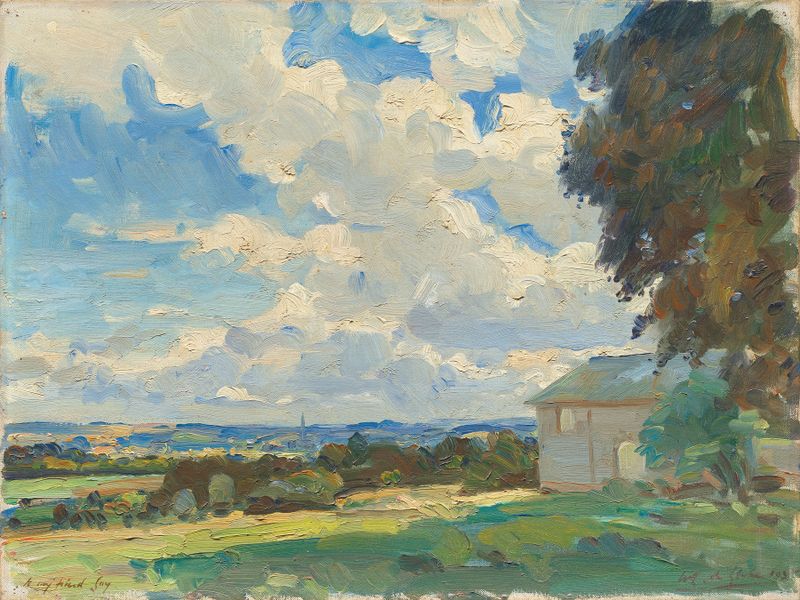
Salisbury cathedral from a field above Wilton
Wilfrid Gabriel de Glehn

Wash day
Wilfrid Gabriel de Glehn
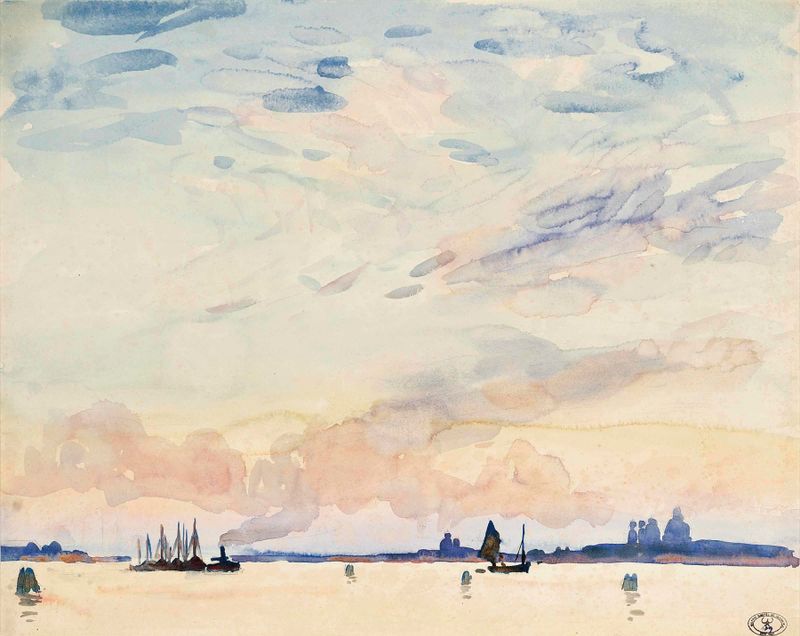
The lagoon, Venice
Wilfrid Gabriel de Glehn

A light breeze, Biôt, Provence
Wilfrid Gabriel de Glehn
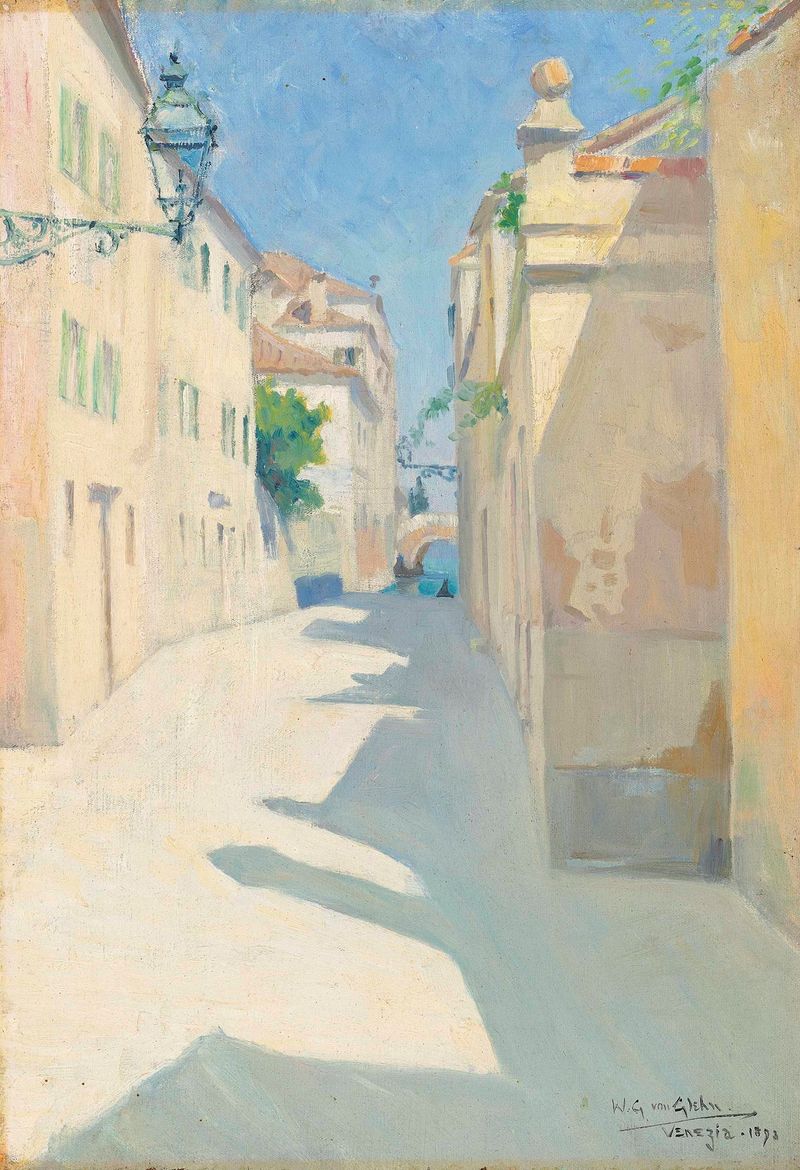
Une ruelle à Venise
Wilfrid Gabriel de Glehn
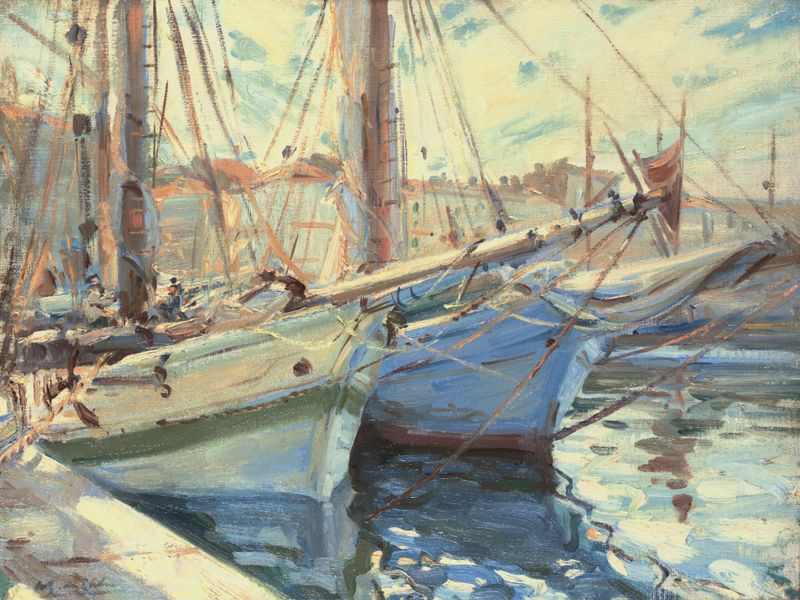
Boats in a harbour, St Tropez
Wilfrid Gabriel de Glehn
Bretagne, France
Wilfrid Gabriel de Glehn
More Architecture Art
Browse all →
The statue of Liberty
Frédéric Auguste Bartholdi

View of Houses in Delft, Known as ‘The Little Street’
Johannes Vermeer

View of Houses in Delft, Known as ‘The Little Street’
Johannes Vermeer

The Cathedral in Rouen. The portal, Grey Weather
Claude Monet

The yellow house
Vincent van Gogh

The Church in Auvers-sur-Oise, View from the Chevet
Vincent van Gogh