
The Pelkus Gate near Utrecht — History & Facts
In the gentle embrace of twilight, feelings of loss and nostalgia intermingle, creating an atmosphere heavy with unspoken stories. Look to the left at the weathered stone archway framed by drooping willow branches. The muted tones of the landscape evoke a somber beauty, emphasizing the interplay of light and shadow across the water. Soft strokes merge the horizon with the sky, a subtle blend that invites the viewer to linger in the scene, while the distant figures appear almost ghostlike, hinting at a life once vibrant but now faded. Each ripple in the water reflects not only the fading light but also the passage of time—remnants of memories swirling beneath the surface.
The stark contrast between the lush greens and the dusky blues creates a tension, symbolizing the duality of beauty and grief that permeates the composition. Each brushstroke becomes a whisper of what was lost, urging us to confront the inevitable transience of existence. During 1646, the artist created this work amidst a flourishing Dutch Golden Age, where landscape painting was gaining prominence and a personal touch. Van Goyen experienced the fallout of war, loss, and changing fortunes, which may have influenced his introspective approach.
He captured not only the physical landscape but also the emotional terrain of memory, loss, and the quiet beauty that resides in moments of reflection.
More Artworks by Jan van Goyen
Browse all →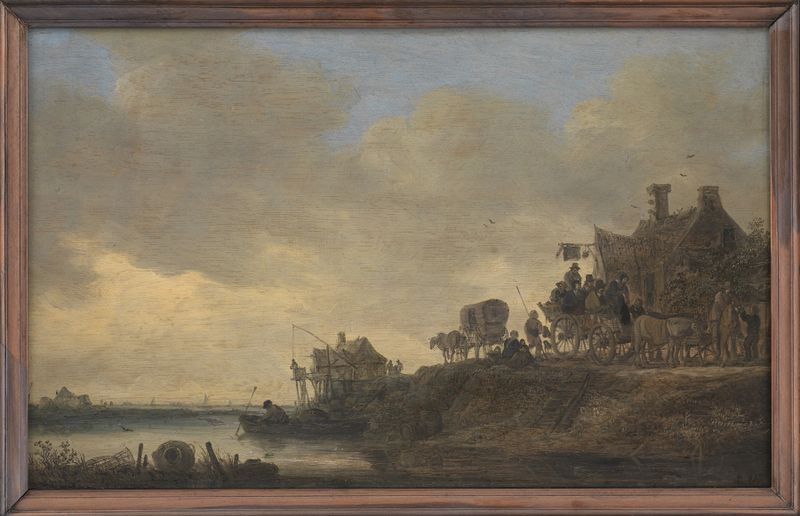
River Scene with the ‘Swan’ Tavern
Jan van Goyen

The Valkhof in Nijmegen
Jan van Goyen
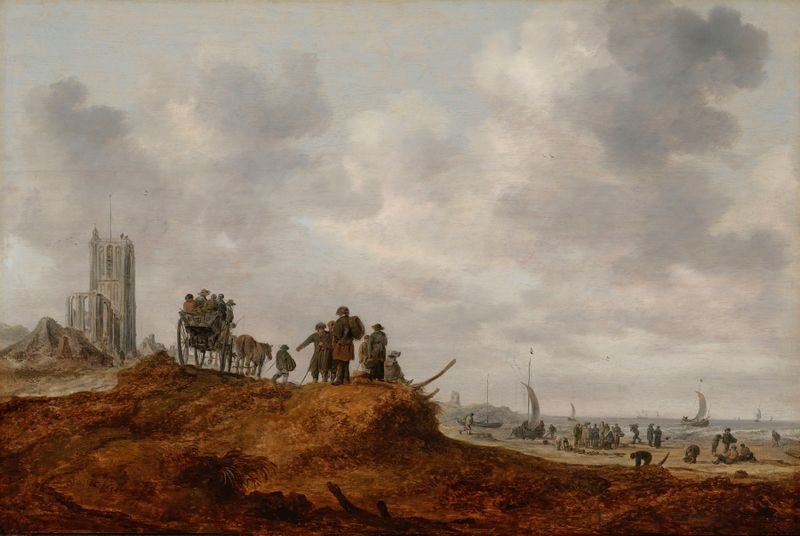
The Old Church at Egmond aan Zee
Jan van Goyen
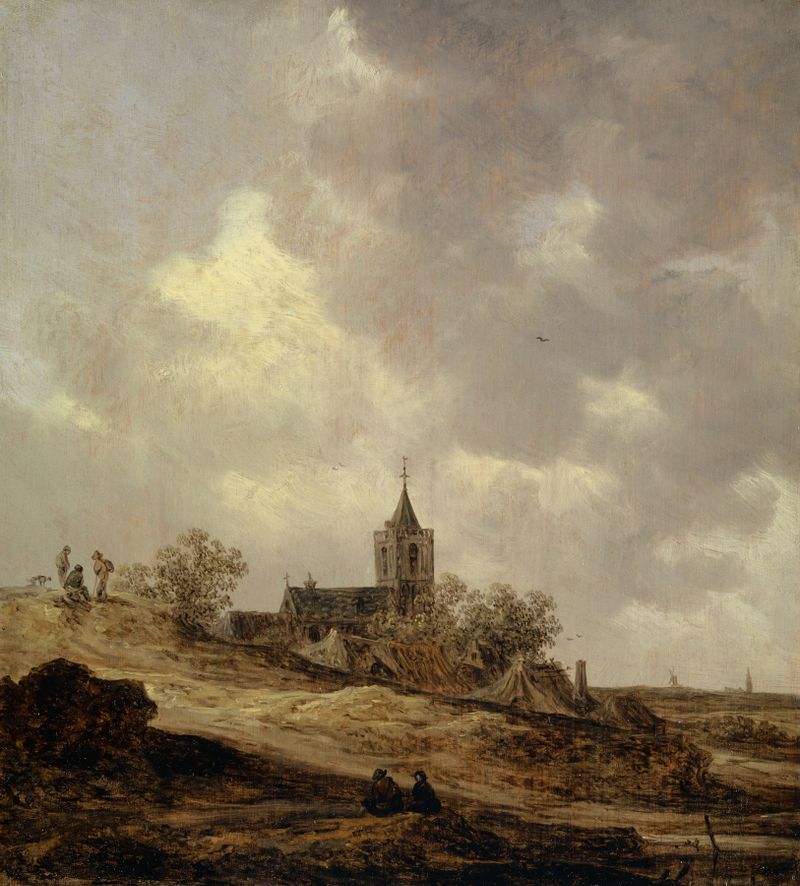
Village Church seen from the Dunes
Jan van Goyen
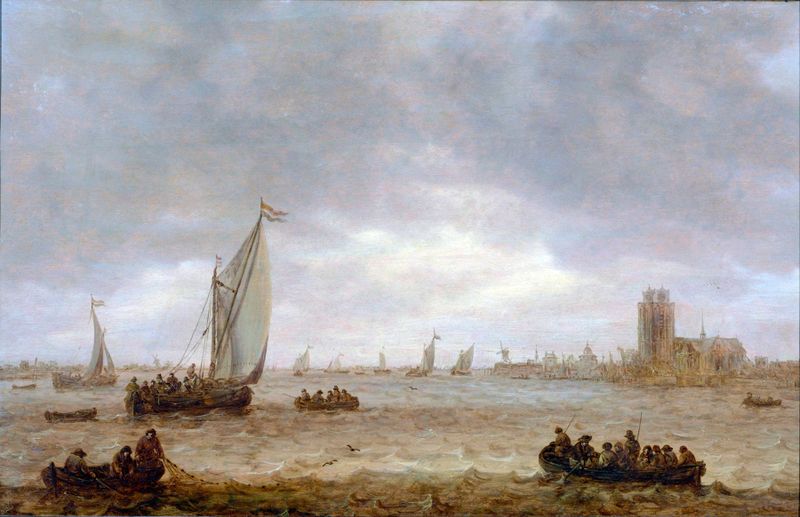
Mouth of the Meuse
Jan van Goyen

River Landscape with the Pellecussen Gate near Utrecht
Jan van Goyen
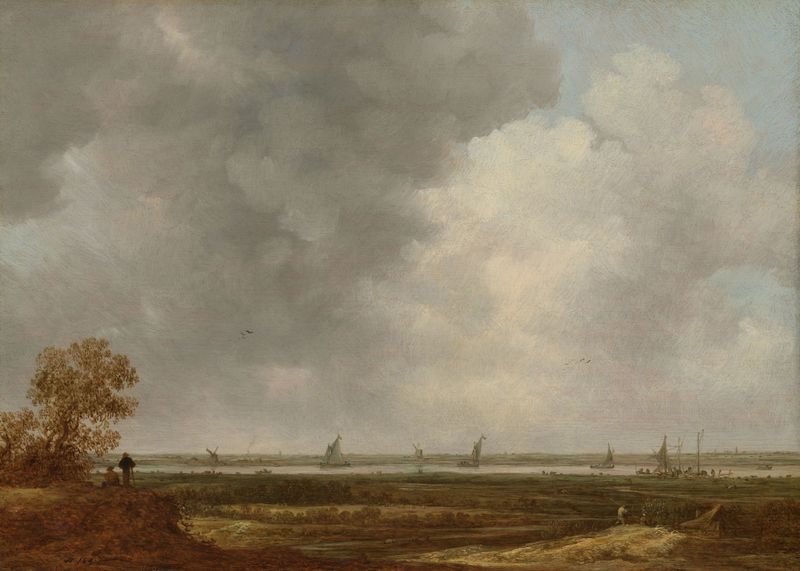
Panoramic View of a River with Low-lying Meadows
Jan van Goyen
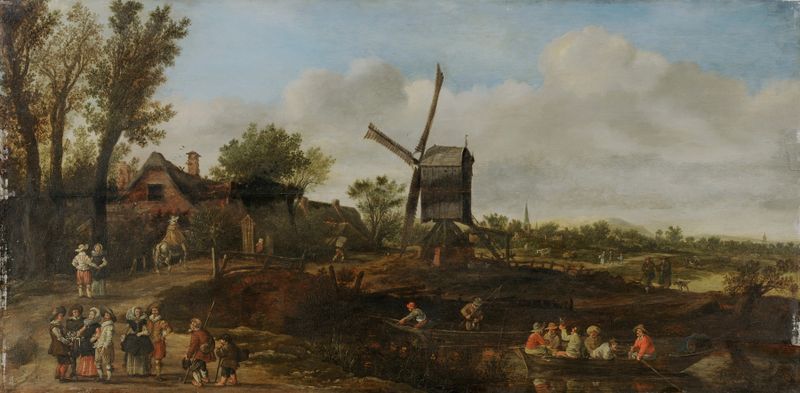
Dutch Landscape
Jan van Goyen
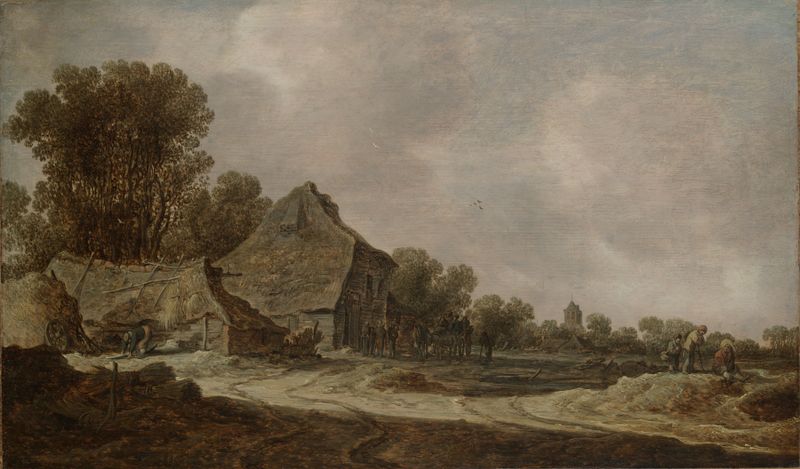
A Sandy Road with Thatched Cottages
Jan van Goyen
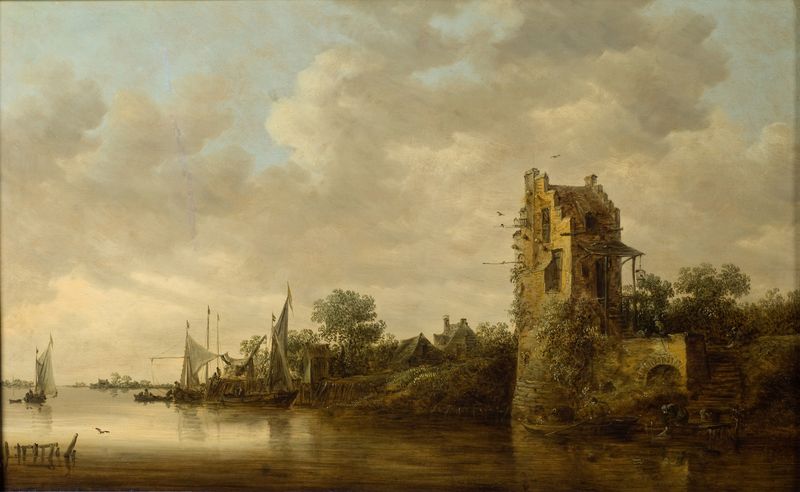
Riverside with an Old Tower
Jan van Goyen





