
The Pier At Territet — History & Facts
What if beauty was never meant to be finished? This question lingers like a whisper in the delicate strokes of the canvas, where faith permeates the scene and invites us to ponder the nature of transience. Focus first on the tranquil waters that reflect the soft pastel hues of dusk, drawing your eyes toward the serene interplay of light and shadow. The gentle ripples mimic the momentary essence of life itself, while the distant mountains cradle the horizon, seemingly untouched by time. Notice how Bocion’s use of light illuminates the pier, acting as a guiding hand that beckons the viewer to step into this fleeting moment of peace. Amidst the calm, emotional tensions emerge in the contrasts of the artwork.
The pier, sturdy yet fragile, stands as a metaphor for faith—an anchor in a world defined by impermanence. The distant boats, mere silhouettes, hint at journeys untraveled, suggesting the intertwining of hope and uncertainty. Each stroke breathes life into the canvas, yet simultaneously evokes a sense of longing for what lies beyond the immediate beauty. In 1886, Bocion created this artwork while residing in Switzerland, amidst a burgeoning movement that sought to capture the ephemeral qualities of nature.
His focus on impressionistic techniques reflected a wider shift in the art world towards exploring light and atmosphere. At this point in his life, Bocion was both influenced by and contributing to the dialogue of modernity, channeling his experiences into pieces that gracefully balance realism with a poetic sense of faith.
More Artworks by François Bocion
Browse all →
View Of Lake Geneva
François Bocion

Lakeside Road In Tourronde On Lake Geneva
François Bocion
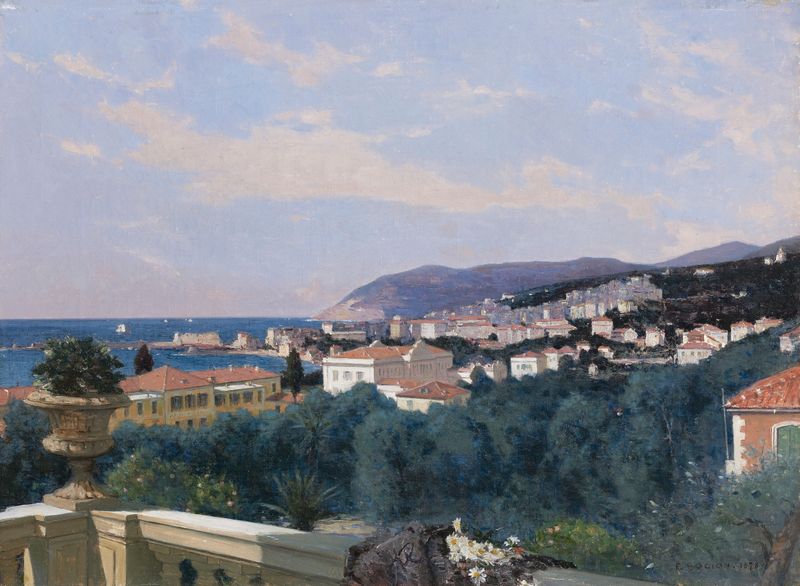
San Remo, From The Terrace of Louis Ormond, 1878
François Bocion
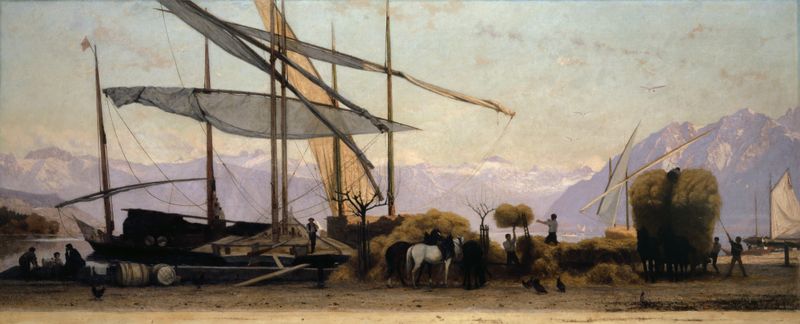
Unloading The Hay In Ouchy
François Bocion
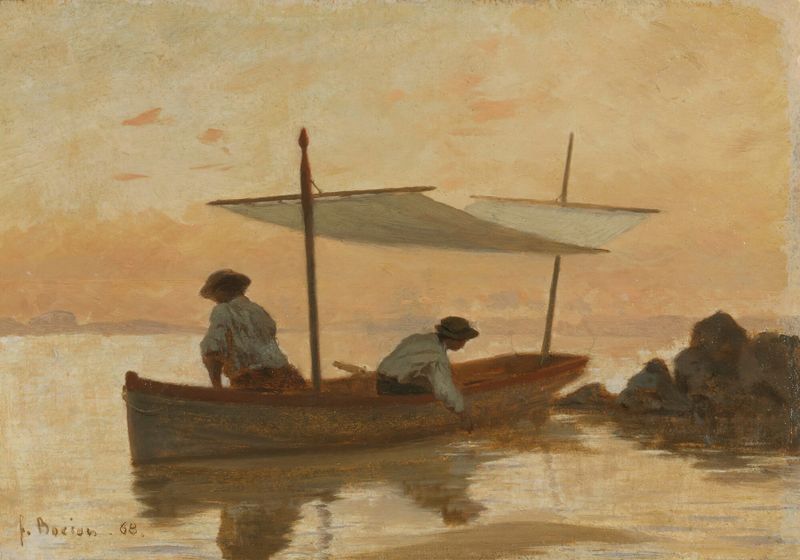
Boat Of The Artist Anchoring Near The Beach Of Dorigny
François Bocion
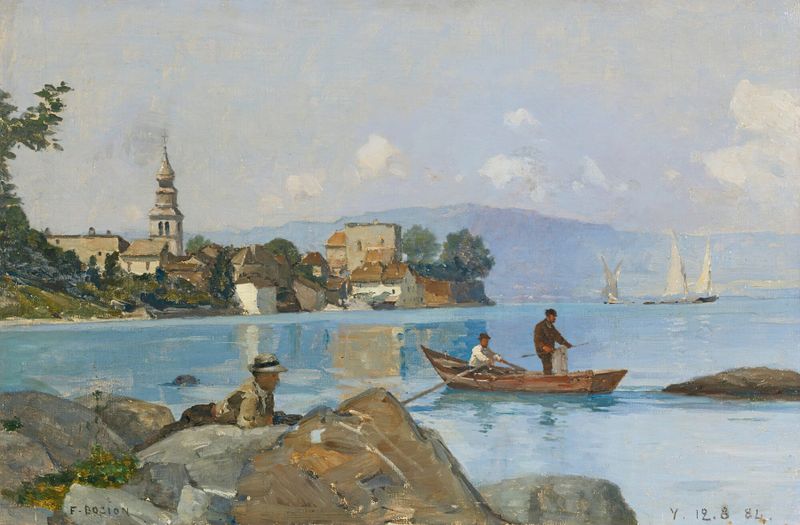
Yvoire
François Bocion
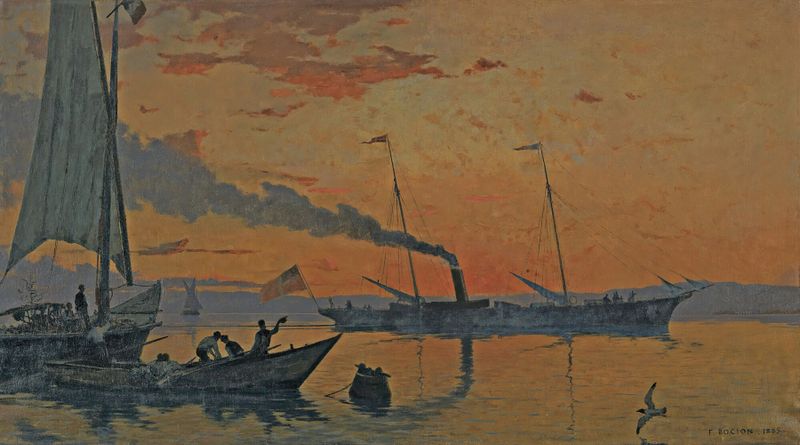
Sunset Atmosphere
François Bocion

Small Port in Brittany
François Bocion
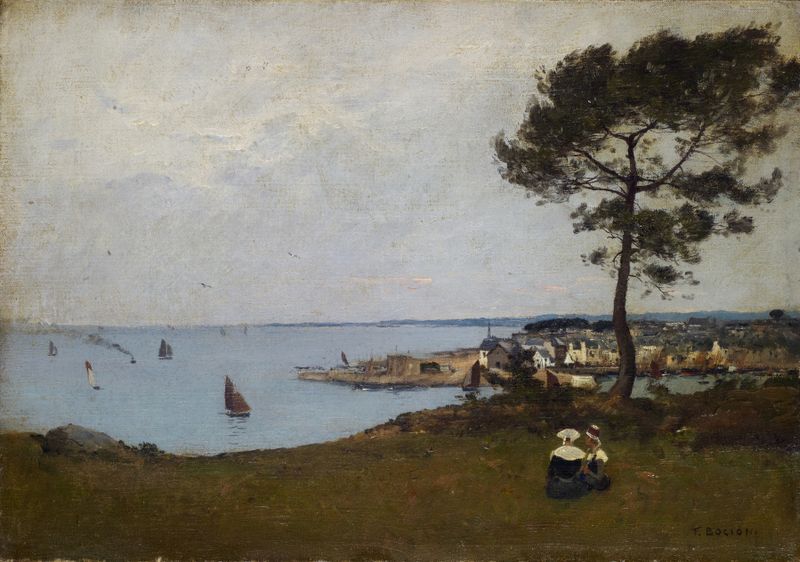
Small Breton Port
François Bocion
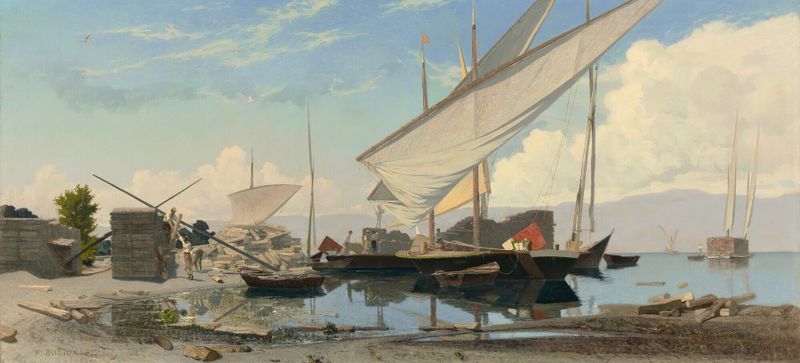
The Wood Loading
François Bocion





