
The Ponte Salario — History & Facts
In the subtle interplay of light and shadow, The Ponte Salario reveals a world where nature and the remnants of human ambition coexist, each vying for dominance. Look to the left where the sun filters through the delicate foliage, casting a warm glow over the ruins. The bridge, a crumbling relic, rises majestically against a backdrop of verdant hills, its arch inviting yet melancholy. The palette, rich in ochres and earthy greens, creates a sense of nostalgia, while the meticulous brushwork captures the texture of the aged stone and the fluidity of the water below, inviting contemplation on the passage of time. Beneath the serene surface lies a poignant contrast.
The idyllic landscape masks a history of decay and abandonment, hinting at the fragility of human endeavors. The juxtaposition of the lively greenery against the dilapidated structure speaks to resilience, yet evokes a sense of loss, as if to remind us that beauty often emerges from the remnants of what once was. Each stroke seems to whisper stories of those who traversed this bridge, their joys and sorrows entwined with the landscape. During the mid-1770s, while residing in Paris, Hubert Robert painted this work amidst a burgeoning interest in romanticizing ruins as symbols of history and emotion.
The Enlightenment era, characterized by exploration and reflection, influenced his approach, allowing him to capture not just the physical form but the essence of nostalgia—an embodiment of beauty in decay.
More Artworks by Hubert Robert
Browse all →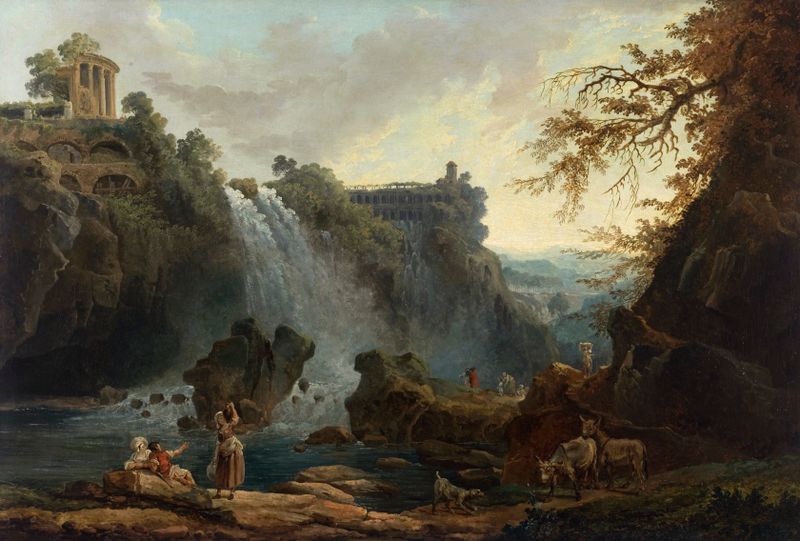
Les Cascatelles de Tivoli
Hubert Robert
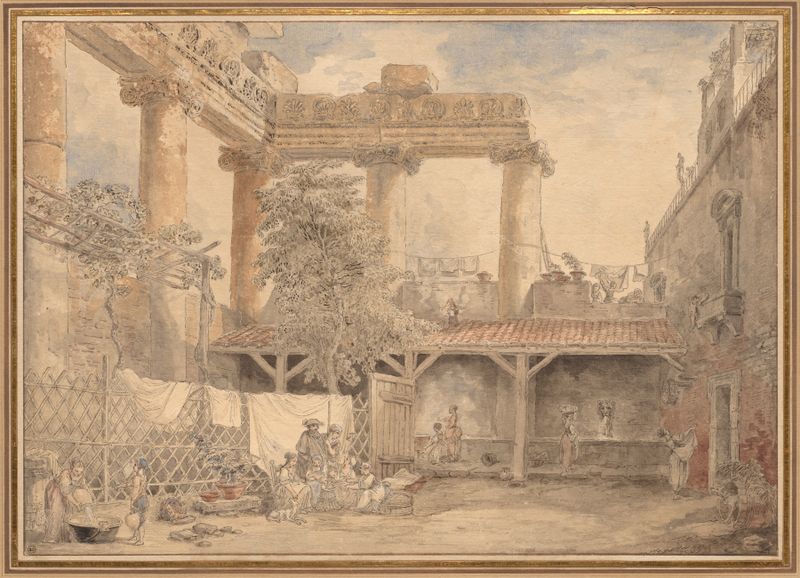
Roman Ruins, Villa Pamfili
Hubert Robert

The Rustic Bridge, Château de Méréville, France
Hubert Robert

The Portico of a Country Mansion
Hubert Robert

Architectural Capriccio
Hubert Robert

The Obelisk
Hubert Robert
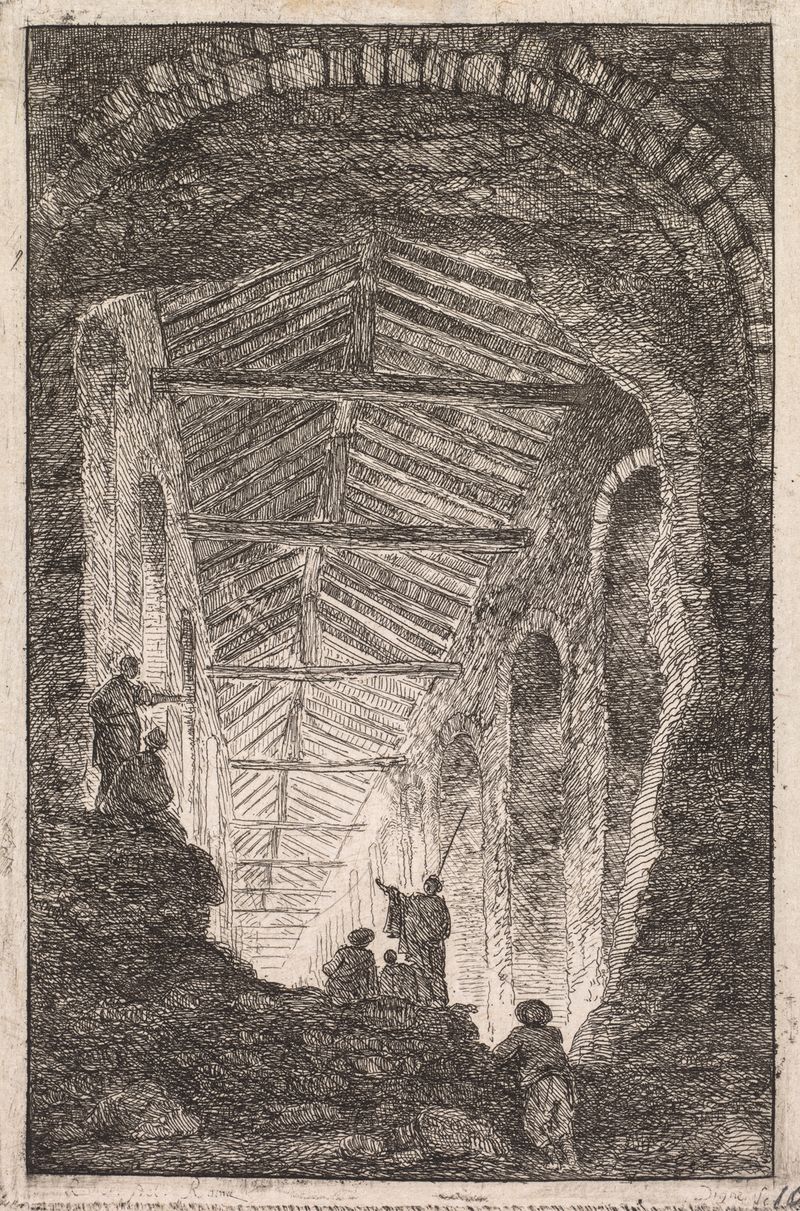
The Antique Gallery
Hubert Robert

L’incendie de l’Opéra, vu des jardins du Palais-Royal, le 8 juin 1781
Hubert Robert
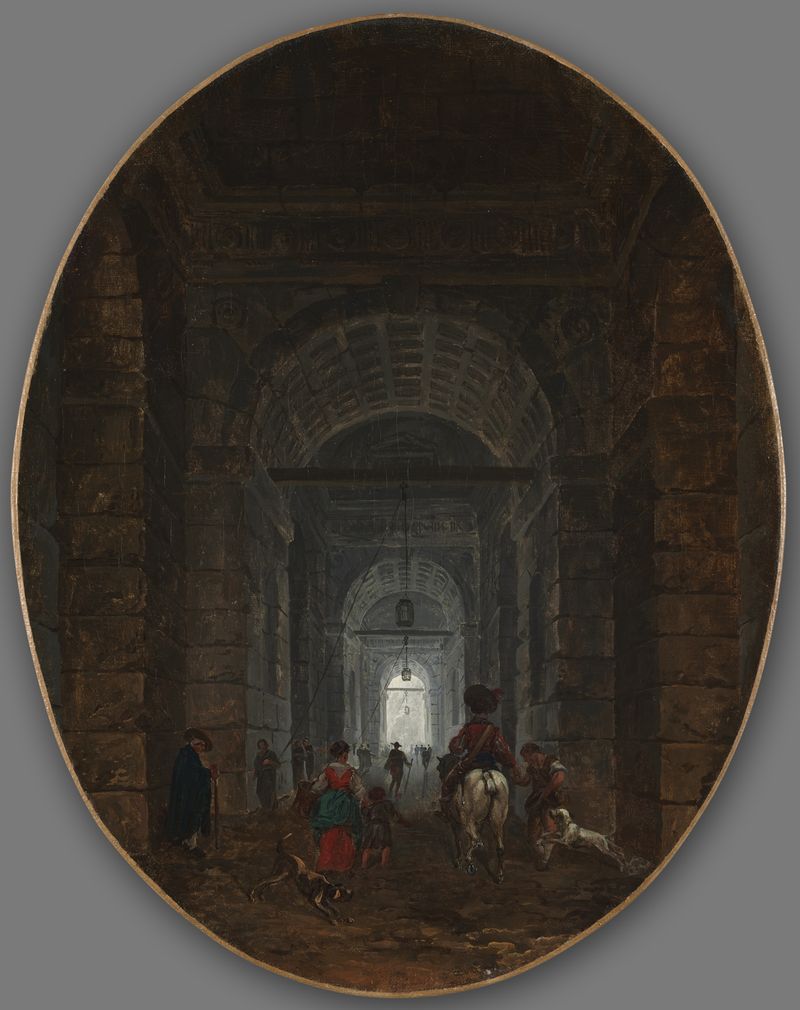
The Grotto of Posillipo
Hubert Robert

Architectural Capriccio with ruins of the Temple of Saturn and the Colosseum in the background
Hubert Robert





