The Port at Enkhuizen — History & Facts
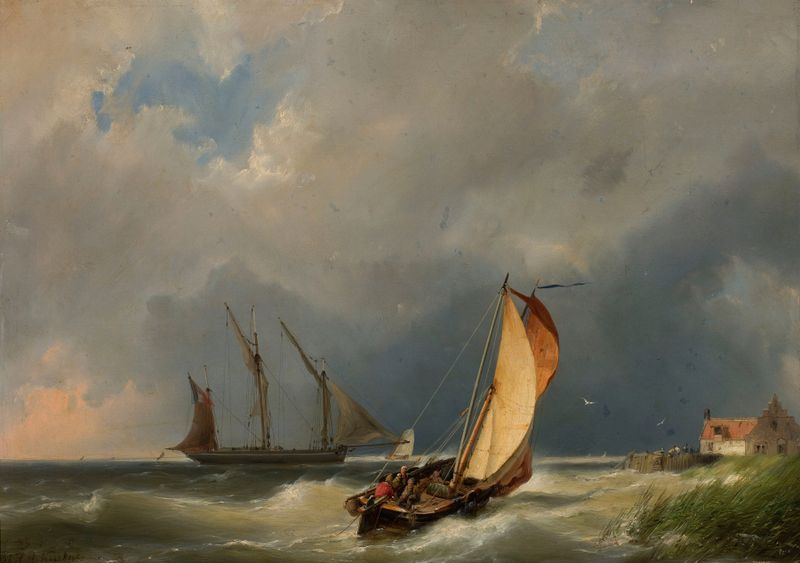
Is this a mirror — or a memory? In The Port at Enkhuizen, the delicate interplay of water and sky serves as a portal into the past, where the fragility of time is poignantly captured. Look to the right at the gentle ripples in the harbor, reflecting the soft hues of twilight. Notice how the light gracefully dances across the surface of the water, creating a mesmerizing blend of blues and oranges. The composition draws the eye toward the boats, their sails slightly billowing, suggesting a moment of pause in a bustling world.
Each brushstroke whispers secrets of the day, inviting the viewer to linger in this serene, almost dreamlike, ambiance. The contrasts in the painting resonate deeply: the solidity of the boats against the ephemeral quality of the water, the stillness of the port contrasting with the vibrancy of the evening sky. These elements collectively evoke a sense of nostalgia, hinting at the transient nature of life and memory. The scene feels both anchored in reality and suspended in time, where each element holds significance in a delicate balance between existence and impermanence. In 1892, Koekkoek created this work during a period characterized by a growing appreciation for seascapes and landscapes in Dutch art.
Living in the Netherlands, he was influenced by the romanticism of the time, striving to depict nature's beauty with meticulous detail. The year marked a time of transformation in his personal art journey, reflecting both his artistic evolution and the shifting tides of societal appreciation for realistic depictions of tranquil moments.