Seaweed Gatherers — History & Facts
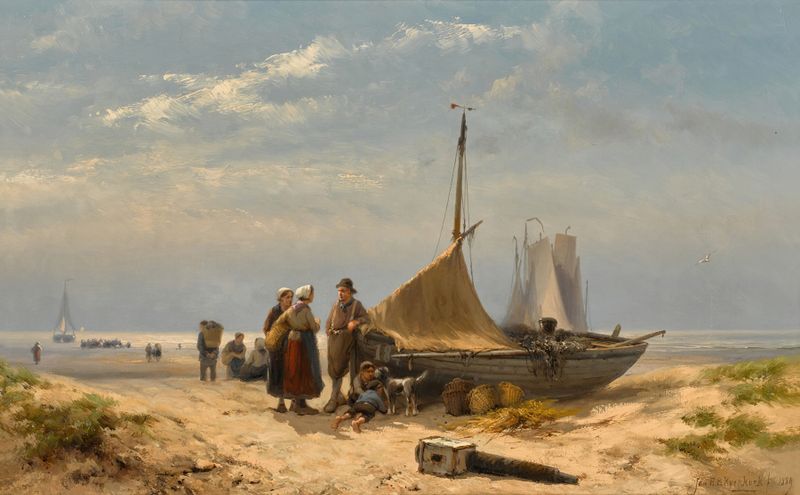
Can beauty exist without sorrow? In Seaweed Gatherers, we are drawn into a world where the sea’s bounty evokes both nostalgia and a sense of longing, capturing a moment that feels both fleeting and eternal. Look closely at the figures on the shore, gathered in their humble task. The soft afternoon light bathes them, illuminating their weathered faces and the delicate strands of seaweed in their hands. Notice how the muted greens and browns evoke the earthiness of the scene, while the pale blue sky hints at the endless horizon.
The composition draws our eye from the foreground, where the gatherers toil, to the serene waters that stretch beyond, creating a harmonious balance between labor and nature. Hidden beneath the surface of this tranquil scene is the contrast between the arduous work and the beauty of the environment. The weariness etched on the gatherers' faces speaks of their dedication, yet the gentle lapping of the waves suggests a world that is both nurturing and indifferent. This duality of existence—the harmony of labor against the backdrop of nature's vastness—echoes the bittersweet memories of labor and love, reminding us that beauty often emerges from struggle. Johannes Hermanus Barend Koekkoek painted Seaweed Gatherers in 1809, a time when Romanticism was gaining momentum in Europe.
Residing in the Netherlands, he was part of a generation that sought to capture the sublime beauty of nature, reflecting the changing relationship between humanity and the environment. This period was marked by both personal and societal upheaval, influencing his artistic vision and the themes he chose to explore.