
The Return of the Cattle — History & Facts
When did color learn to lie? In the lush landscape of The Return of the Cattle, Hubert Robert offers a vivid exploration of rebirth, where the soft greens of the pasture seem to pulse with life, inviting contemplation of renewal and the passage of time. Focus on the foreground, where a herd of cattle grazes peacefully, their forms rendered with such meticulous detail that they almost appear to breathe. The warm hues of the animals contrast beautifully with the cool blues of the sky, while a scattering of figures in the background connects the tranquil scene to the activities of everyday life. The balance between light and shadow is masterfully handled; sunlight filters through the trees, dappling the ground and enriching the colors with an almost ethereal glow. Beyond the idyllic surface lies a profound commentary on the relationship between nature and humanity.
The gentle, pastoral setting suggests harmony, yet the presence of the human figures hints at a complex interaction with the environment, perhaps alluding to the cycles of dependence and stewardship. Each brushstroke of the lush foliage contributes to the narrative of rebirth, symbolizing not just a return to agrarian roots, but also a resurgence of hope amid the uncertainties of life. Created during the years 1773 to 1775, this painting emerged in a period when Hubert Robert was deeply engaged in the Romantic exploration of landscape, amidst the shifting tides of artistic movements in France. The era was marked by a growing appreciation for nature, as well as a fascination with the past, which Robert embraced, infusing his works with both nostalgia and an inviting sense of peace.
More Artworks by Hubert Robert
Browse all →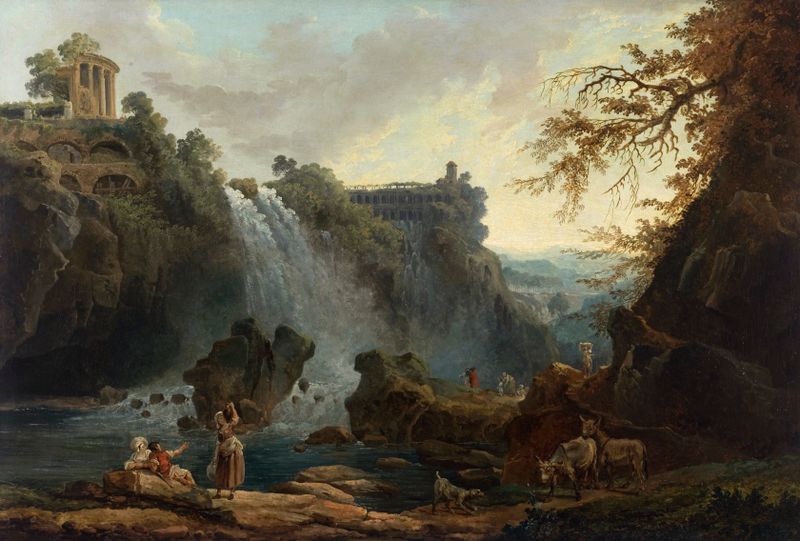
Les Cascatelles de Tivoli
Hubert Robert
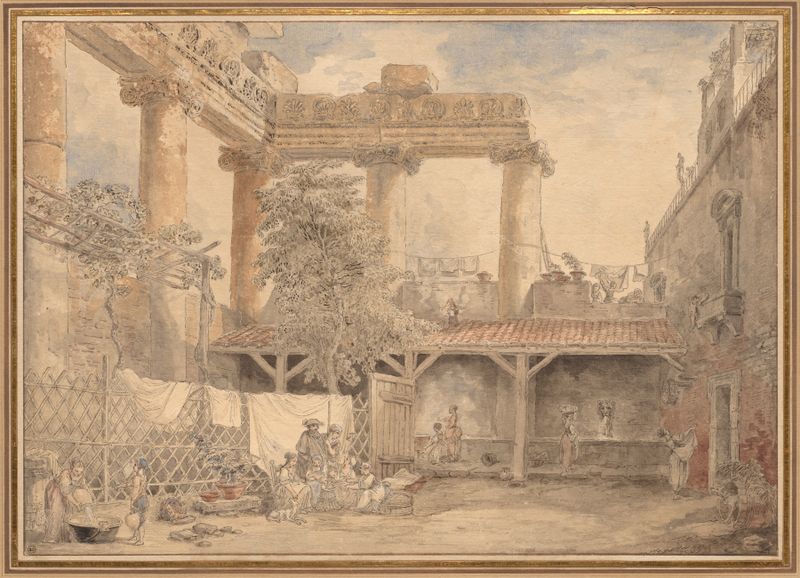
Roman Ruins, Villa Pamfili
Hubert Robert

The Rustic Bridge, Château de Méréville, France
Hubert Robert

The Portico of a Country Mansion
Hubert Robert

Architectural Capriccio
Hubert Robert

The Obelisk
Hubert Robert
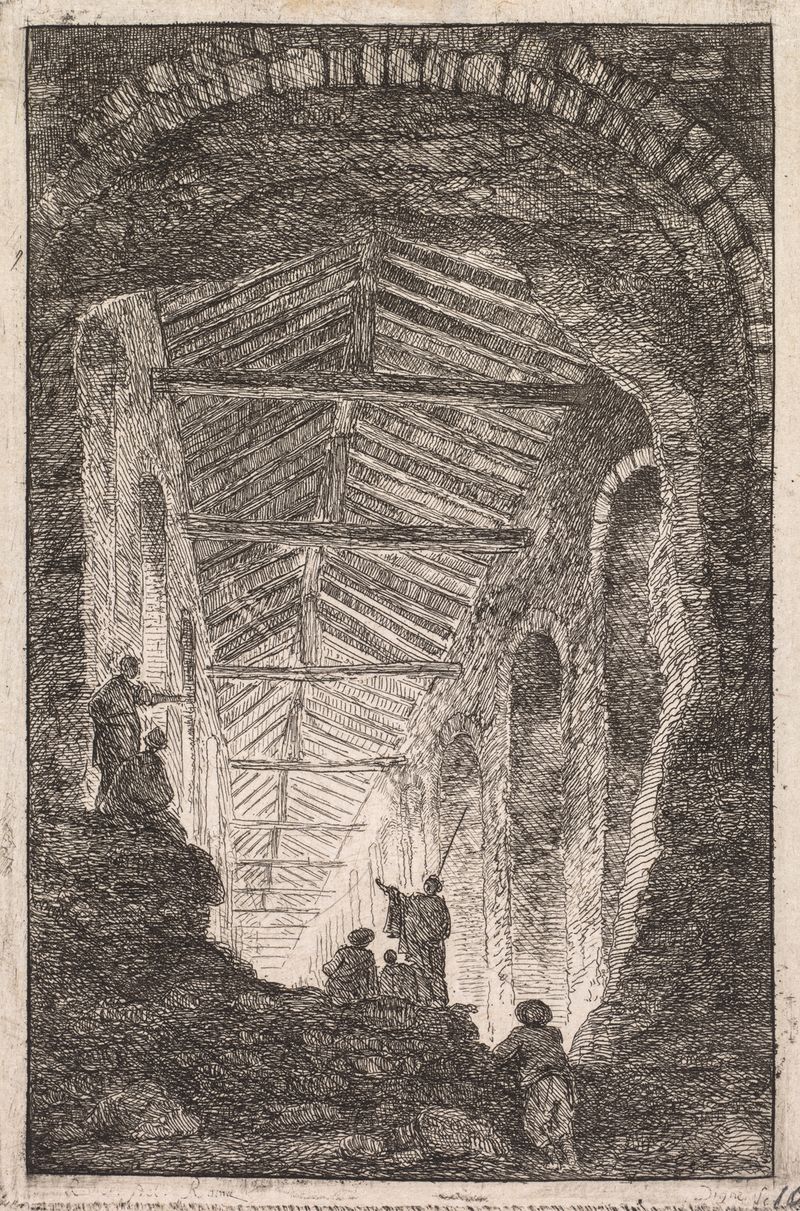
The Antique Gallery
Hubert Robert

L’incendie de l’Opéra, vu des jardins du Palais-Royal, le 8 juin 1781
Hubert Robert
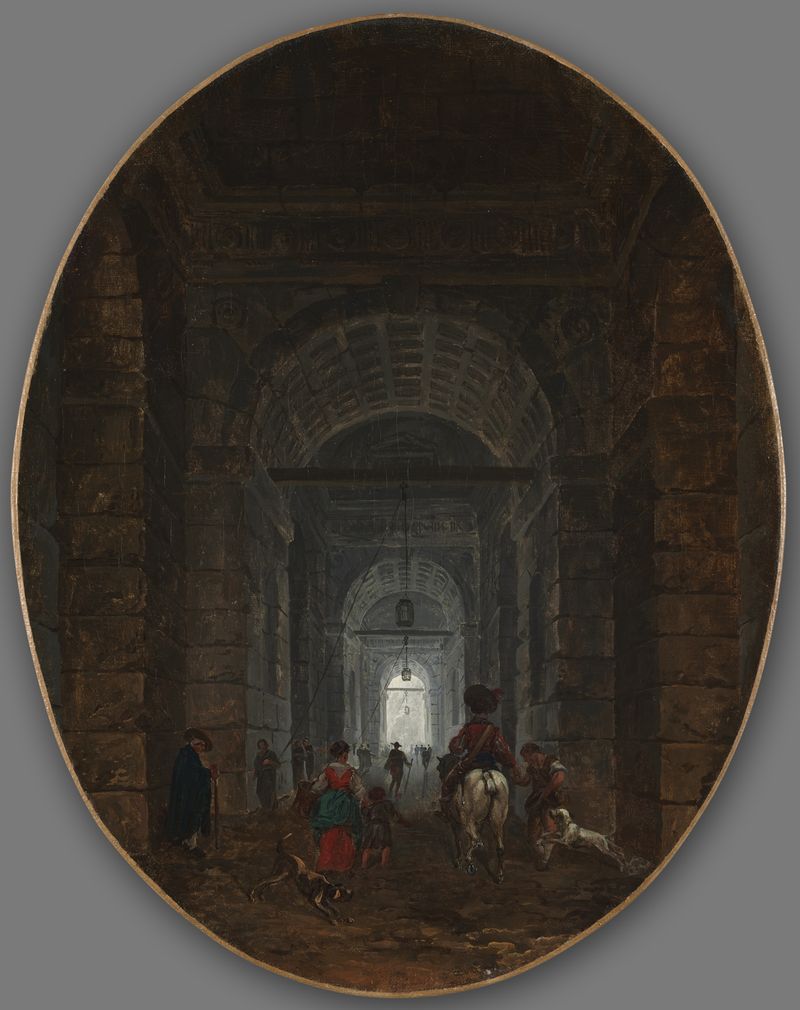
The Grotto of Posillipo
Hubert Robert

Architectural Capriccio with ruins of the Temple of Saturn and the Colosseum in the background
Hubert Robert





