The River, Sound Beach, Connecticut — History & Facts
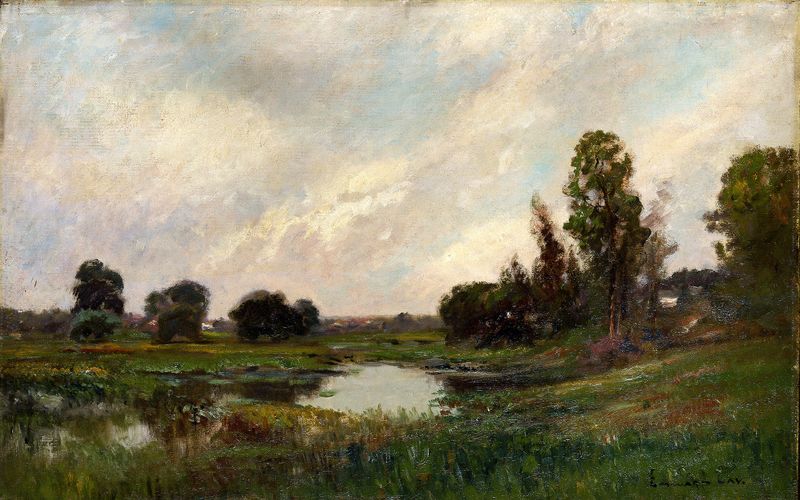
Did the painter know this moment would outlive them? In the quiet embrace of nature, beauty exists in stillness and transience, captured on canvas for eternity. Look towards the left side of the composition, where the soft hues of the sky blend seamlessly with the tranquil water below. The gentle ripples reflect the subtle pastels of dawn, hinting at the artist's delicate brushwork. Notice how the trees frame the scene — their lush greens contrasting with the pale blues and warm yellows, creating a harmonious balance that draws the eye across the transition from land to water. Beneath the surface of this serene landscape lies a deeper narrative.
The interplay of light and shadow suggests the passing of time, inviting contemplation of both the fleeting moment and the permanence of nature. The silhouettes of trees whisper of solitude and introspection, while the vibrant colors celebrate the vitality of life. Each detail, from the waving grasses to the distant hills, intertwines to evoke a profound sense of calm and reflection. Edward Gay painted this work between 1870 and 1907, a period marked by significant artistic shifts and a growing appreciation for American landscapes.
Living in Connecticut, he was part of a movement that sought to capture the sublime beauty of the natural world, often drawing influence from the Hudson River School. This piece reflects not only his technical skill but also a deep-seated reverence for the environment, at a time when such themes began to resonate with an increasingly urbanized society.