The River, Sound Beach, Connecticut — History & Facts
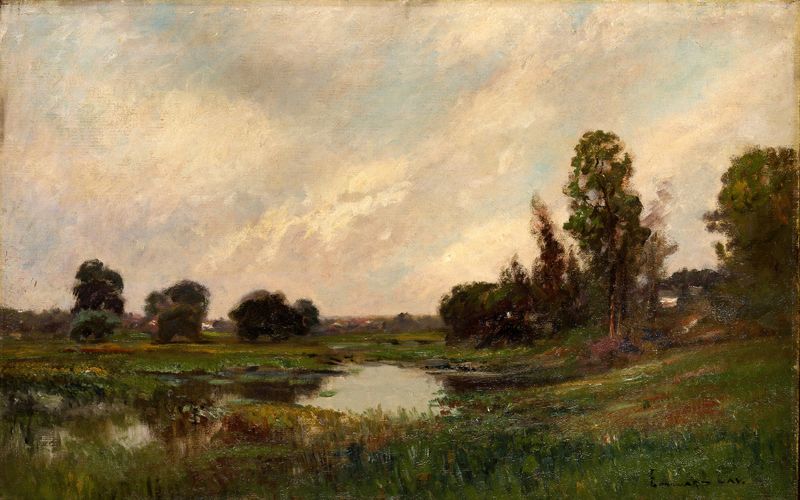
Where does light end, and longing begin? In The River, Sound Beach, Connecticut, a serene landscape conceals depths of emotional complexity beneath its tranquil surface. Look to the left at the shimmering water, where the sun spills its golden hue across the gentle ripples. The soft blues and greens of the foliage cradle the riverbank, inviting your gaze deeper into the scene's peaceful embrace. Notice how the artist layers texture upon texture, creating a rich tapestry of leaves and sky that breathe life into the landscape.
The play of light—dancing on the water's surface—suggests a fleeting moment, capturing both beauty and a sense of melancholy. Yet beneath this idyllic façade lies a whisper of betrayal. The juxtaposition of vibrant hues against the darker shadows hints at underlying tensions, where beauty masks the ache of yearning. Look closer at the subtle brushstrokes that convey movement among the trees, as if they mourn an unseen loss.
This contrast invites reflection on the dualities of nature—its tranquility and tumult, its joys and sorrows. Edward Gay created this work between 1870 and 1907, a time when American landscape painting was evolving, moving towards a more personal expression of nature. Living in Connecticut, he was influenced by the Impressionist movement, yet retained a unique approach that emphasized emotional depth over mere representation. This painting stands as a testament to his skill in weaving together light, landscape, and the deeper currents of human experience.