The riverside, Chelsea — History & Facts
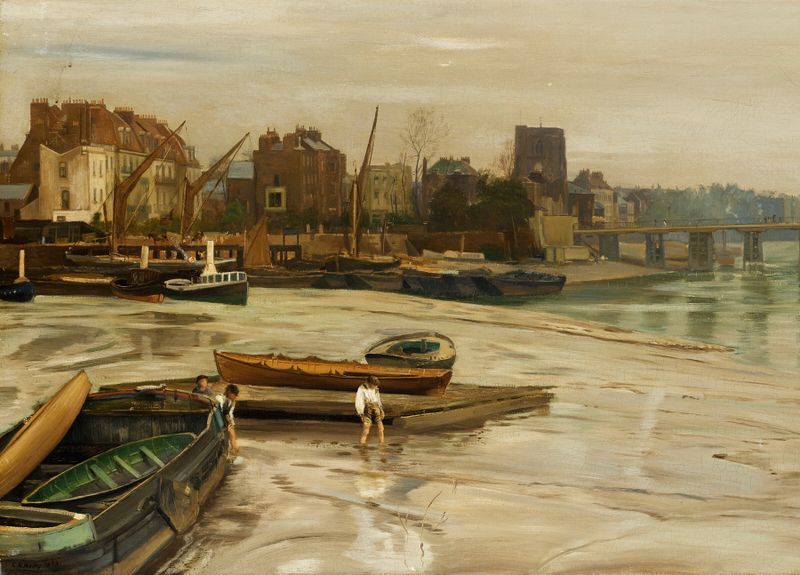
In the act of capturing beauty, an artist finds a profound connection to the past, inviting us to breathe life into what has slipped away. Look closely at the tranquil waters in the lower half of the canvas; they reflect the soft hues of the evening sky. Focus on the rich, warm tones of orange and pink as they blend seamlessly with the deepening blue, creating a serene backdrop for the riverside scene. The brushwork is loose yet deliberate, allowing the viewer to feel the gentle ripples of the water while drawing attention to the charming boats and figures drifting leisurely along the shore. Within this tranquil setting lies a subtle tension between stillness and movement.
The boats, though anchored, seem poised to glide away at any moment, symbolizing the transience of life. The figures on the banks are captured in quiet contemplation, evoking a sense of nostalgia for moments passed. Shadows play across the scene, reminding us that beauty often exists fleetingly, caught between the light of day and the encroaching night. In 1873, Charles Napier Hemy was living in England, immersed in a vibrant art community that embraced the natural beauty of the landscape.
During this period, he was exploring the effects of light on water, influenced by the Impressionist movement sweeping across Europe. As he painted The riverside, Chelsea, he sought to immortalize a fleeting moment, revealing his dedication to capturing the beauty of everyday life.