In the track of the trawlers — History & Facts
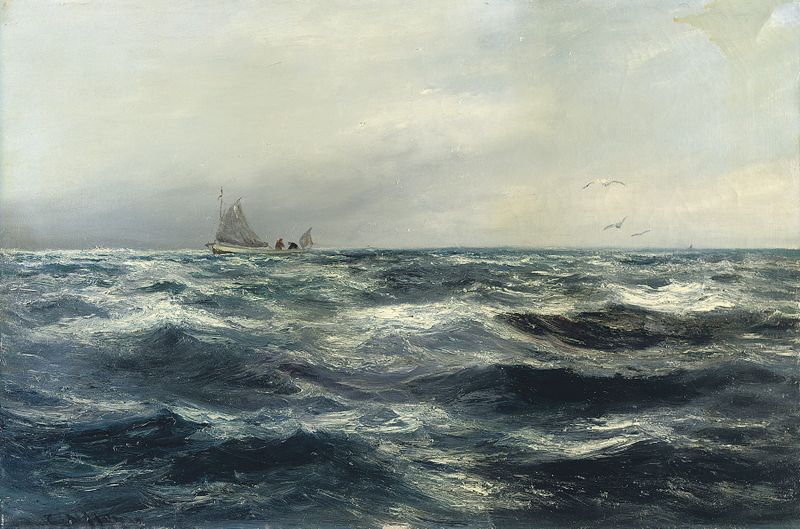
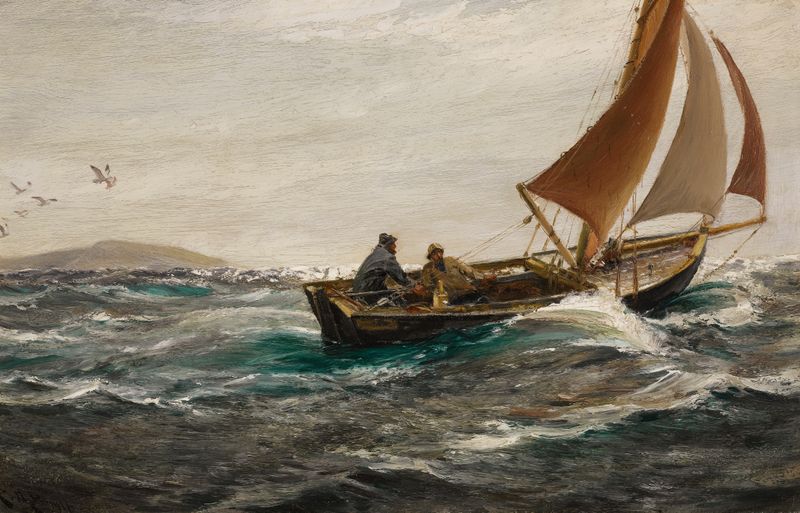
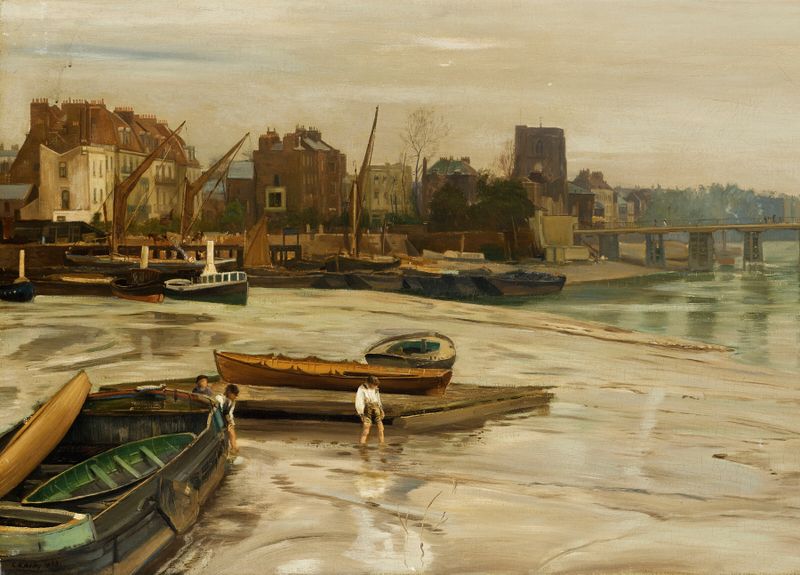
Who listens when art speaks of silence? In a world clamoring for noise and attention, the stillness captured in this piece invites a deeper contemplation of the divine. Look to the center of the canvas where the calm sea meets the horizon, its gentle waves reflecting a palette of muted blues and greys. The brushwork, soft and fluid, conveys a sense of serenity, drawing your eye toward the distant trawlers that seem to float weightlessly, almost ethereal. The quiet light bathes the scene, hinting at the passage of time while emphasizing the harmony between man and nature. As you explore the painting further, notice the delicate details that hint at the interplay of human ambition and the vastness of the universe.
The trawlers, symbols of industriousness, contrast with the expansive emptiness of the sea. This duality speaks to the fragility of existence; amid human endeavors, there lies an eternal serenity, a reminder of something greater that remains just out of reach. Each ripple of water carries with it a story, echoing the whispers of fishermen and their age-old rituals. In 1896, Charles Napier Hemy painted this work during a time of growing industrialization and maritime expansion, while residing in Newlyn, Cornwall.
The bustling art scene of the period was transitioning from traditional landscapes to a more intimate, personal exploration of nature. Hemy's focus on the coastal life and its profound stillness reflects not only his own experiences but also the broader cultural shift towards interpreting the divine in everyday life.