The riverside, Chelsea — History & Facts
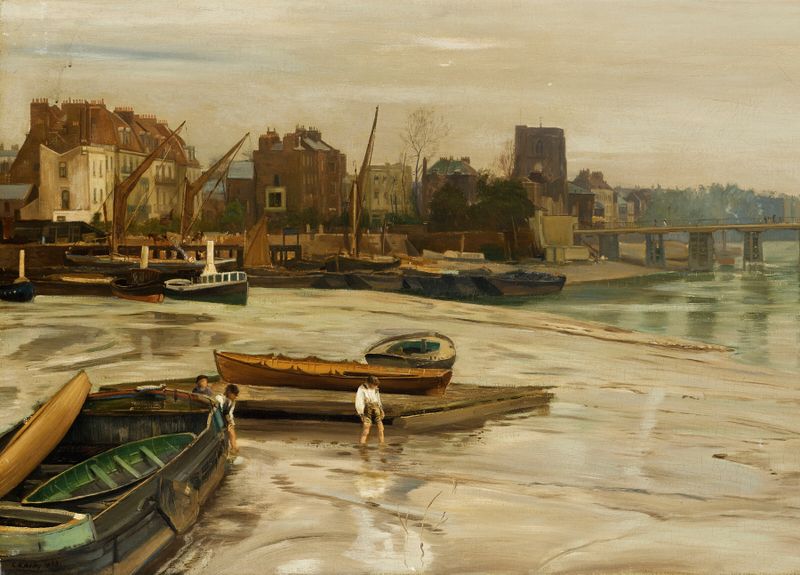
In an era of upheaval, every brushstroke becomes a testament to fleeting moments and enduring beauty amid chaos. Look to the left at the gentle curve of the river as it winds through the composition, a silver ribbon shimmering under a pale sky. The artist's deft use of light creates an ethereal glow, illuminating the foliage that frames the scene. Notice how the vibrant greens contrast with the cool blues of the water, pulling you into a serene yet dynamic interplay.
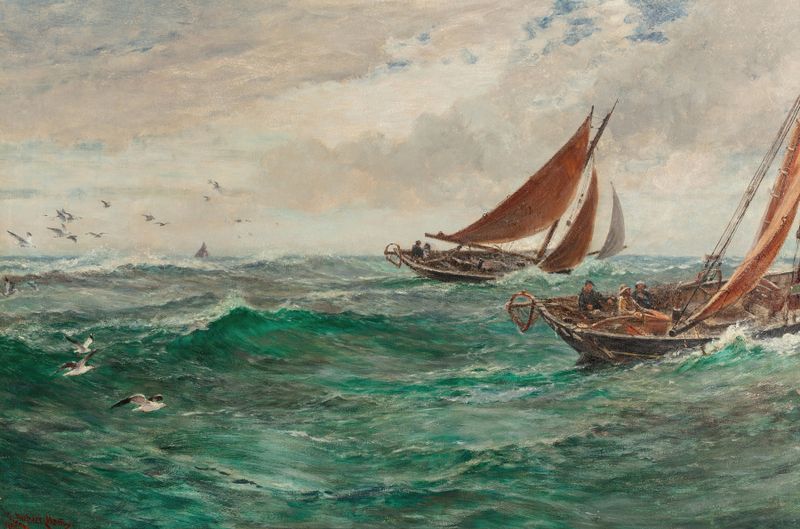
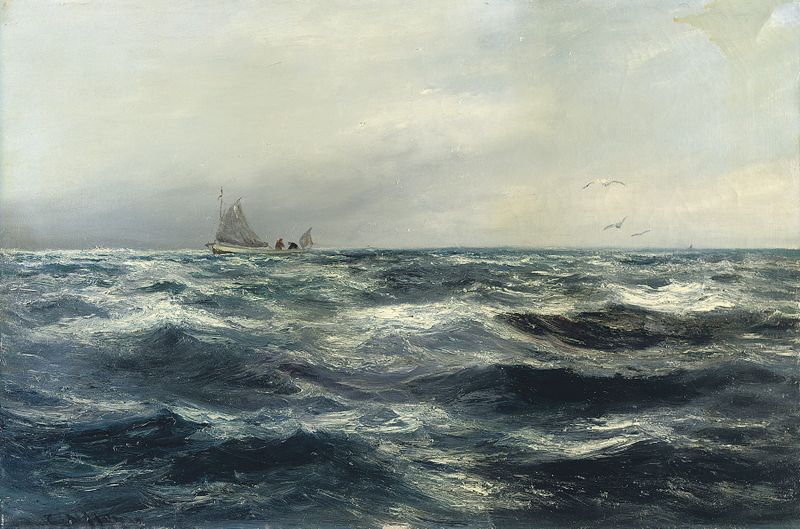
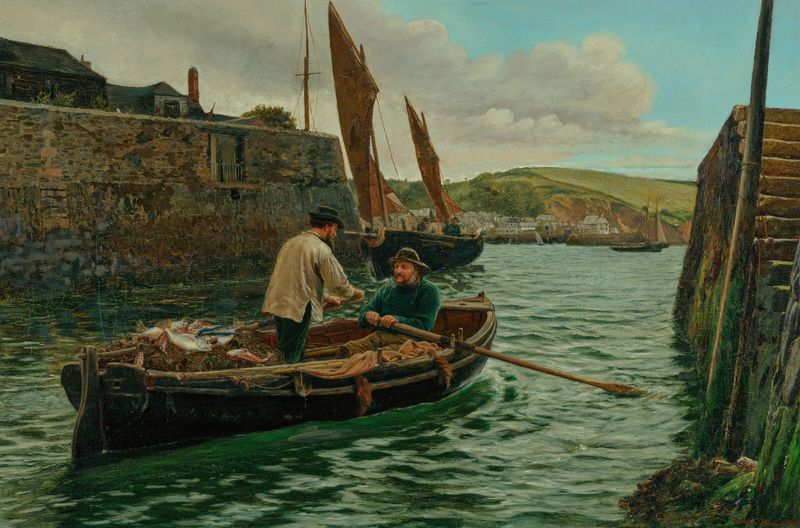
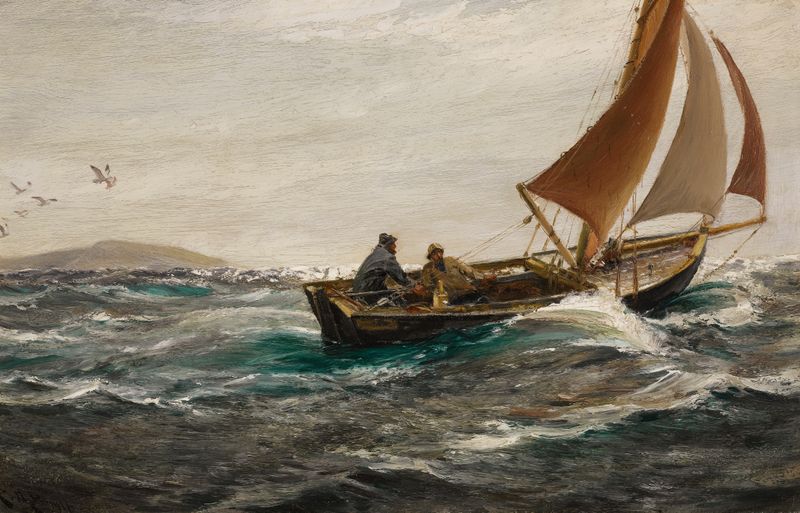
Each stroke captures the meticulous detail of the boats, their sails catching the breeze, inviting you to explore further into this tranquil tableau. Beneath the surface of this idyllic riverside scene lies a tension between nature and the encroaching industrial age. The boats, leisurely floating, symbolize a world resisting change, while the distant outlines of emerging structures hint at revolution—a transformation inevitably looming. The soft brushwork evokes nostalgia, contrasting with the stark reality of progress, urging the viewer to reflect on what is gained and lost in the march of time. Charles Napier Hemy painted The riverside, Chelsea in 1873 during a period when Britain was experiencing significant industrial and social change.
Living in London, he was part of a generation of artists grappling with the tension between the pastoral and the urban. His focus on natural beauty in the face of modernization reveals both a personal and collective struggle, capturing a moment teetering on the brink of revolution.