With Wind And Tide – Off The Dodman-Head, Falmouth — History & Facts
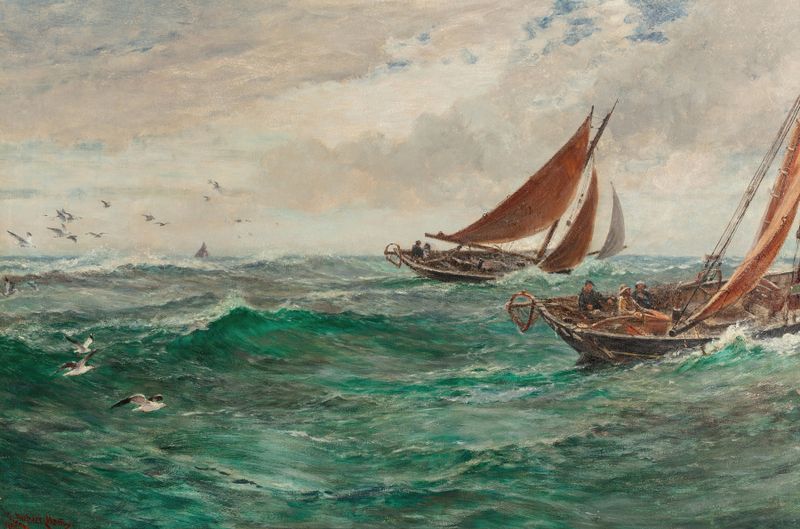
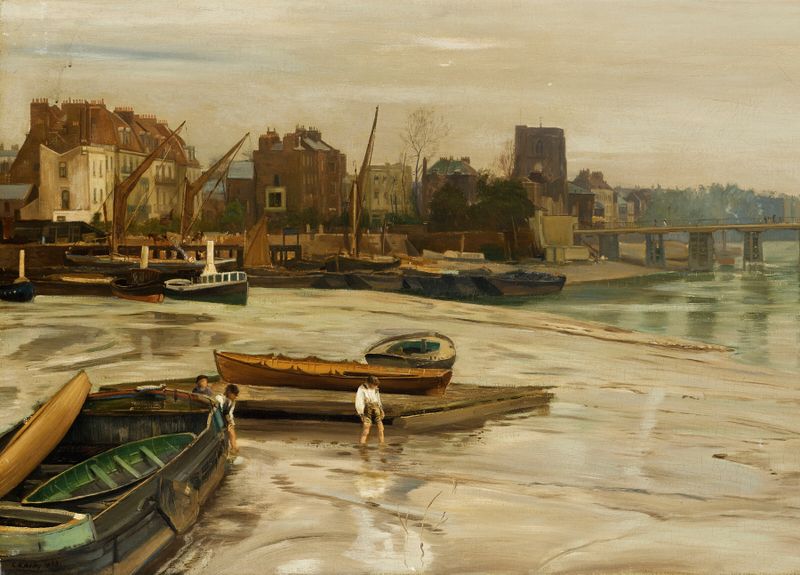
Where does light end, and longing begin? In the tranquil embrace of With Wind And Tide – Off The Dodman-Head, Falmouth, the horizon stretches infinitely, blurring the lines between sea and sky, evoking a profound sense of serenity. Look closely at the interplay of blues and soft whites — the waves gently rolling under the delicate caress of a fading sun. Focus on the distant boats, their sails billowing gracefully, exuding a sense of adventure and freedom. Notice how the light dances upon the water’s surface, creating a shimmering pathway that invites the viewer to step into the scene, while the clouds above cradle the horizon in a soft, warm embrace of pastel hues. Within this calm tableau lies an undercurrent of emotional tension.
The boats, both anchored and afloat, symbolize the delicate balance between stability and wanderlust. The harmonious colors convey tranquility, yet the dynamic movement of the clouds suggests change and the inevitability of time's passage. Each brushstroke conveys a longing for connection to nature, reminding us of our place within its vastness. Charles Napier Hemy painted this work in 1916 while residing in Falmouth, a coastal town that influenced many of his maritime themes.
This was a time of global turmoil during World War I, yet Hemy found solace in the beauty of the ocean, capturing moments of peace amidst chaos. His relationship with the sea deepened during this period, as he turned to it for inspiration and respite.