
The Road from Versailles to Louveciennes — History & Facts
In The Road from Versailles to Louveciennes, a fleeting moment is captured, inviting contemplation of the divine interplay between nature and human experience. Look to the middle of the canvas, where delicate strokes of light weave through vibrant greens and browns, creating a path that meanders toward the horizon. The interplay of sunlight dapples the scene, illuminating the figures walking along the road with a soft golden hue. Notice how the trees to the left stand tall and sturdy, their leaves fluttering in a gentle breeze, while the distant houses suggest a life intertwined with the landscape.
The soft focus of the background contrasts with the clarity of the figures, drawing the viewer’s gaze toward the warmth of their endeavor. Beneath the serene surface lies a tension between motion and stillness. The figures, small yet purposeful, embody the human spirit striving for connection with both nature and each other. The winding road symbolizes life's journey, suggesting both a physical and spiritual passage, while the distant houses whisper of domesticity and belonging, hinting at the tension between the wild and the civilized.
Each brushstroke resonates with a collective memory of travel and transformation, evoking a sense of longing for communion with the divine. Pissarro painted this work around 1872, during a period marked by the emergence of Impressionism as a revolutionary movement in art. Nestled in the suburbs of Paris, he sought to capture the beauty of the everyday, reflecting the changing landscapes of modernity. This was a time of personal trials for him, yet he found solace and inspiration in the scenery, choosing to immortalize these quiet moments in nature.
More Artworks by Camille Pissarro
Browse all →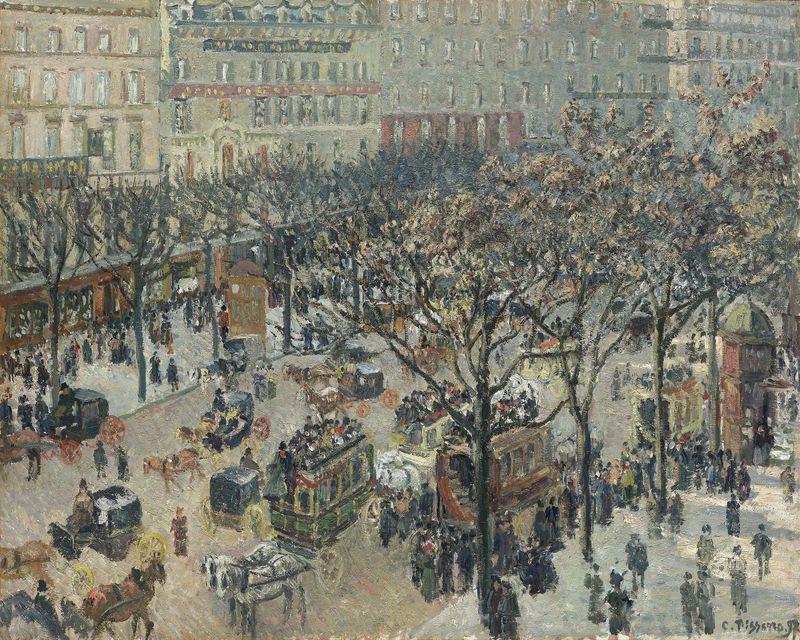
Boulevard des Italiens,Morning_Sunlight
Camille Pissarro
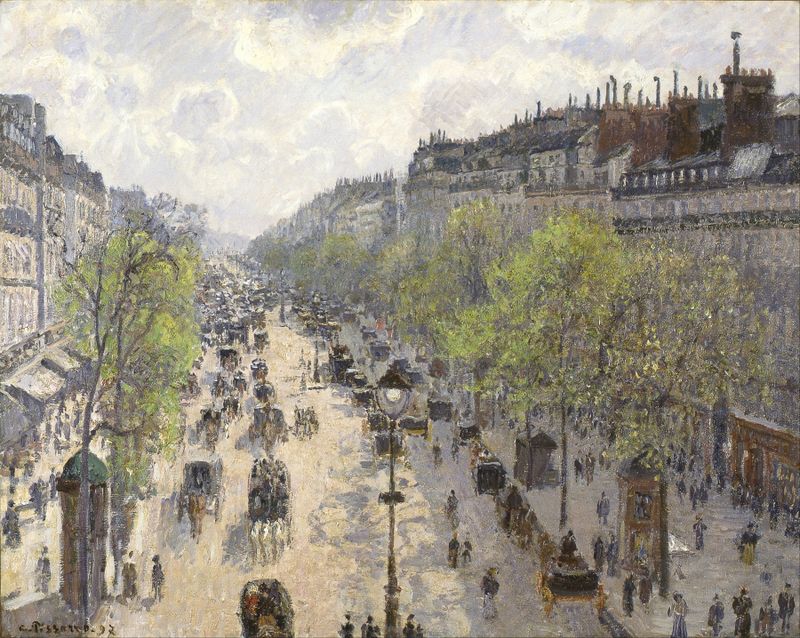
Boulevard Montmartre, Spring
Camille Pissarro
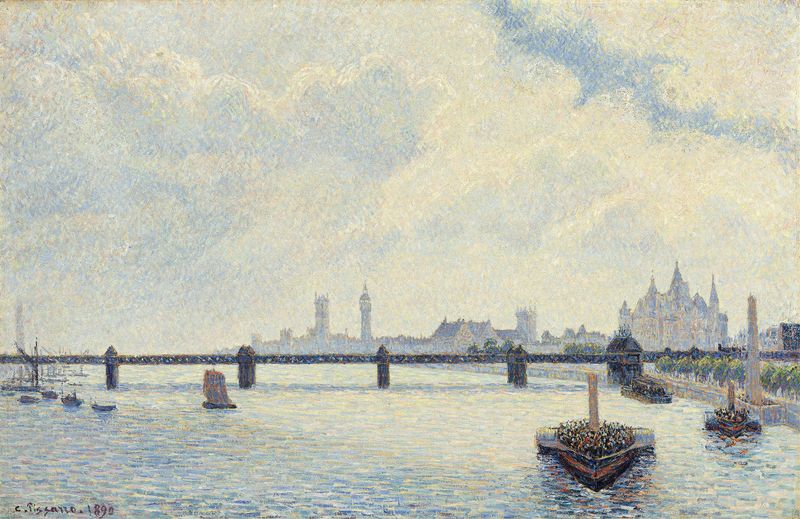
Charing Cross Bridge,London
Camille Pissarro
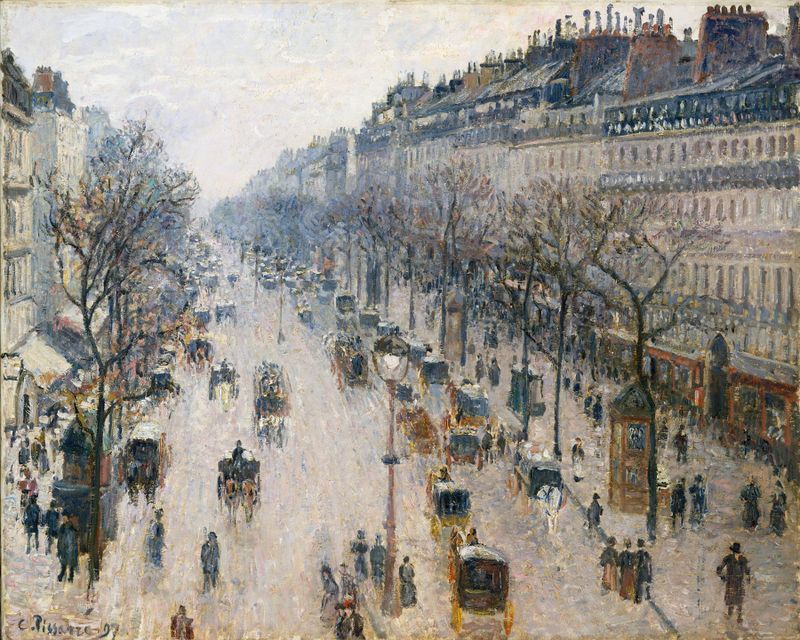
The Boulevard Montmartre on a Winter Morning
Camille Pissarro
La Place du Théâtre Français
Camille Pissarro

Rue Saint-Lazare, Paris
Camille Pissarro
L’hermitage En Été, Pontoise
Camille Pissarro

Place du Theatre Francais,Fog Effect
Camille Pissarro
La barrière du chemin de fer, aux Pâtis près Pontoise
Camille Pissarro
Port de Bruxelles
Camille Pissarro





