
The Road To Market — History & Facts
Can beauty exist without sorrow? In the stillness of The Road To Market, that question lingers, capturing the delicate balance between hope and hardship. Look closely at the winding path that beckons you into the landscape. Your gaze is drawn to the figure of a woman, her basket poised upon her arm, moving purposefully along the sun-drenched road. Notice how the golden light bathes her in a warm glow, accentuating the textures of her clothing and the earthy tones of the landscape.
The gentle curves of the path lead your eye through the painting, inviting you to explore both the physical journey and the emotional weight carried by its solitary traveler. In this serene portrayal, contrasts emerge between the lush greenery and the woman’s humble presence, hinting at the quiet struggles of everyday life. The overhanging trees, with their dappled shadows, cast a sense of both shelter and confinement, suggesting a duality of safety and isolation. As the viewer, you feel the pulse of the earth beneath her feet juxtaposed with the weight of her burden, symbolizing resilience and hope despite the shadows that linger in the background. Created during a time when Birket Foster was entrenched in the art of capturing rural life in England, The Road To Market reflects his focus on the intimate relationship between nature and humanity.
Painted in the late 19th century, this work coincided with a growing interest in the idyllic portrayal of landscapes, even as industrialization began to reshape the countryside. It was a time of personal and artistic exploration, as he sought to depict beauty amidst the trials of existence, emphasizing the quiet dignity found in life’s simplest moments.
More Artworks by Myles Birket Foster
Browse all →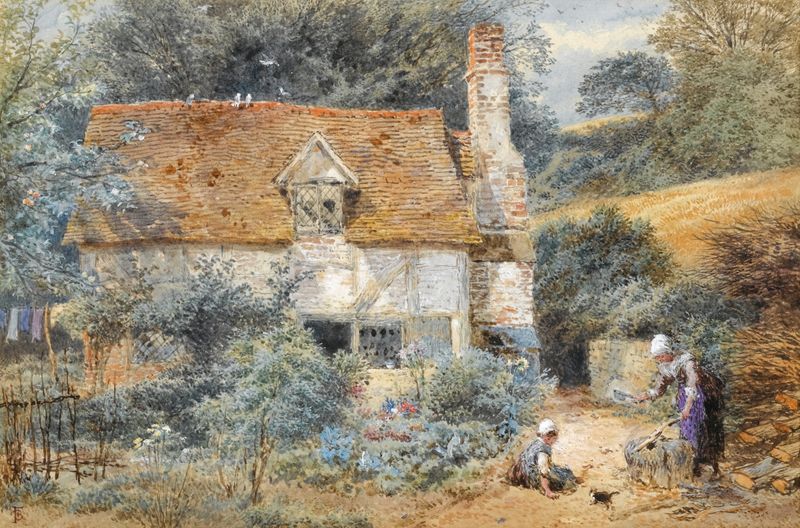
The Cottage
Myles Birket Foster
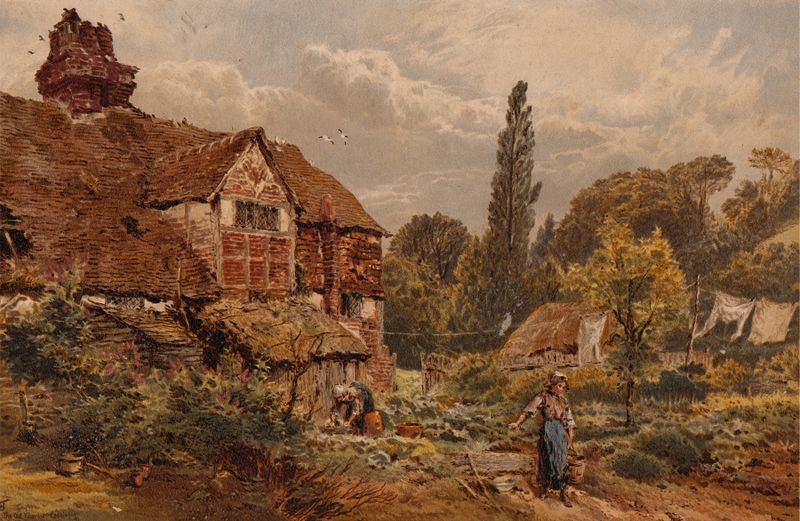
The Old Vicarage
Myles Birket Foster
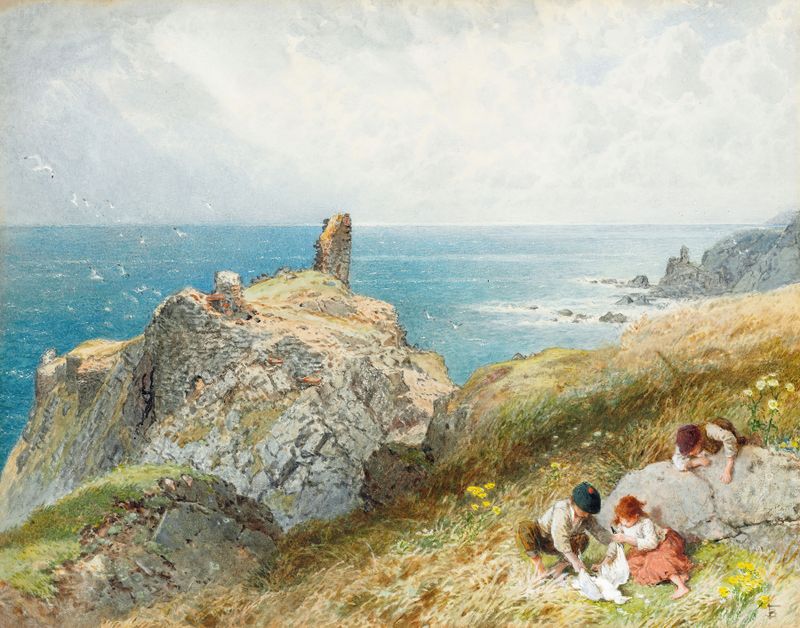
Fast Castle, Berwickshire, Scotland
Myles Birket Foster
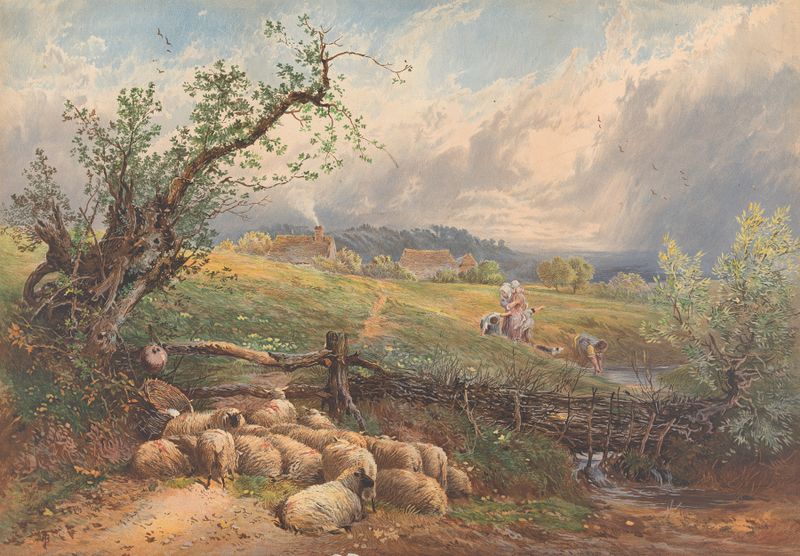
Children at the Spring
Myles Birket Foster
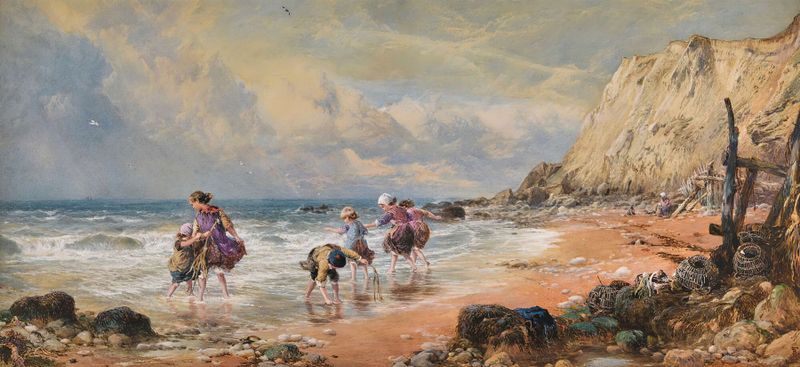
On The Shore, Bonchurch
Myles Birket Foster
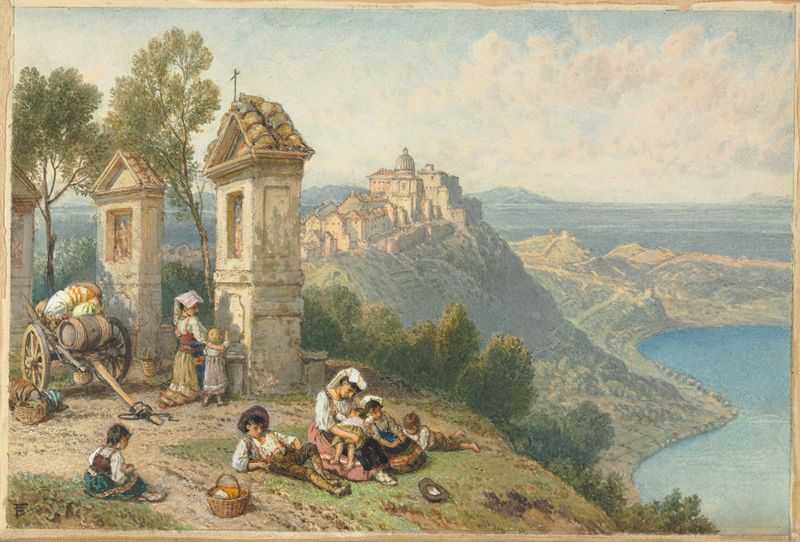
View of Castel Gandolfo
Myles Birket Foster

Children in a Cart
Myles Birket Foster
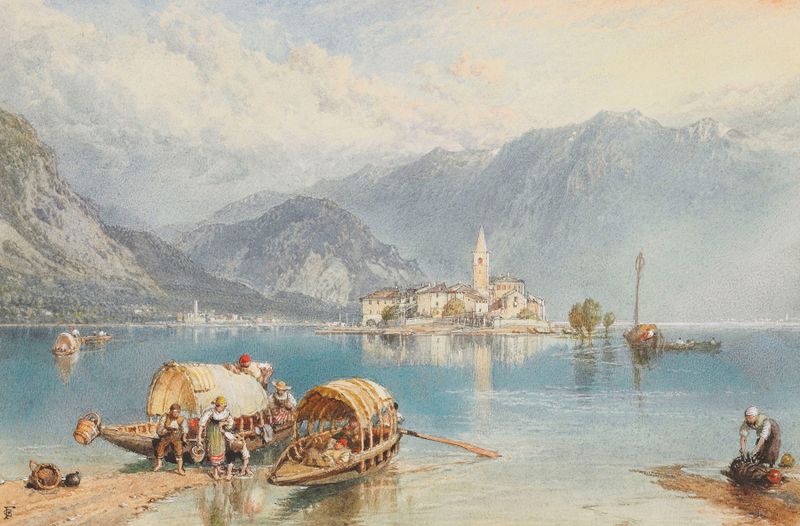
View of Isola Bella, Lake Maggiore, Italy
Myles Birket Foster

Loch Awe At Sunset
Myles Birket Foster

The shepherd’s watch
Myles Birket Foster





