
The Rock of Beauregard, Lyon (1780-1790 — History & Facts
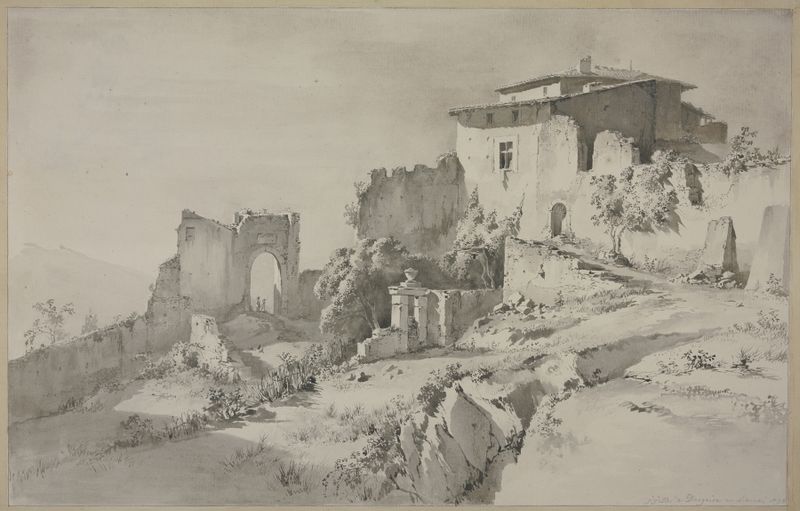
This sentiment echoes deeply within the serene beauty of the landscape, where nature's whispers unveil the revelations of existence. Look to the foreground of The Rock of Beauregard, Lyon, where the rugged contours of the rocky outcrop rise dramatically, framed by a gentle haze of twilight. The artist’s delicate brushwork captures the interplay of light and shadow, imbuing the stone with a warmth that contrasts with the cool blues of the sky. Notice how the flowing lines of the trees lead the eye upward, inviting contemplation, while the distant hills stand stoically as silent observers of the scene. Beneath its quiet surface, the painting is rich with layers of meaning.
The rock itself embodies permanence, an anchor amidst the fleeting nature of life, suggesting a tension between stability and the inevitable march of time. Meanwhile, the gentle gradients of color evoke an emotional landscape, hinting at nostalgia and the transient beauty of ephemeral moments. Each element contributes to an underlying sense of revelation, as if the landscape holds secrets yearning to be unearthed. During the late 18th century in France, Jean-Jacques de Boissieu was immersed in the Rococo art movement, which celebrated nature's splendor.
This work, painted between 1780 and 1790, reflects his dedication to capturing the sublime in everyday landscapes. At this time, the world around him was shifting, with Enlightenment thought emerging, emphasizing individual experience and personal reflection, themes that resonate beautifully within this piece.
More Artworks by Jean-Jacques de Boissieu
Browse all →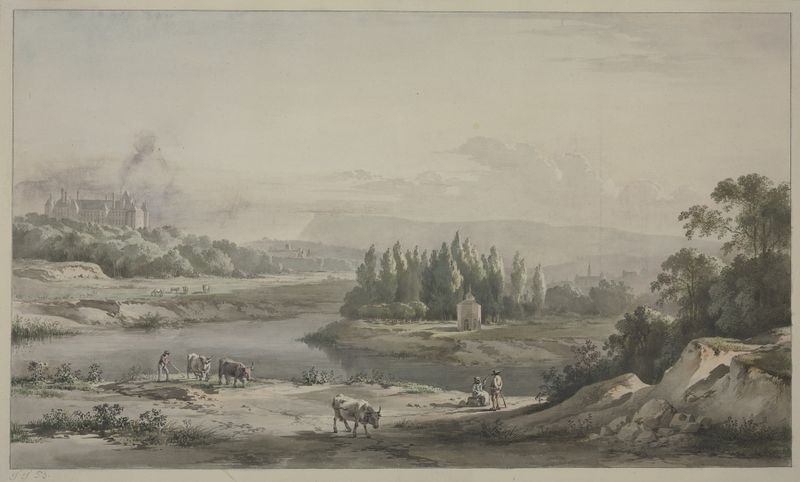
River Landscape
Jean-Jacques de Boissieu

Vestiges du temple d’Apollon au bord du Lac d’Auverne
Jean-Jacques de Boissieu

Vue du pont de la Guillotière à Lyon
Jean-Jacques de Boissieu
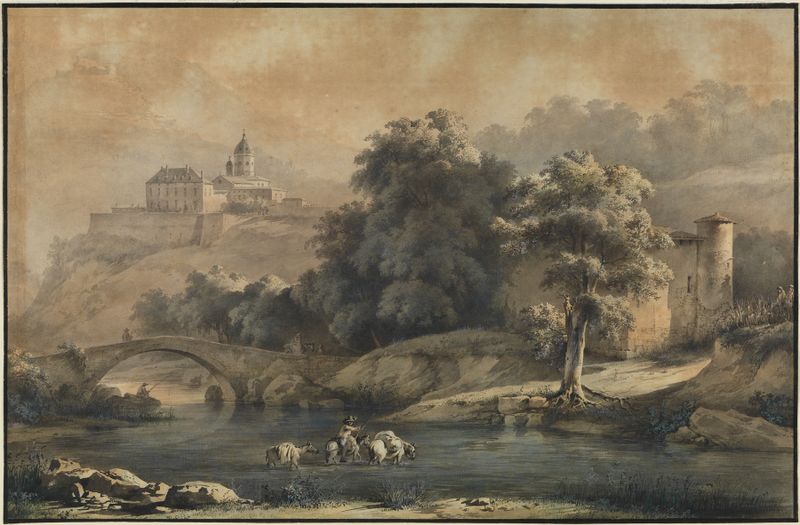
Flußlandschaft mit Bergkloster
Jean-Jacques de Boissieu
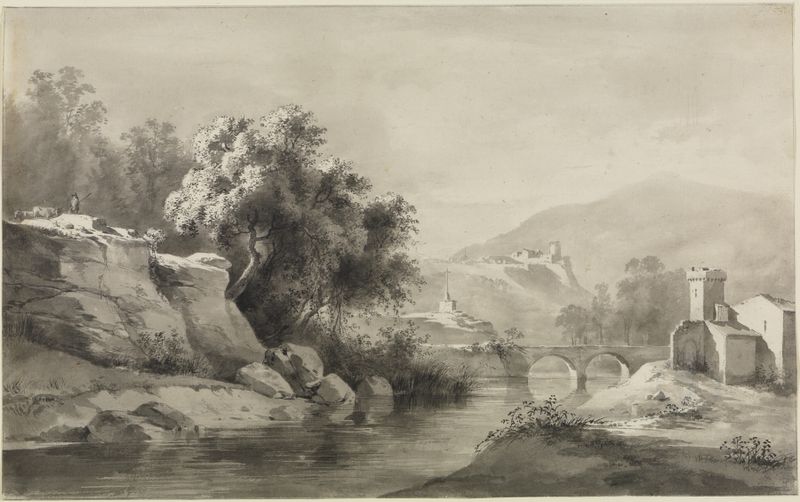
Flusslandschaft mit Doppelbogenbrücke und Kreuz
Jean-Jacques de Boissieu
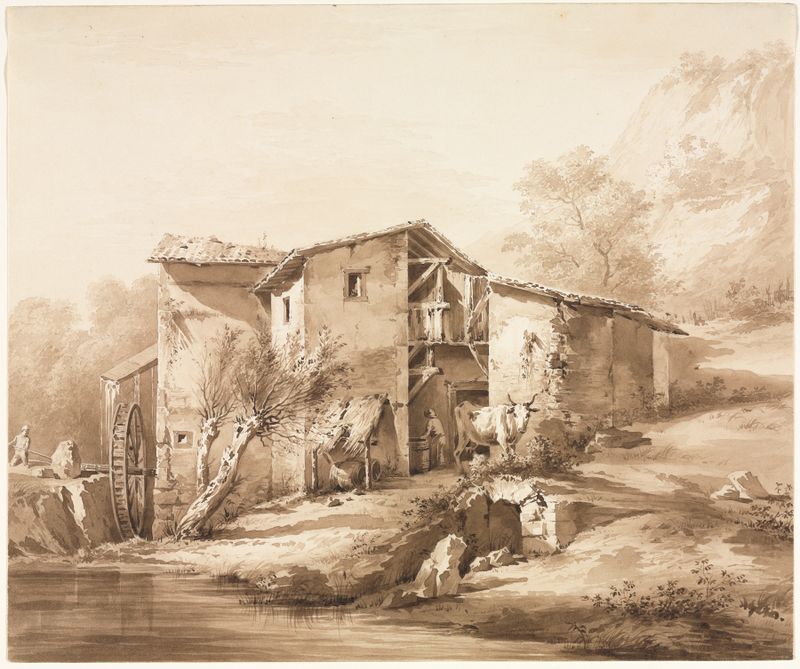
Landscape with Watermill
Jean-Jacques de Boissieu

Château Galliard
Jean-Jacques de Boissieu

Flußlandschaft bei L’Arbresle im Lyonnais
Jean-Jacques de Boissieu
Landscape near Dargoire
Jean-Jacques de Boissieu

Tree with leafless treetop
Jean-Jacques de Boissieu





