The Saas Hunting Lodge, Liechtenstein — History & Facts
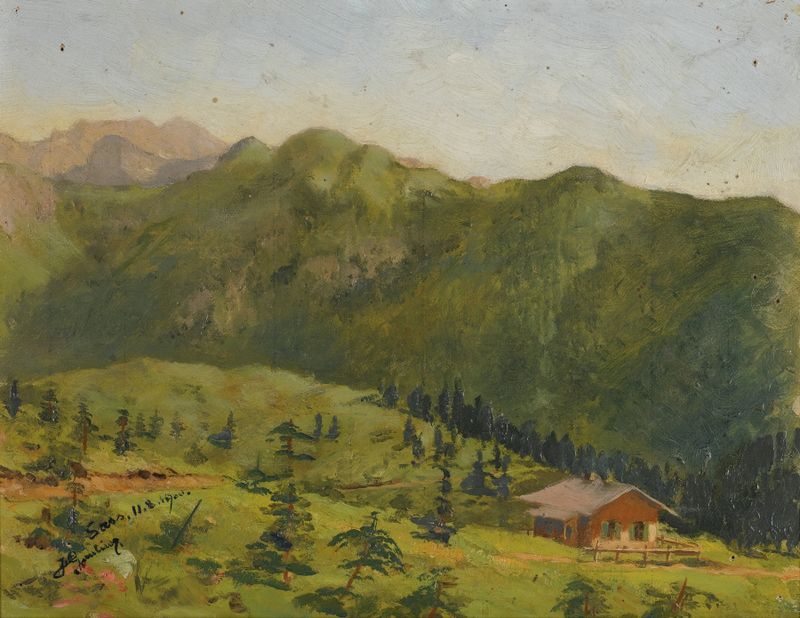
Is this a mirror — or a memory? In Hans Gantner's depiction of a quaint lodge nestled within a landscape that melds reality with reverie, we are invited to explore the boundaries of our own perceptions of place and belonging. Look to the left at the gentle curves of the mountains, stoic and eternal, framing the central figure of the lodge. Notice how the subdued palette of greens and browns contrasts with the soft azure sky above, creating an atmosphere of serene nostalgia. The brushwork dances lightly across the canvas, invoking a fleeting quality, as though the scene itself is caught in the midst of a daydream.
Every shadow and highlight seems deliberate, inviting the viewer to linger and absorb the tranquil ambiance. Delve deeper, and you may find the artwork grappling with the themes of transience and permanence. The lodge stands resilient amid the sweeping landscape, a symbol of human endeavor against the backdrop of nature's immensity. Yet, the delicate handling of the trees and the fluidity of the clouds suggest an impermanence, urging us to contemplate what remains after memories fade.
Here lies a subtle tension between manmade structures and the wild, untamed beauty that envelops them. At the turn of the 20th century, Gantner was immersed in a burgeoning art scene in Europe, where the transition towards modernism was beginning to take shape. Painting The Saas Hunting Lodge in 1901, he observed the swift changes in society and the way artists were redefining their relationship with nature. The Peace of the Alps served as both muse and metaphor, illuminating a path for Gantner’s exploration of nostalgia and the fleeting passage of time.