The Saas Hunting Lodge In Liechtenstein — History & Facts
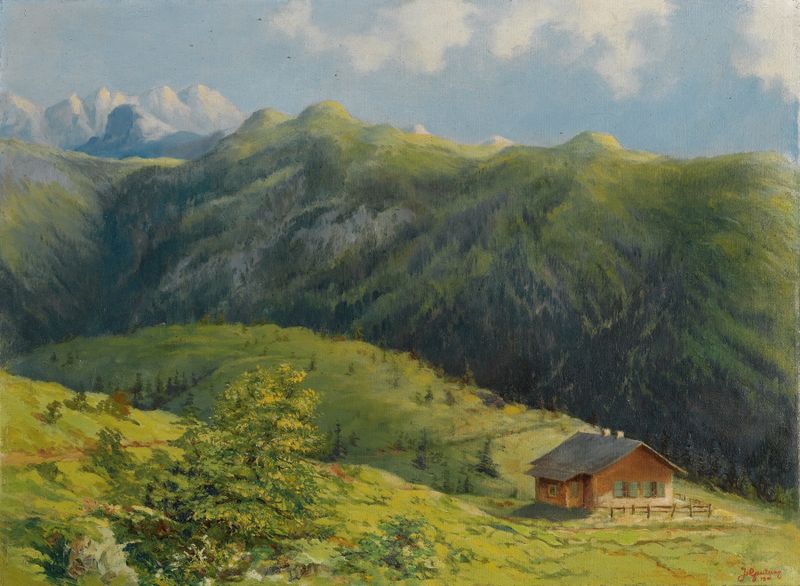
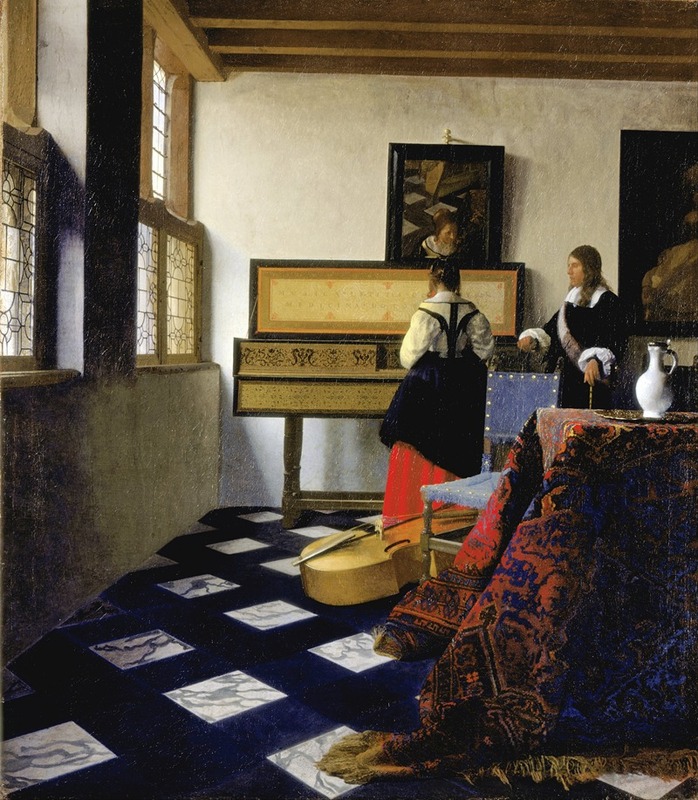
What if silence could speak through light? In the stillness of a hunting lodge, a profound emptiness envelops the space, whispering untold stories from the walls. Look to the center of the canvas, where the lodge stands, cloaked in a soft light that reveals the intricate woodwork and timeless charm of its architecture. The gentle tones of ochre and earthy browns dominate, while dappled shadows dance in the corners, hinting at both solace and solitude. Notice how the light falls upon the empty chairs, inviting yet unoccupied, as if awaiting the return of those who once gathered there, their laughter echoing in the air. The juxtaposition of warmth and desolation speaks volumes.
Each brushstroke seems to preserve the moments of joy while mourning the absence of life. The far window, framed by heavy drapes, offers a glimpse of the outside world—lush and vibrant—contrasting the interior's stillness. This tension between the lively landscape and the quiet lodge evokes an introspective exploration of human connection and the passage of time. Created in 1900, the artist painted this piece during a period of transition in European art.
Living in Liechtenstein, he was influenced by both the serene landscapes and the burgeoning modernist movements that sought to explore deeper emotional realities. This artwork reflects a moment in his life when the simplicity of stillness became a canvas for the unspoken, capturing the essence of solitude within the rustic charm of the hunting lodge.