The Sacred Grove, Beloved of the Arts and the Muses — History & Facts
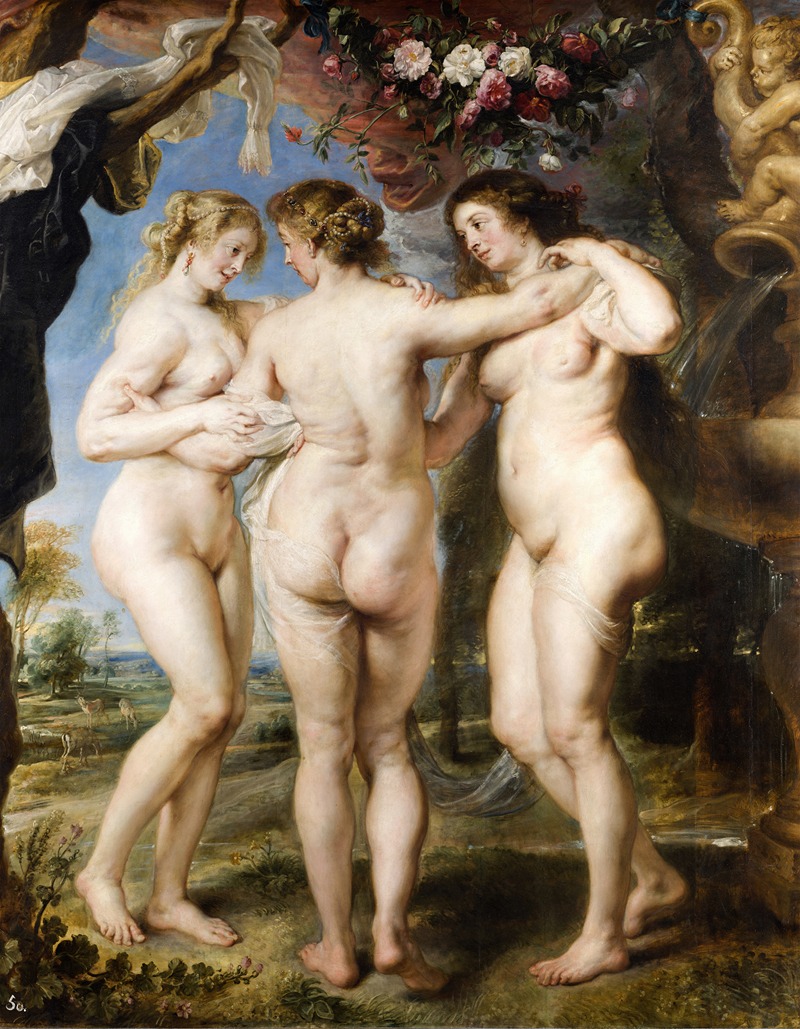
What if beauty was never meant to be finished? In The Sacred Grove, Beloved of the Arts and the Muses, a moment is captured where chaos and serenity intertwine, inviting contemplation of an eternal pursuit. Focus on the luminous figures who inhabit the serene grove, as they engage in a harmonious dance of creativity and inspiration. The figures seem to emerge from the foliage, their soft pastels contrasting against the rich greens and earthy tones of the landscape. Notice how the light filters through the trees, casting dappled shadows that play upon their forms, suggesting a delicate interplay between the tangible and the ethereal.
The composition draws the eye toward the central group of Muses, each embodying a different aspect of the arts, inviting viewers to participate in their timeless celebration. Yet, amidst the tranquil ambiance, a tension simmers beneath the surface. The figures, though poised in graceful tranquility, evoke a sense of longing—a futile chase for artistic perfection. The darker hues lurking around the edges of the grove symbolize the chaos surrounding the creative process, an unseen force that both nurtures and hinders the act of creation.
This tension between aspiration and the chaotic nature of art challenges the viewer to reflect on the balance between beauty and imperfection. Created between 1884 and 1889, Puvis de Chavannes painted this masterpiece during a period marked by a shift towards Symbolism in art. Living in Paris, he was surrounded by a burgeoning artistic community that sought to explore deeper meanings. His unique approach to composition and color—a welcome departure from the realism of his predecessors—revealed a desire to evoke emotion rather than depict reality, forever leaving a significant impact on the art world of his time.