
The Seine at Bougival — History & Facts
In a realm often filled with the noise of existence, it is within the quietude of a painted scene that we confront our innermost voids. The stillness of the river, laced with the brushstrokes of time, invites deeper reflection and connection. Look to the left at the gentle curve of the Seine, its shimmering surface echoing the dappled light filtering through the trees. Notice how the vibrant greens and soft blues blend harmoniously, creating a sense of calm amidst the activity.
The figures scattered along the banks — leisurely strollers and a small boat afloat — are rendered with lively strokes that pulse with life, yet they remain small within the vast landscape, hinting at the insignificance of human endeavors against nature’s grandeur. Delve deeper, and you will find subtle contrasts enveloped in tranquility. The vibrant colors reflect a moment of leisure, yet the isolation of the figures suggests a quiet yearning — a desire for deeper connection or understanding. The interplay between light and shadow speaks to the fleeting nature of joy, as the warmth of the sun dances across the water while the encroaching shadows hint at the inevitable passage of time.
Each brushstroke captures not merely a scene but a feeling, a reminder of both presence and absence. In 1870, while residing in Louveciennes, the artist created this work during a period marked by upheaval and change in the world of art and society. It was a time of experimentation and the rise of Impressionism, as Pissarro sought to capture the nuances of light and color in the landscape. Surrounded by fellow artists, he was deeply engaged in exploring new techniques that would ultimately redefine how we perceive the world around us.
More Artworks by Camille Pissarro
Browse all →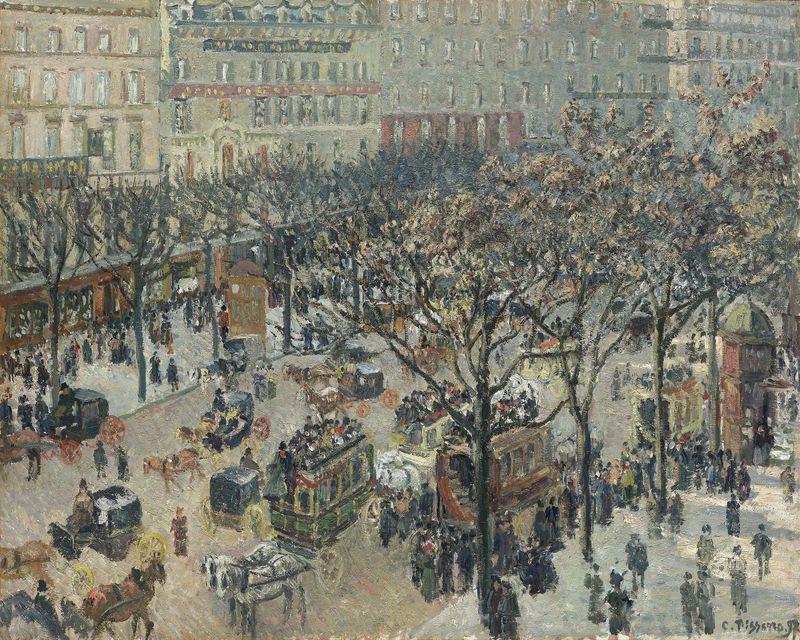
Boulevard des Italiens,Morning_Sunlight
Camille Pissarro
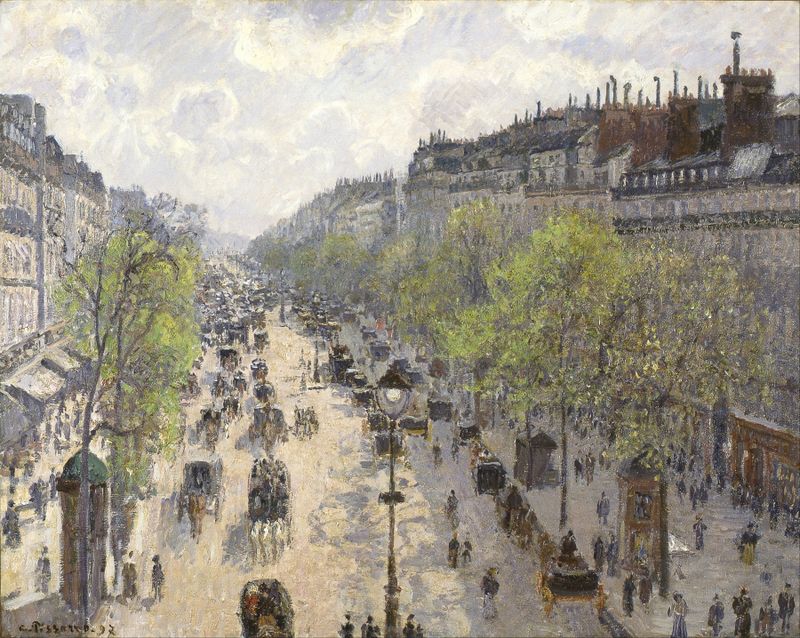
Boulevard Montmartre, Spring
Camille Pissarro
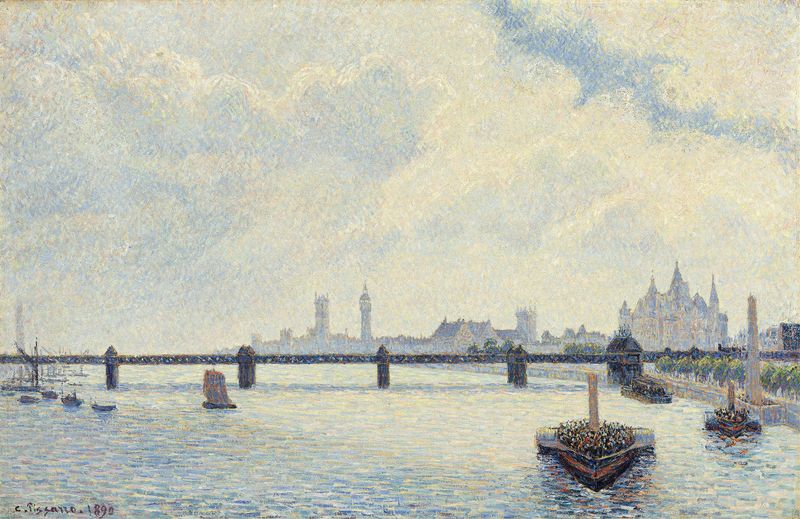
Charing Cross Bridge,London
Camille Pissarro
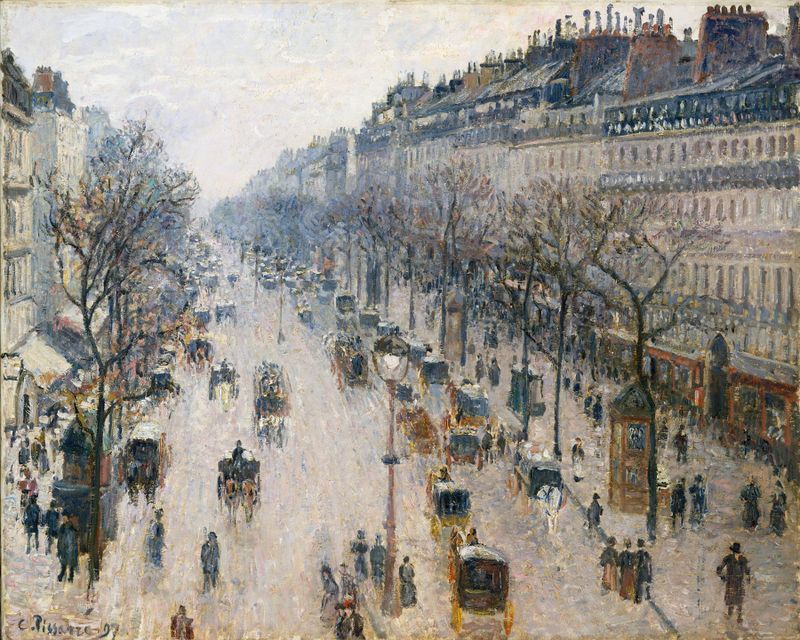
The Boulevard Montmartre on a Winter Morning
Camille Pissarro
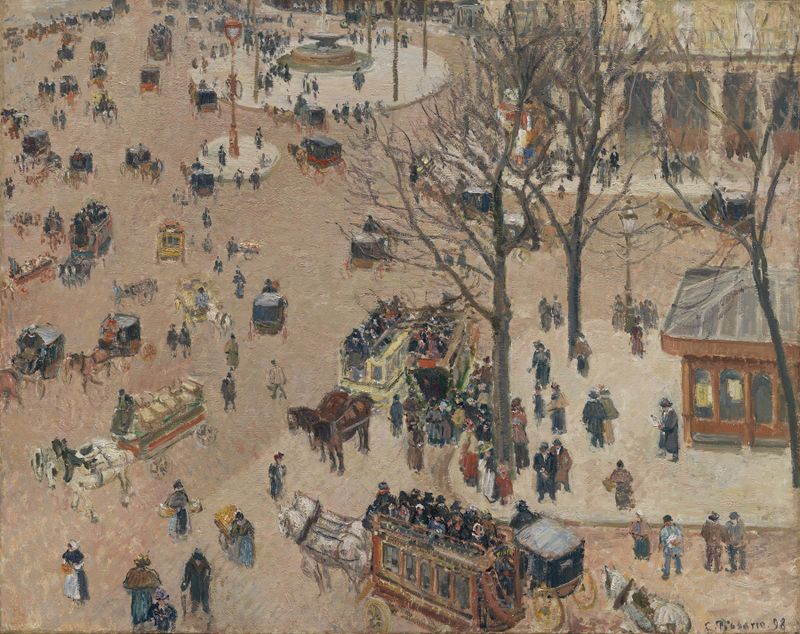
La Place du Théâtre Français
Camille Pissarro

Rue Saint-Lazare, Paris
Camille Pissarro
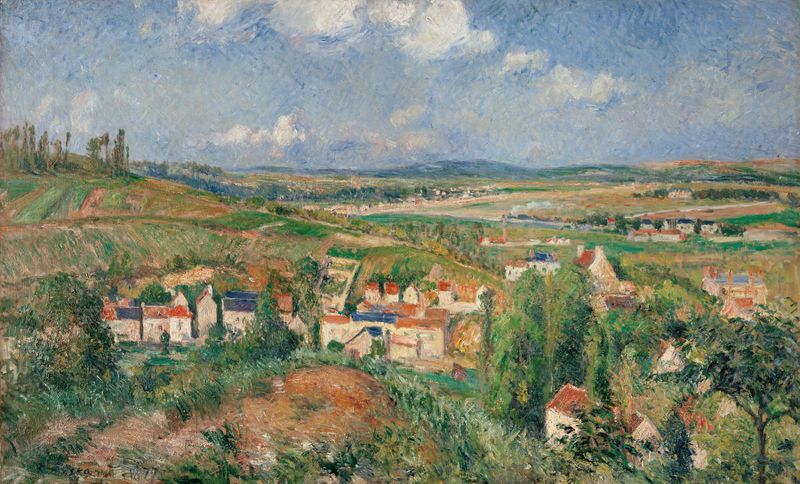
L’hermitage En Été, Pontoise
Camille Pissarro

Place du Theatre Francais,Fog Effect
Camille Pissarro
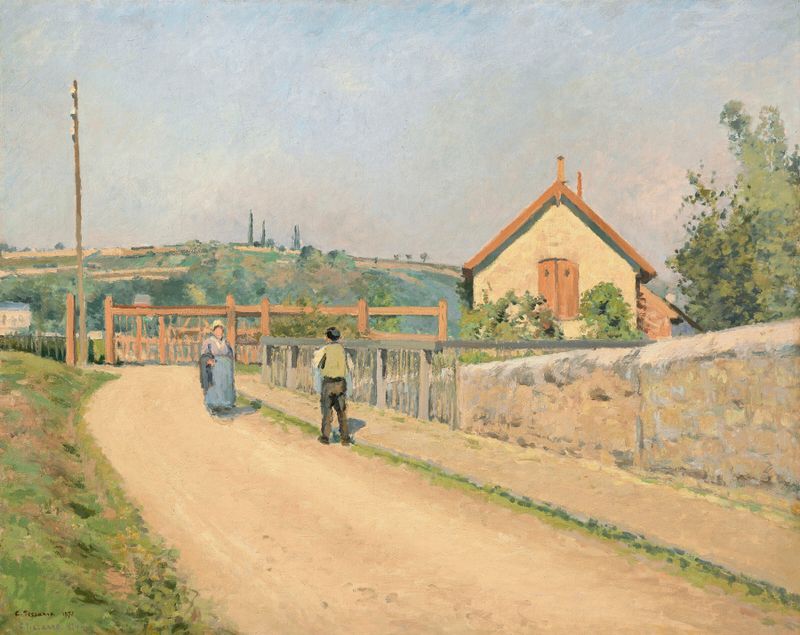
La barrière du chemin de fer, aux Pâtis près Pontoise
Camille Pissarro
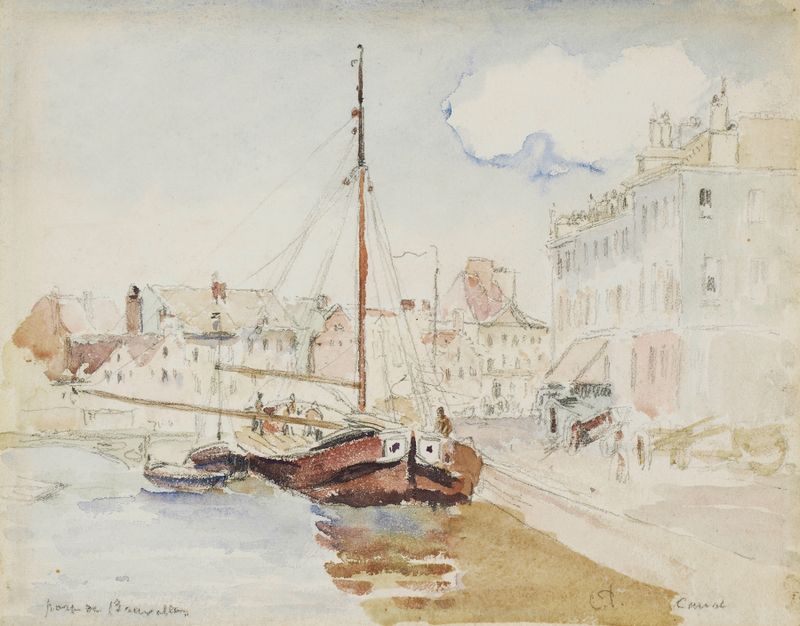
Port de Bruxelles
Camille Pissarro





