
The Sint-Antoniuswaag in Amsterdam — History & Facts
What secret hides in the quiet of the canvas? Beneath the surface of a seemingly simple scene lies a world of beauty and life, echoing with untold stories of daily existence. Look to the right at the elegantly arched facade of the Sint-Antoniuswaag, its pale stone glistening in soft afternoon light. The artist’s gentle brushwork captures a moment suspended in time, where shadows pool in the crevices and light dances across the cobblestones. Notice how the figures—merchants and townsfolk—interact with their surroundings, their postures a dance of commerce and community.
The warm earth tones of the buildings contrast with the cooler blues of the sky, creating a harmony that envelops the scene, inviting contemplation. Within this tranquil marketplace, contrasting elements emerge: the bustling activity of urban life against the serene architecture of the weighing house. Each figure seems imbued with purpose, yet they remain part of a greater tapestry, hinting at the interconnectedness of lives woven through shared spaces. The precision of the architectural details juxtaposes the fluid gestures of the people, suggesting a balance between the structured and the organic—a reflection of society itself. Created in Amsterdam during the late 18th century, this work by Ouwater stands at a time when Dutch society was undergoing significant change.
Influenced by the Enlightenment, artists sought to blend realism with idealism, capturing the essence of everyday life while reflecting broader social themes. Ouwater's serene depiction of commerce speaks to his keen observation of both the physical and emotional landscapes of a burgeoning modernity.
More Artworks by Isaac Ouwater
Browse all →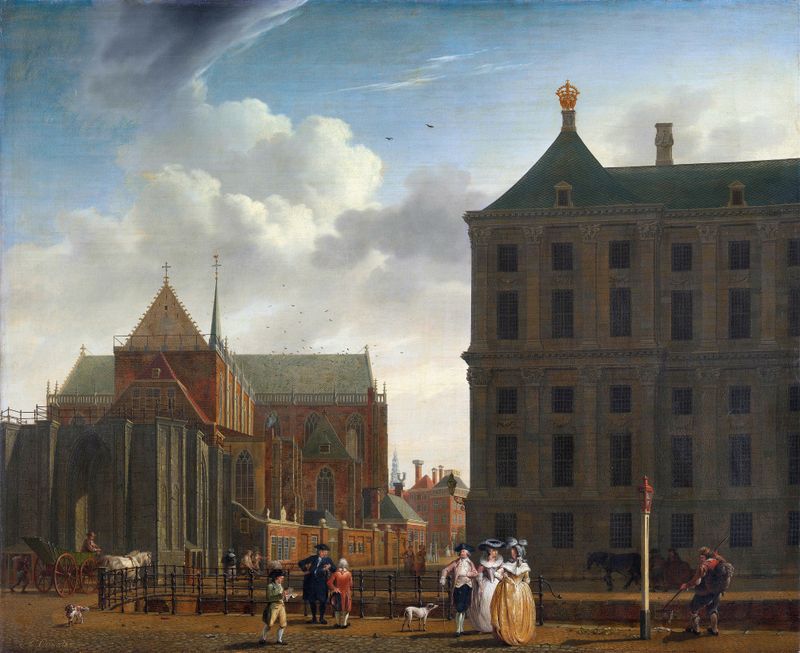
The Nieuwe Kerk and the Town Hall on the Dam in Amsterdam
Isaac Ouwater

The Bookshop and Lottery Agency of Jan de Groot in the Kalverstraat in Amsterdam
Isaac Ouwater

De boekhandel en het loterijkantoor van Jan de Groot in de Kalverstraat te Amsterdam
Isaac Ouwater
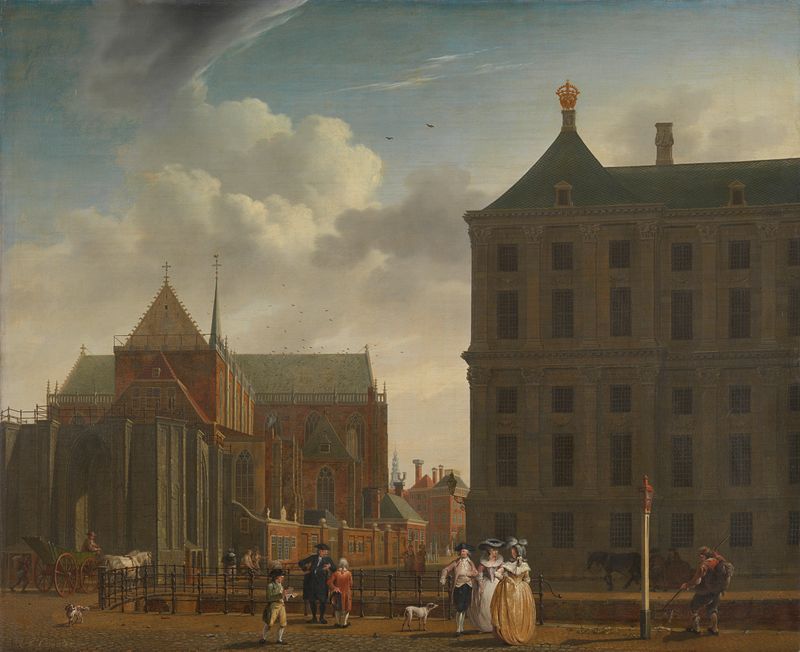
The Nieuwe Kerk and the Town Hall on the Dam in Amsterdam
Isaac Ouwater

View Of The Westerkerk Seen From Across The Keizersgracht, Amsterdam
Isaac Ouwater
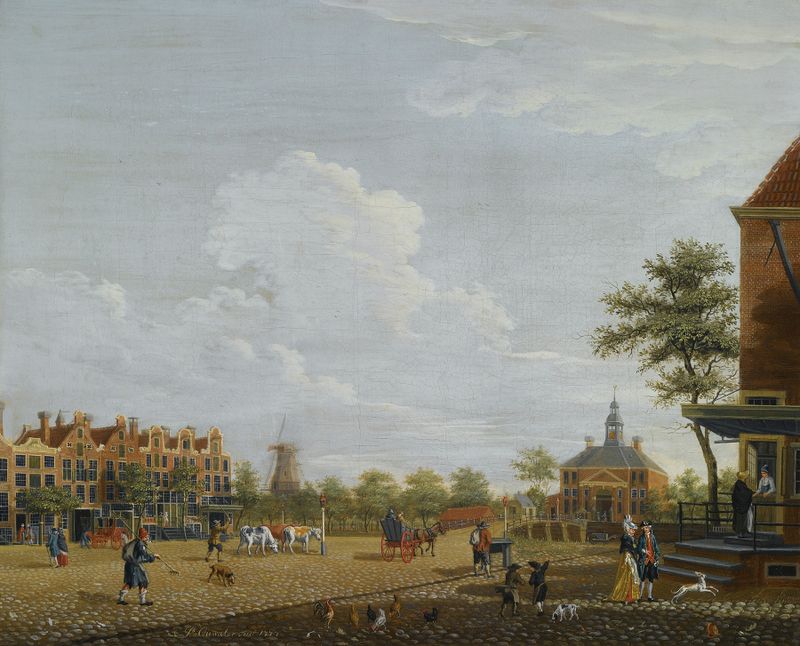
Amsterdam, A View Of The Weesperplein With The Weesperpoort, The Corn Mill ‘het Fortuyn’ On The Fortification Weesp In The Background
Isaac Ouwater
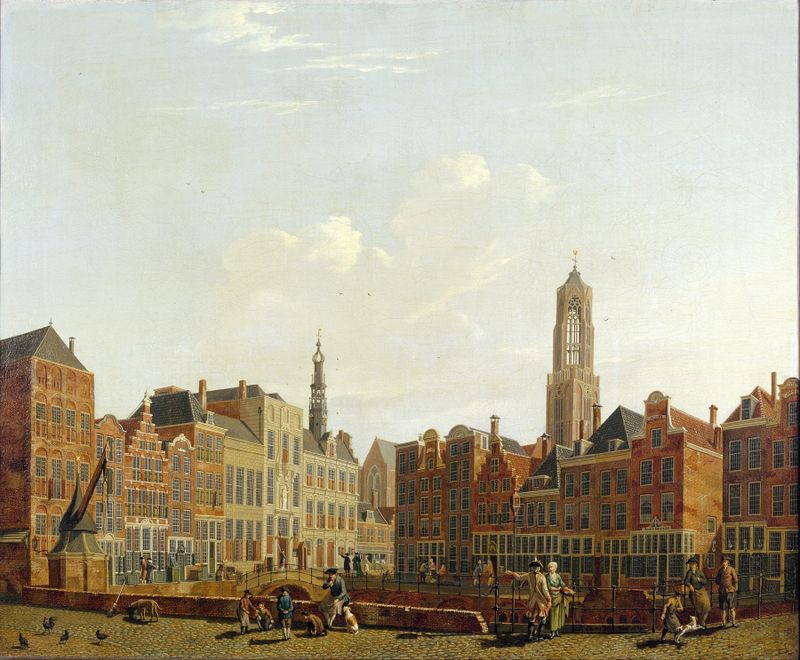
Utrecht Town Hall Bridge with Surroundings
Isaac Ouwater

Landschap met herberg
Isaac Ouwater
More Architecture Art
Browse all →
The statue of Liberty
Frédéric Auguste Bartholdi

View of Houses in Delft, Known as ‘The Little Street’
Johannes Vermeer

View of Houses in Delft, Known as ‘The Little Street’
Johannes Vermeer

The Cathedral in Rouen. The portal, Grey Weather
Claude Monet

The yellow house
Vincent van Gogh

The Church in Auvers-sur-Oise, View from the Chevet
Vincent van Gogh