The Sky Clearing over the Sea — History & Facts
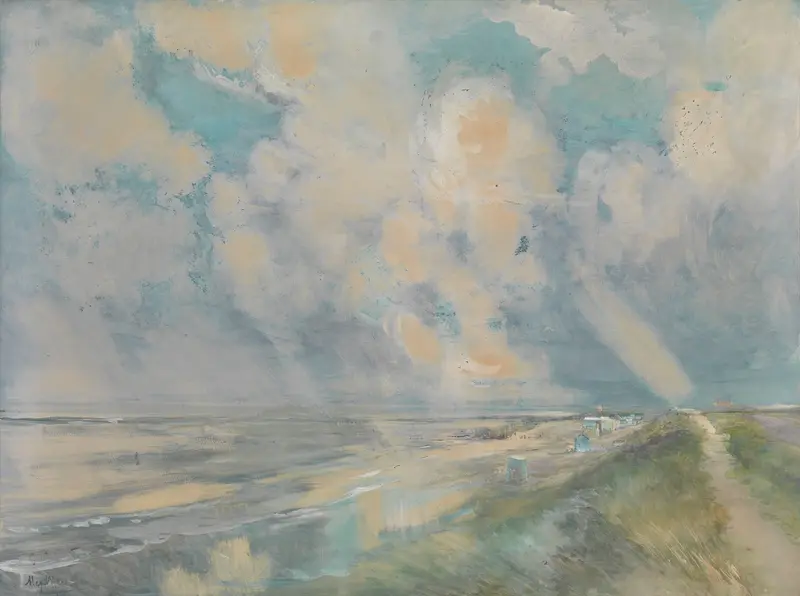
What first seizes the eye in The Sky Clearing over the Sea is the sheer sweep of atmosphere—an expanse of cloud and light that dwarfs the restless water below. The horizon sits low, giving the sky full command, its billowing forms painted with a restless, almost sculptural energy. The sea, meanwhile, churns in broad, broken strokes, its surface catching the pale, diffused light in flashes of foam and shadow.
The palette is restrained: cool blues, muted greys, and sandy ochres, all working together to evoke a moment just after turmoil, when the last traces of storm are dissolving into calm. Every brushstroke seems to chase the fleeting effects of weather, inviting the viewer to linger in the shifting space between storm and serenity. Painted in 1892, this work belongs to a period when artists across Europe were obsessed with capturing nature’s moods directly from life, often braving the elements to do so. Marine paintings like this were prized by collectors eager to bring the drama and tranquility of the coast into their homes, and the Museum of Fine Arts Ghent now holds this particular vision in its collection.
Little is recorded about Alexander Marcette or the specific circumstances of this painting’s creation, but its ambition is clear: to offer not just a view, but an experience of nature’s vastness and unpredictability. The painting stands as a testament to an era when artists and audiences alike sought the thrill of the open sky—an invitation to return, again and again, to the shifting horizon.