The Souk — History & Facts
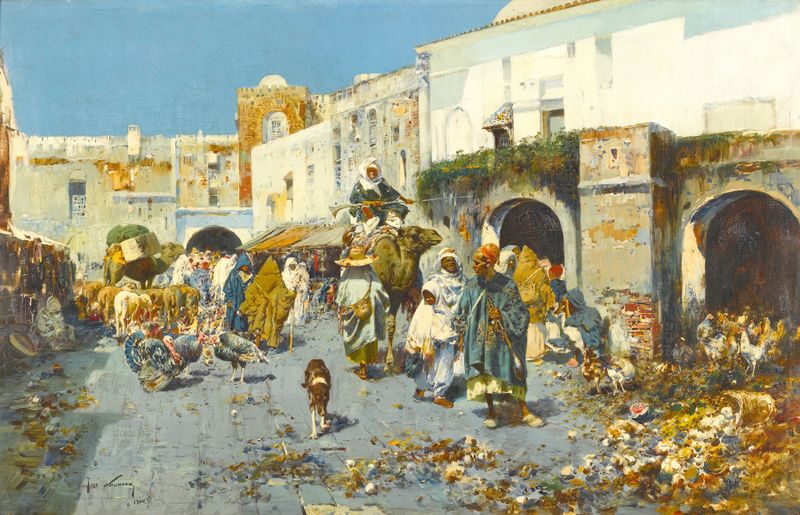
What if beauty was never meant to be finished? In the vibrant tapestry of life, every moment hints at revelations yet to come, awaiting those who dare to look closely. Focus on the swirling colors that envelop the canvas, where warm earth tones dance alongside hints of deep blues and greens. Notice how the market stalls fan out across the scene, creating an inviting rhythm that draws you into the bustling atmosphere. The figures, cloaked in traditional garments, exude a sense of movement—some animated, others absorbed in quiet contemplation.
Light cascades through the scene, casting gentle shadows that tell stories of daily life amidst the vibrant backdrop. Hidden within the lifelike representations are emotional currents, each figure standing as a testament to the intersection of commerce and culture. The juxtaposition of joy and solitude speaks to the complexities of existence, while intricately woven patterns in textiles symbolize tradition and identity. This interplay invites a reflection on the balance between the individual and the collective, where every person contributes to the vibrant tapestry of the souk—a space where beauty is nurtured in chaos. Created in 1900, the painting emerged during a time of cultural resurgence in Spain, as artists sought to capture the essence of their heritage.
José Navarro y Llorens, working in his homeland, was influenced by the burgeoning interest in realistic representations of daily life and the exotic allure of the Moroccan markets. This piece reflects not only his personal journey but also the broader artistic movement embracing local culture at the turn of the century, bridging the past with a modern sensibility.