A Bustling Street — History & Facts
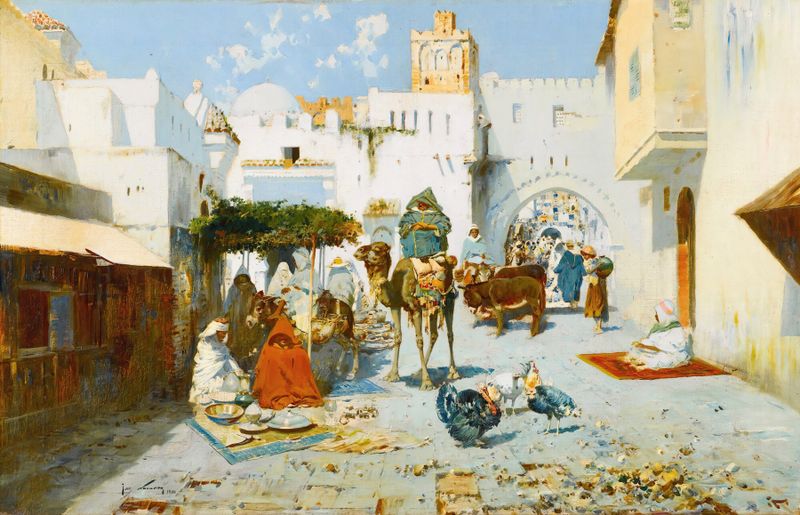
In its stillness, it captures the relentless ebb and flow of life, revealing layers of movement that pulse beneath the surface. Focus on the foreground, where vibrant splashes of color collide with one another; the reds and yellows of street vendors’ stalls burst forth like laughter in a crowded room. The figures, rendered in a frenzied array of strokes, seem to dance across the canvas, their limbs a blur of activity. Notice how the artist employs quick, sweeping brushwork to suggest the hurried pace of a day in the city, each stroke echoing the thrumming heartbeat of life bustling around them. Yet, amid this frenetic energy, a deeper tension simmers.
Look closely at the expressions on the faces, a mix of anticipation and weariness that hints at stories untold. The juxtaposition of the lively scene and the solemnity etched on some characters’ faces evokes a complex narrative of community and solitude. It reflects both the joy of connection and the isolation that often accompanies urban existence, presenting a world that is vibrantly alive yet quietly contemplative. In 1900, amid the rapid industrial changes of post-Romantic Spain, José Navarro y Llorens created this piece as a reflection of a society undergoing transformation.
Living in Madrid, he was influenced by the vibrant cultural milieu of the time, drawing inspiration from the interplay between traditional values and modern life. This work captures a moment in which the pulse of urbanity was reshaping human experience, revealing both the excitement and challenges of a new era.