
The South Foreland — History & Facts
In its stillness, The South Foreland beckons viewers to explore a world on the brink of innocence lost, where the allure of nature meets the encroachment of mankind. Look to the horizon where the soft, diffused light embraces the cliffs, casting gentle shadows that dance across the canvas. Notice how the cerulean sky, adorned with wispy clouds, mirrors the tranquil sea below, creating a seamless transition between earth and water. Every brushstroke reveals a meticulous attention to detail, from the rocky outcrops to the fragile flowers that cling to the cliff’s edge, symbolizing a precarious balance between beauty and vulnerability. The painting captures an emotional tension between serenity and foreboding.
The play of light suggests a fleeting moment, a reminder of transient beauty. The cliffs, both majestic and looming, evoke a sense of protection yet also an impending threat from the powerful sea. This duality reflects the innocence of nature, untouched yet vulnerable to the forces beyond its control, urging viewers to consider the delicate equilibrium of existence. During the early 19th century, Serres was immersed in the artistic circle of England, focusing on maritime and landscape scenes that celebrated the natural world.
Working at a time when Romanticism was gaining momentum, he sought to capture the sublime beauty of coastal landscapes, reflecting a growing appreciation for nature amidst an industrializing society. Though the exact date of The South Foreland remains unknown, it stands as a testament to Serres’ vision of innocence amidst the changing tides of human influence.
More Artworks by John Thomas Serres
Browse all →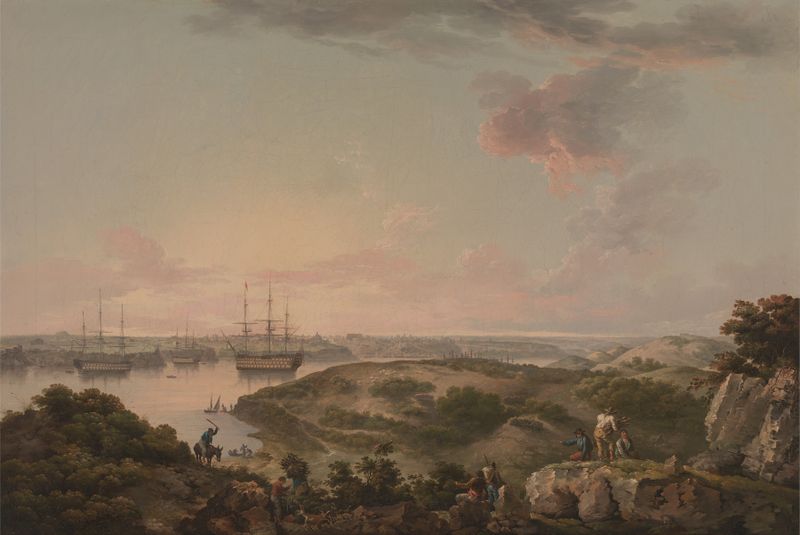
Port Mahon, Minorca with British Men-of-War at Anchor
John Thomas Serres
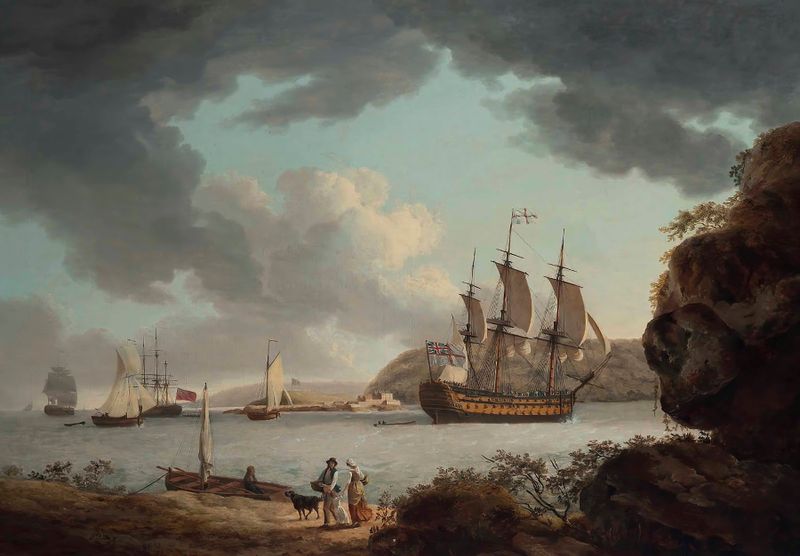
A Flagship Of The White Entering The Hamoaze And Approaching Plymouth Dock With Drake’S Island Off Her Port Quarter
John Thomas Serres
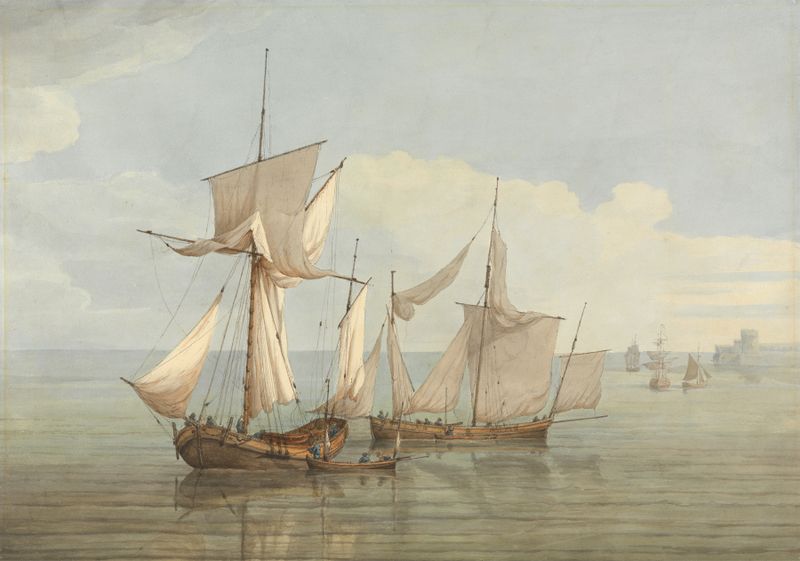
A Hoy and a Lugger with other Shipping on a Calm Sea
John Thomas Serres
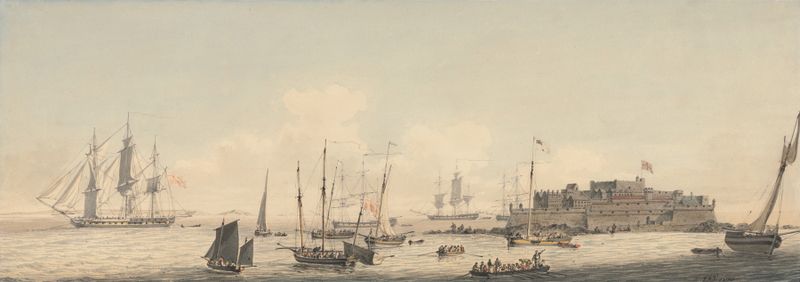
View of Castle Cornet, Guernsey, Channel Islands, with Shipping
John Thomas Serres
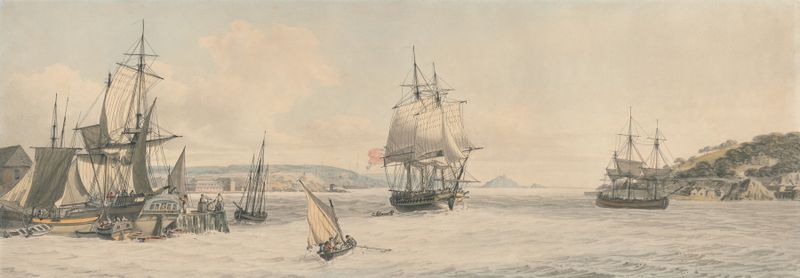
Plymouth Roads
John Thomas Serres

Gibraltar, South West by West
John Thomas Serres
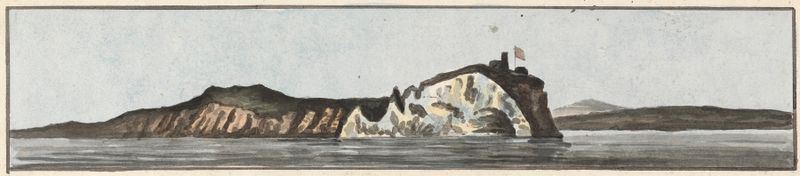
The Needles Bearing East
John Thomas Serres

The South Foreland and Shakespeare’s Cliff
John Thomas Serres

The North Foreland
John Thomas Serres

Gibraltar, The Signal House
John Thomas Serres





