
The Statue in Front of Ruins — History & Facts
Who listens when art speaks of silence? In a world often drowned in noise, it is the quiet echoes of grief that resonate most deeply through the ages. Look closely at the center of the canvas, where a solitary statue stands sentinel amidst the crumbling ruins. The figure, carved with intricate detail, embodies a poignant stillness, while the surrounding architecture bears the scars of time. Notice how the sun filters through the fragmented structures, casting soft shadows that dance around the statue, enhancing the feeling of isolation.
The palette remains muted—earthy browns and soft grays—evoking a sense of melancholy that invites contemplation. In the juxtaposition of the robust statue against the decaying ruins lies a narrative of loss and memory. The statue, representing permanence, grapples with the ephemeral nature of human achievement, as the crumbling stones whisper tales of what once was. This contrast stirs an emotional tension, reflecting not only the passage of time but also the universal experience of grief—how we honor what remains even as we mourn what has been irrevocably lost. During the years 1763-1764, Robert painted this work in Paris, a city rich in artistic evolution yet grappling with its own historical ruins.
As a prominent figure in the French landscape tradition, he was influenced by the Enlightenment's fascination with nature and antiquity, which often prompted reflections on the transience of human endeavors. In this context, The Statue in Front of Ruins captures not just a scene but a profound meditation on existence itself.
More Artworks by Hubert Robert
Browse all →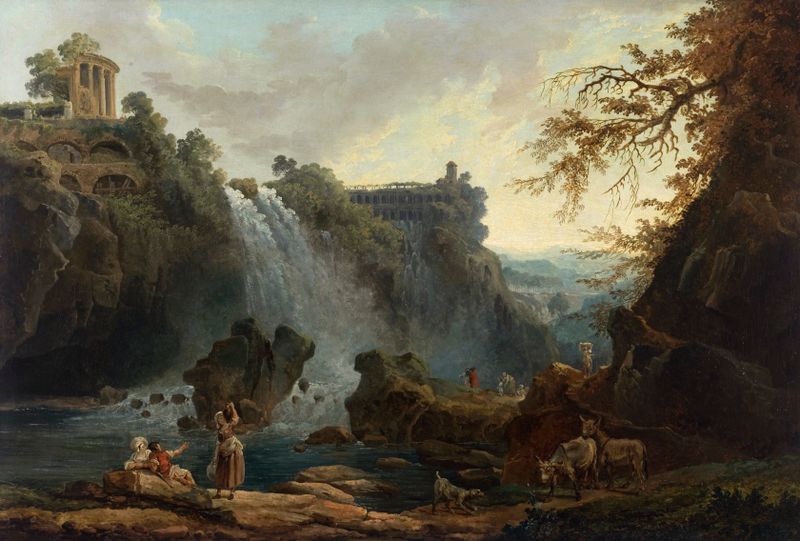
Les Cascatelles de Tivoli
Hubert Robert
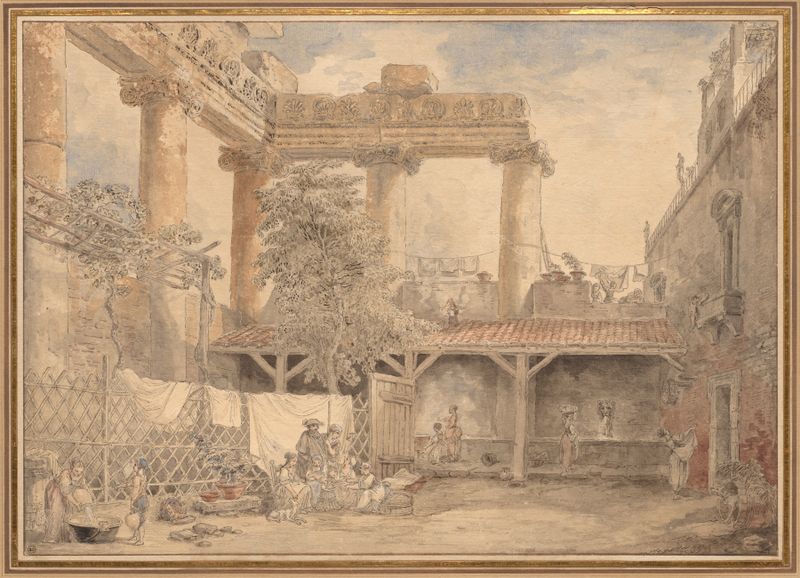
Roman Ruins, Villa Pamfili
Hubert Robert

The Rustic Bridge, Château de Méréville, France
Hubert Robert

The Portico of a Country Mansion
Hubert Robert

Architectural Capriccio
Hubert Robert

The Obelisk
Hubert Robert
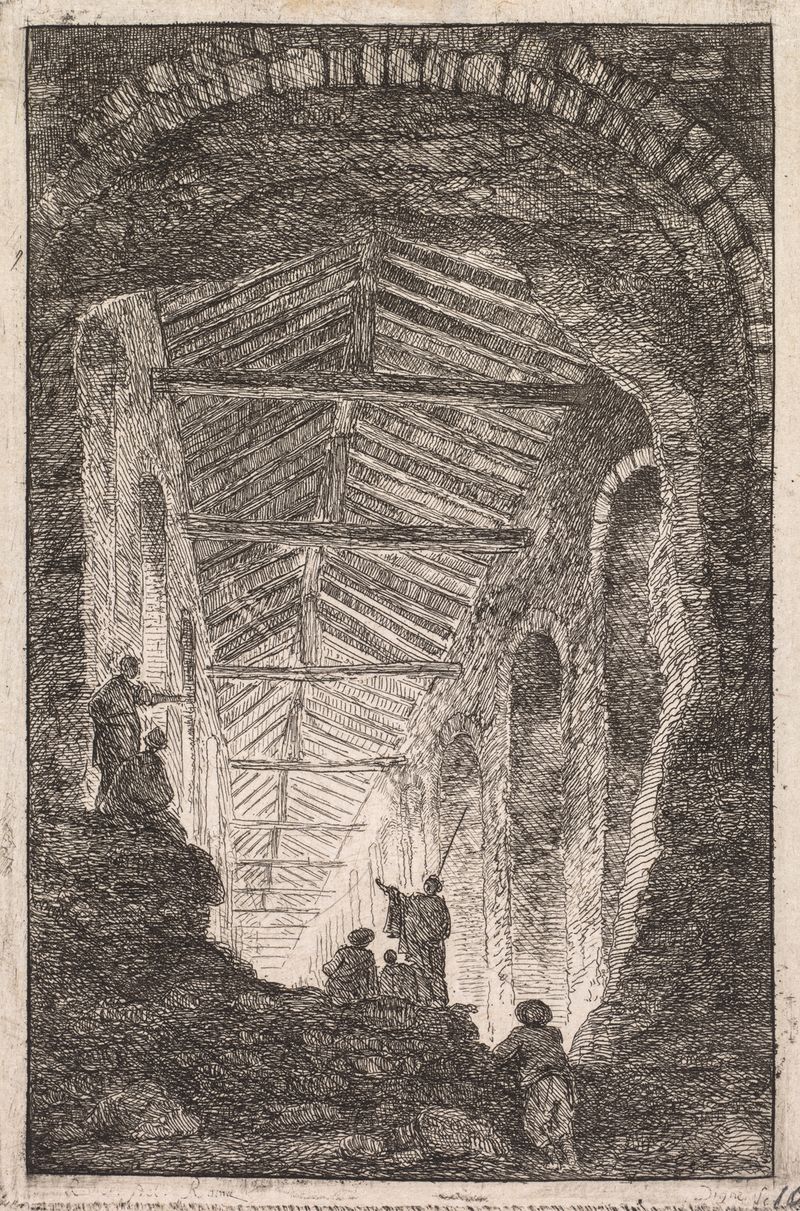
The Antique Gallery
Hubert Robert

L’incendie de l’Opéra, vu des jardins du Palais-Royal, le 8 juin 1781
Hubert Robert
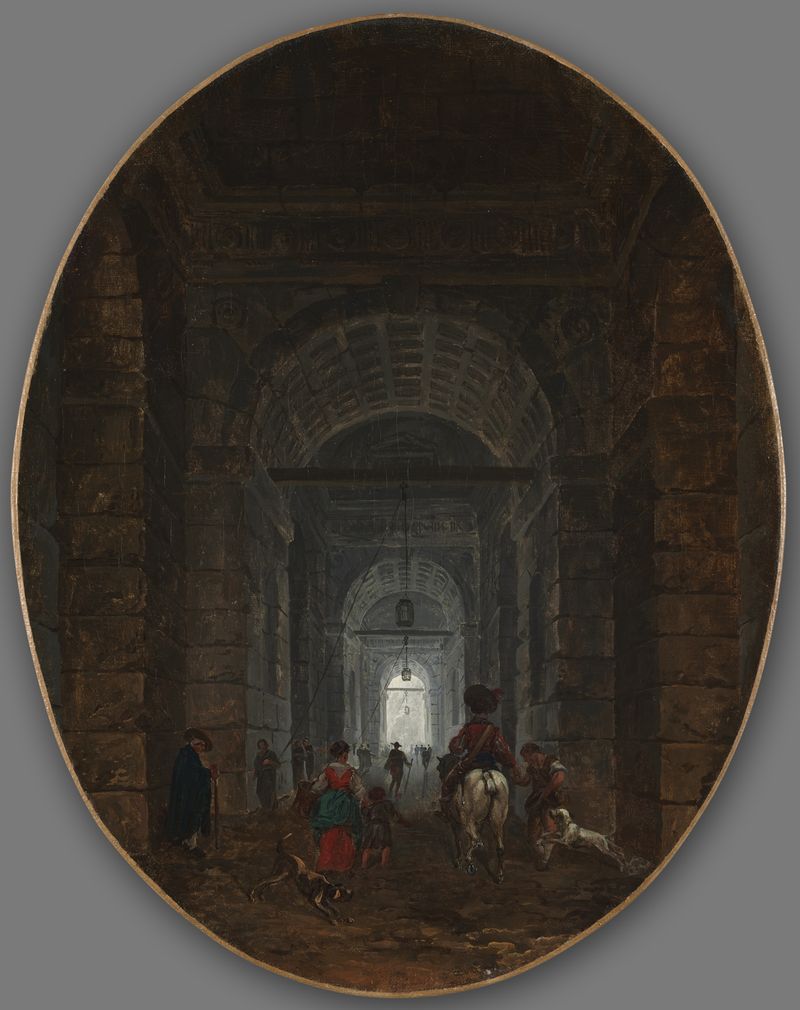
The Grotto of Posillipo
Hubert Robert

Architectural Capriccio with ruins of the Temple of Saturn and the Colosseum in the background
Hubert Robert
More Architecture Art
Browse all →
The statue of Liberty
Frédéric Auguste Bartholdi

View of Houses in Delft, Known as ‘The Little Street’
Johannes Vermeer

View of Houses in Delft, Known as ‘The Little Street’
Johannes Vermeer

The Cathedral in Rouen. The portal, Grey Weather
Claude Monet

The yellow house
Vincent van Gogh

The Church in Auvers-sur-Oise, View from the Chevet
Vincent van Gogh