
The Storm — History & Facts
Could beauty survive in a century of chaos? This poignant question echoes through The Storm, a work that contemplates the delicate balance between nature’s fury and the fragile human spirit. Focus first on the turbulent sky, where dark, swirling clouds clash with hints of lighter tones struggling to emerge. The artist masterfully employs a palette of blues and grays, punctuated by flashes of warm yellows and whites that suggest fleeting sunlight breaking through. The sweeping brushstrokes create a sense of movement, drawing the eye from the turbulent horizon to the grounding landscape below, where silhouettes of trees bend under the weight of the impending tempest. Within this composition lies an emotional depth that reflects the duality of existence.
The threatening storm symbolizes the chaos of the era, while the soft light hints at resilience and hope amidst despair. The contrast between the ferocity of the elements and the tranquility of the earth below speaks to a profound struggle—nature’s power against the enduring beauty of life, reminding us of the dreams often forged in turmoil. Georges Michel created this masterpiece between 1814 and 1830, a period marked by immense social and political upheaval in Europe following the Napoleonic Wars. As Romanticism flourished, artists sought to capture the emotional intensity of their surroundings, reflecting the turmoil not only in the world but also within their own lives.
In this context, The Storm serves as both a personal expression of the artist's experience and a broader commentary on the struggles of humanity.
More Artworks by Georges Michel
Browse all →
The Approaching Storm
Georges Michel

Landschap met zandweg
Georges Michel

Landschaft bei Paris
Georges Michel
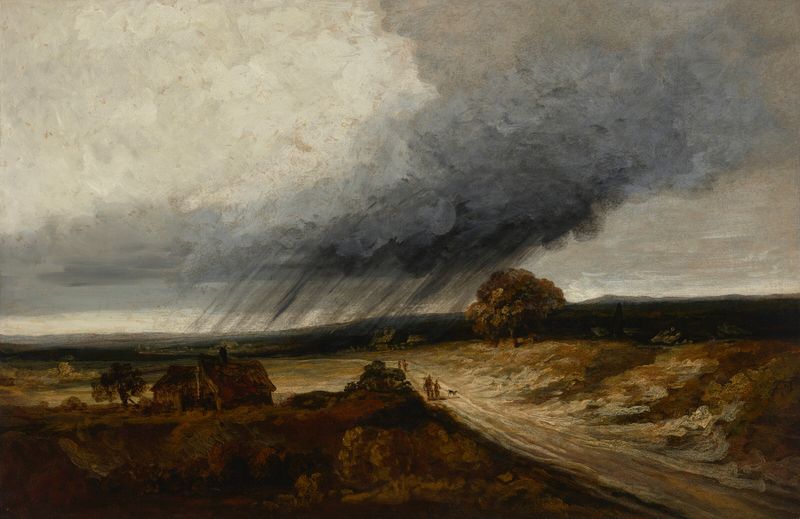
The Approaching Storm
Georges Michel

Landschap met overtrekkende bui
Georges Michel
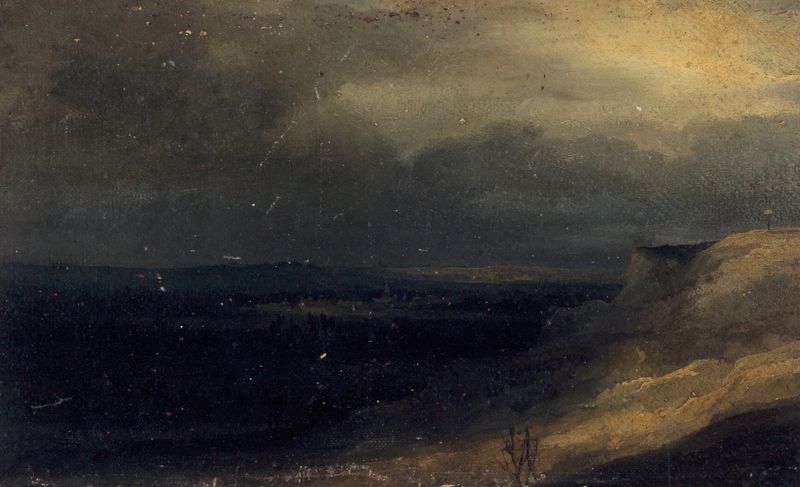
Vue présumée de Montmartre.
Georges Michel

Landschap met figuren en vee
Georges Michel

Approaching Storm
Georges Michel
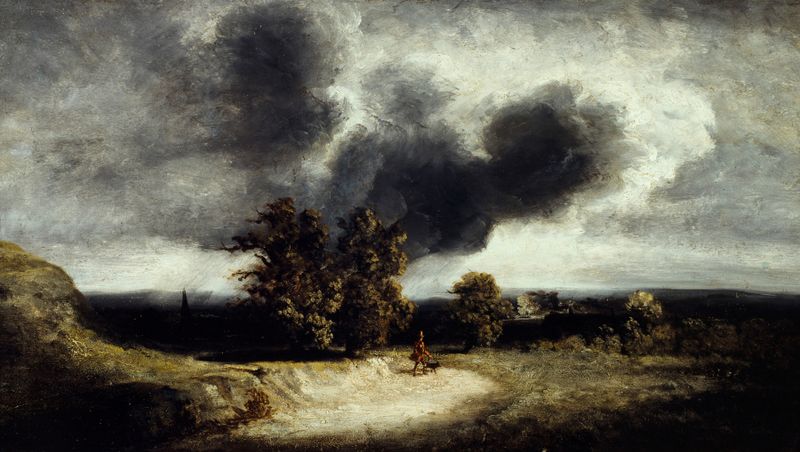
Paysage des environs de Paris.
Georges Michel

Gezicht op de Dome des Invalides uit de Champ de Mars
Georges Michel





